Skip to content
Account

Cart

Authors

Daniel Volpe

Coach and recovery specialist

Daniel Volpe is a coach who focuses on recovery in training and everyday life.

In the Ractiveone guides he writes about indoor air, sleep and everyday recovery.

Articles by Daniel Volpe

Sleep & blue light

Jet lag tips: light, heavy legs and sleep when you travel

The most useful jet lag tips all come back to one tool: light at the right time. You cannot avoid jet lag completely, but you can shorten it. After flying east, your body clock shifts by just under an hour a day on average, a little faster after flying west. On top of that come heavy, swollen legs after hours in a seat. This guide covers when to seek light and when to avoid it, what studies show about compression stockings on flights, where compression boots make sense after landing, and which warning signs can point to a blood clot.

Sleep & blue light

Screen time before bed: eyes, evening light and sleep at work

Screen time before bed is, for most office workers, just the tail end of a day that already started with eight hours in front of a monitor. By evening your eyes sting and sleep takes a while to come. Blue light usually gets the blame. The evidence is more nuanced. As far as we know, blue light from screens does not damage your eyes, and tired eyes have other causes. For sleep, what counts is how much light you get in the morning and how much in the evening. This article separates the two and shows what actually helps in a normal working week.

Sleep & blue light

Gamer sleep schedule, neck and wrists: an esports routine

A gamer sleep schedule is usually the first thing to slip. In one study, professional esports players fell asleep at a median of 3:43am, and in a survey of college players 42% reported neck and back pain and over a third wrist pain. The problem is not gaming itself but long sessions with no plan around them. This guide covers what research on gamers has actually measured and gives you a routine you can start today: a set-up and breaks that spare your neck and wrists, a cool-down after long sessions, and an evening that ends with you actually falling asleep.

Indoor air & humidifiers

Humidifier for athletes: airways, sleep and winter training

A humidifier for athletes sounds like a nice-to-have. In winter it does have a clear role: you spend eight hours breathing quietly in your bedroom, and with the heating on, the air there can drop below 30% humidity. At that point eyes and skin start to feel dry, and plenty of people wake up with a scratchy throat. At the same time, its effect is often overstated. No device in your bedroom changes the cold, dry air you breathe on a January run. This guide separates the two, sets out what the research says about airways and sleep, and gives you concrete settings for the heating season.

Heat & cold therapy

Padel recovery: forearm, shoulder and calves after a match

Padel recovery is about more than your legs. After two hours on court, the forearm and shoulder of your hitting arm feel tight and your calves are hard from all the sprints and lunges. Play three or four times a week and sooner or later your elbow lets you know. This guide gives you a routine for the evening after a match, the next day and a tournament weekend, using heat, cold and vibration. It also shows you where self-care stops and when an elbow needs to be seen by a professional.

Recovery boots & compression

Football Recovery After a Match: 72 Hours, Busy Weeks, Grassroots

Football recovery after a match decides how fresh you are for the next game and how high your injury risk is. After 90 minutes of sprints, turns and tackles, research shows your speed can take up to 72 hours to come back. In a congested run of fixtures, you rarely get that long. This article gives you a clear plan for the 72 hours after the final whistle, a strategy for two games a week and an honest look at what Sunday league players can borrow from the pros and what they cannot. You will also see where compression boots and a massage gun fit in.

Recovery boots & compression

Cycling recovery: how to rest your legs after long rides

Cycling recovery decides whether you sit on the bike the next morning with fresh legs or grind through every pedal stroke. After four hours in the saddle, a set of hill repeats or three days on a training camp, your quads feel heavy and your fuel tanks are empty. Plenty of riders buy compression boots at this point without knowing when they actually help. This guide gives you protocols for long rides, interval sessions and multi-day trips, with minutes, pressure levels and what to eat. And I will tell you honestly what studies on cyclists show, and what they do not.

Recovery boots & compression

Sore legs after skiing: recovery on your ski trip and after

Sore legs after skiing are part of almost every ski trip: on the second morning you can barely get down the chalet stairs, and your thighs are burning on the first run. That comes from the particular way skiing loads your leg muscles. Here you will find out why your thighs suffer most, how to prepare in the weeks before, and what a daily plan on the trip looks like, with heat in the morning, cold for an irritated knee and compression boots in the evening. Plus what to do in the days after you get home.

Sleep & blue light

How to sleep after a night shift: a light plan that works

How to sleep after a night shift is rarely a question about your bed. It is a question about the drive or bus ride home. At 7am you walk out into daylight, and your body clock reads it as the start of the day. You fall asleep exhausted, then wake up four hours later. Light is the strongest signal your body clock has, and you can time it: bright in the first half of the shift, dimmer towards the end, dark on the way home. This guide covers what studies with nurses and other night workers actually measured, where the evidence is thin, and what a realistic plan looks like for the NHS, the police and warehouse work.

Indoor air & humidifiers

Humidifier vs air purifier: and ultrasonic or evaporative?

Humidifier vs air purifier sounds like a choice between two similar gadgets, but they solve completely different problems. A humidifier puts water back into the air when your hygrometer drops below 40% with the heating on. An air purifier filters out particles such as pollen and dust and leaves humidity exactly where it was. Once that's settled, there's a second decision: ultrasonic, evaporative or steam. This comparison first matches your problem to the right device, then explains the three humidifier types with their honest trade-offs, and tells you when neither is the answer.

Indoor air & humidifiers

How to clean a humidifier and descale it: step-by-step guide

To clean a humidifier properly you need three habits: empty and dry the tank every day, scrub it every third day and descale it roughly once a week, depending on how hard your water is. That sounds like a chore, but in practice it is a few minutes here and there. Skip it and you get slimy film in the tank, white dust on the furniture and, at worst, germs in the air you breathe all night. This guide gives you the full routine, the household products that work, the ones that must never go in the tank, and the signs that tell you it is time to step up.

Indoor air & humidifiers

Ideal Humidity for Sleeping: Bedroom Levels and How to Measure

The ideal humidity for sleeping is 40–60 % relative humidity, and in the heating season 40–50 % is the safer target. Simple enough, yet in winter many bedrooms miss it at both ends: too dry at night, then streaming windows in the morning. This article gives you the target values with sources, a table of what each reading means and how to measure properly. You also get clear steps for both problems, air that is too dry and air that is too damp, and an honest look at what humidity does and does not do for your sleep.

Recovery boots & compression

Lymphatic Drainage Boots at Home: What They Can and Can't Do

Lymphatic drainage boots sound like a physio session on your sofa, but they are something different. Compression boots use rhythmic air pressure to push tissue fluid towards the trunk, and many people find their legs feel lighter afterwards. Manual lymphatic drainage, on the other hand, is a treatment given by specially trained therapists to people with lymphoedema, usually alongside compression bandaging, exercise and skin care. This article keeps the two apart: what clinical guidance and research show about fluid movement, where the boots fit in sport and everyday life, and why lymphoedema should never be managed with them on your own.

Recovery boots & compression

How to Use Compression Boots: How Long, How Often, What Pressure

The best way to use compression boots is 20 to 30 minutes after training, two to five times a week, at a pressure that feels firm but never painful. That is the short answer. The real questions come once the boots are on your legs: is 45 minutes better than 20? Can I use them before a run or at half-time? Which of the seven levels is right? I answer each one with what studies have actually measured and what has worked for the athletes I coach.

Recovery boots & compression

Compression Boots Side Effects: Who Should Not Use Them

Compression boots rarely cause side effects in healthy people, but there are clear contraindications. If you have a blood clot, decompensated heart failure, an acute skin infection on the leg or severe, uncontrolled high blood pressure, recovery boots are off the table. In other cases, such as pregnancy, diabetes with nerve damage or blood thinners, you check with your GP first. This article sorts the list using the German clinical guideline on pneumatic compression and the manufacturer's notes, explains why each limit exists and shows the warning signs that mean you stop straight away. It does not replace medical advice.

Recovery boots & compression

Compression boots for gyms and physio clinics: setup and hygiene

Compression boots for a gym, physio clinic or recovery lounge work differently from a pair at home: lots of different legs, fixed bookings, cleaning between clients and the question of who shouldn't have a session at all. If you're buying for a business, you'll choose less on maximum pressure and more on adjustability, sizes, charging and how quickly the cuffs can be cleaned. This article shows you what a 40-minute booking slot looks like, how to look after the cuffs between two clients, which screening questions belong before the first session, and how to promote the service without promising more than the research supports.

Training & recovery

Recovery calendar 2027: season plans for runners, riders, footballers

Your recovery calendar for 2027 starts now, in autumn 2026. If you want to run a spring marathon or get through a full summer of riding, the groundwork happens over the next few months. Recovery isn't a break you take at the end, it's something you plan into every phase of the season. Here are the big 2027 dates confirmed by mid-October 2026, plus a plan for runners, cyclists and footballers showing which kind of recovery takes priority when. Where a date isn't confirmed yet, we say so.

Training & recovery

Recovery after 40: using heat, cold and compression well

Recovery after 40 feels slower for a lot of people: soreness hangs around an extra day, your lower back is stiffer in the morning and Monday takes more effort after a hard weekend. The research, though, paints a more nuanced picture than “it's all downhill after 40”. Part of what we put down to age is really less movement, poorer sleep and badly dosed training. This article sorts out what genuinely changes after 40 and through the menopause, and shows when heat, cold and compression can help you and when they get in the way.

Heat & cold therapy

Heat for a stiff neck: infrared, heat pad or massage?

Heat for a stiff neck is the remedy almost everyone reaches for first, and with good reason: it feels good, costs little and carries few risks. The real question is which heat. Hot water bottle, electric heat pad, infrared lamp, a device with infrared warmth, or a massage instead? I compare the options by depth, practicality and evidence, give you a 20-minute routine followed by gentle movement, and tell you plainly where the research is thin. By the end you will also know when a stiff neck is not a job for a hot water bottle.

Heat & cold therapy

Heat or ice for sore muscles? What works after training

Heat or ice for sore muscles? In short: use heat for stiff, tight muscles and for soreness the day after, and use cold straight after a hard session or when you need to perform again soon. A meta-analysis of 32 trials found that both reduce muscle soreness, with no clear winner between them. What matters is timing, duration and what you are training for, not which one feels nicer in the moment. This guide gives you a decision table for common situations, practical temperatures and minutes, and explains when regular icing can work against your strength gains.

Sleep & blue light

Red vs orange blue light glasses: differences and when to wear

Red vs orange blue light glasses: the short answer is orange for daytime and early evening, red for the last 1–2 hours before bed. The reason is a trade-off between filtering and colour accuracy that you weigh differently depending on the time of day. The redder the lens, the more short-wavelength light it blocks, but the more it distorts colours. Here we compare both tints in practical terms, show which lenses were actually tested in studies, and tell you honestly when a second pair is worth it and when it is not.

Sleep & blue light

Do blue light glasses help sleep? What the studies show

Do blue light glasses help sleep? The idea is simple: filter the light from your phone, monitor and lamps in the evening so your body switches to night mode sooner. Whether that actually improves sleep is disputed, and many health sites are sceptical. They have a point, because the evidence is mixed. This article goes through the key trials and three reviews one by one, including those that found nothing. You will see what is well established about light and melatonin, where the evidence for better sleep gets thin, and how to use a pair if you want to try it.

Sleep & blue light

GTA 6 late-night gaming: how to play late and still sleep

GTA 6 is due on 19 November 2026, according to Rockstar Games, and plenty of people have already blocked out the first few nights. You know how it goes: you switch off at 2am, you are still wide awake at 3, and the next day you drag yourself through training or work. Screen light is only part of the story. Research suggests the excitement of the game and the later clock matter just as much. This guide gives you a practical plan for launch week and an honest look at what blue light glasses can and cannot do.

Recovery boots & compression

Compression boots for runners: marathon and interval protocols

Compression boots for runners make obvious sense on paper: few sports load the calves and thighs as repetitively and as often as running. After a marathon, a hard interval session or a long Sunday run, your legs feel heavy and stiff. Plenty of runners buy boots and then aren't sure when, how long or at what pressure to use them. Here you get concrete plans for the marathon, half marathon and intervals, with minutes, pressure level and timing. I'll also tell you honestly what studies on runners show and what they don't.

Recovery boots & compression

Heavy Legs: Causes, Warning Signs and Why Compression Helps

Heavy legs usually have a harmless cause: after hours of standing, sitting or a hot day, blood returns from your legs more slowly because your calf muscles are barely pumping. Sometimes, though, the cause is weak veins, a medicine or, rarely, a blood clot. This article sorts the seven most common causes, lists the warning signs you should never sit out, and explains what compression actually does inside your legs. I will also tell you plainly where the research is solid and where it is thin, so you know what to expect from stockings and recovery boots.

Recovery boots & compression

Intermittent Pneumatic Compression (IPC): Hospital vs Sport

Intermittent pneumatic compression therapy, or IPC, is the principle behind every pair of recovery boots: air chambers squeeze a limb at intervals and then let go. The method comes from medicine, where it has been used for decades for vein and swelling conditions and to prevent blood clots in hospital. That is exactly where the confusion starts, because what is proven on a ward does not automatically apply to athletes. I explain what IPC does in the body, how medical devices differ from recovery boots, and what research in sport actually shows.

Recovery boots & compression

How Do Compression Boots Work? Recovery Boots Explained

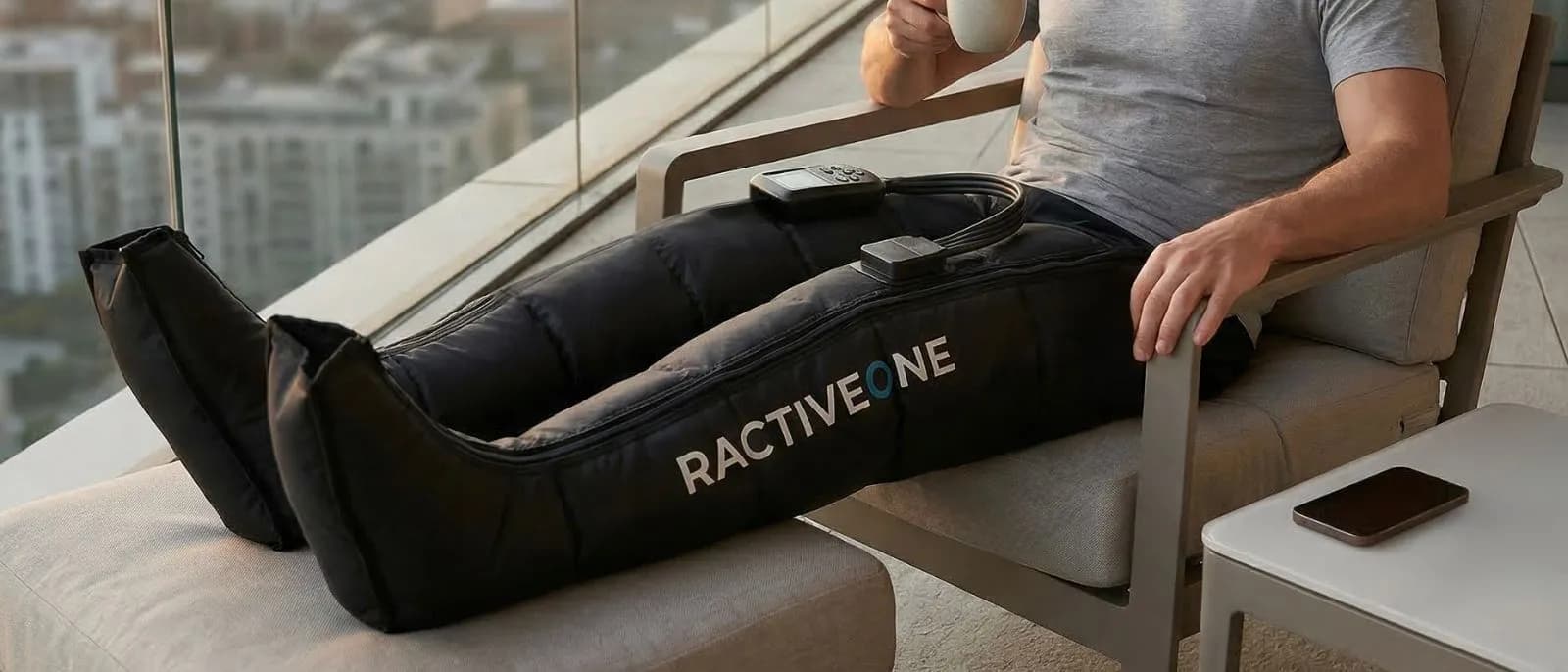
Compression boots are inflatable leg sleeves that use several air chambers to push a wave of pressure from your feet up towards your thighs. In effect they do the job your calf muscles do when you walk, while you lie on the sofa. Plenty of athletes swear by them; the research is more mixed. This guide explains what compression boots actually do, step by step: how the chambers work, what pressure figures mean, what the studies show and what they do not, how to use the boots well and when to leave them in the cupboard.

Recovery boots & compression

Altimate Run Cologne: Ractiveone as Recovery Partner

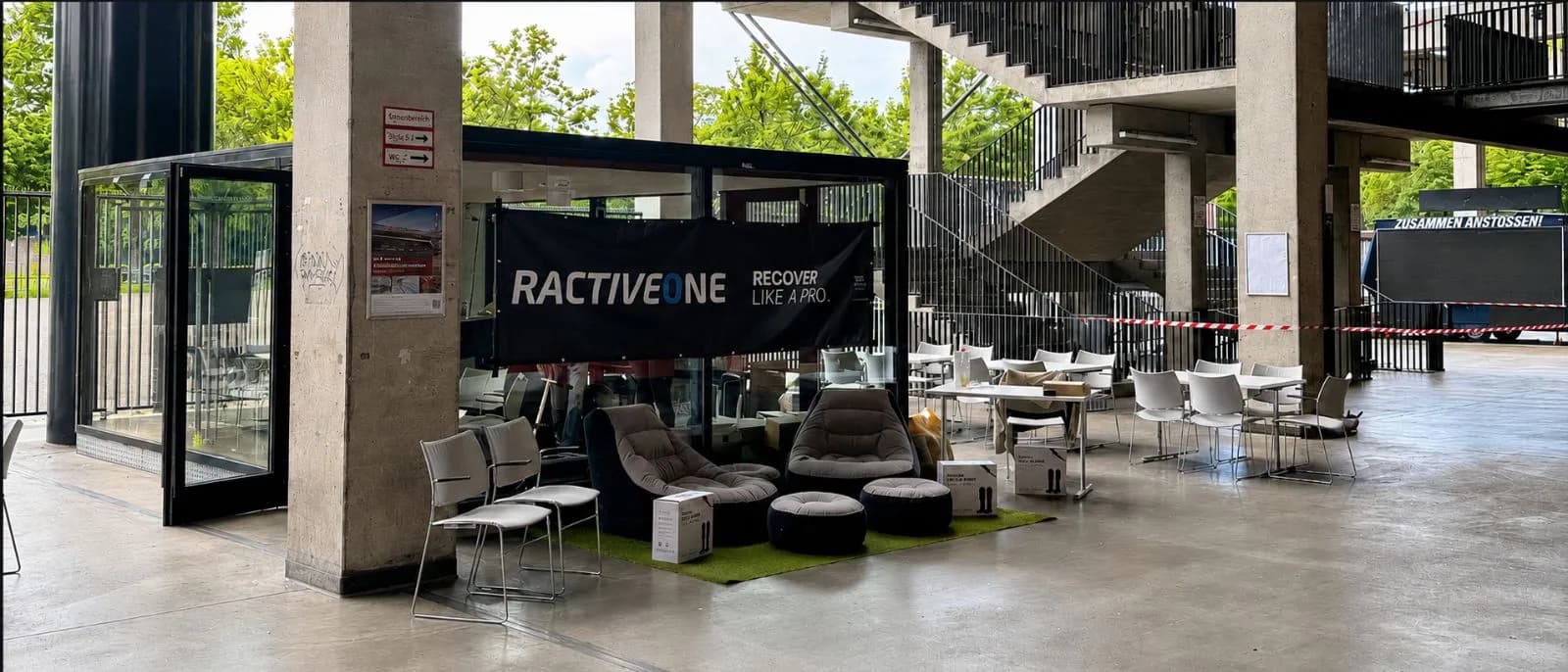
The Altimate Run Cologne made its debut on 16 May 2026 at the RheinEnergieSTADION, and Ractiveone was there as recovery partner. The format is a stair run through the stadium in blocks of 1,000 steps; after each block, runners decide for themselves whether to carry on. In our recovery area they could then try the Revive Active. This look back sticks to the facts: how the event works, what we did on site, and what stair runners can do for their legs in the days that follow.

Massage guns & trigger points

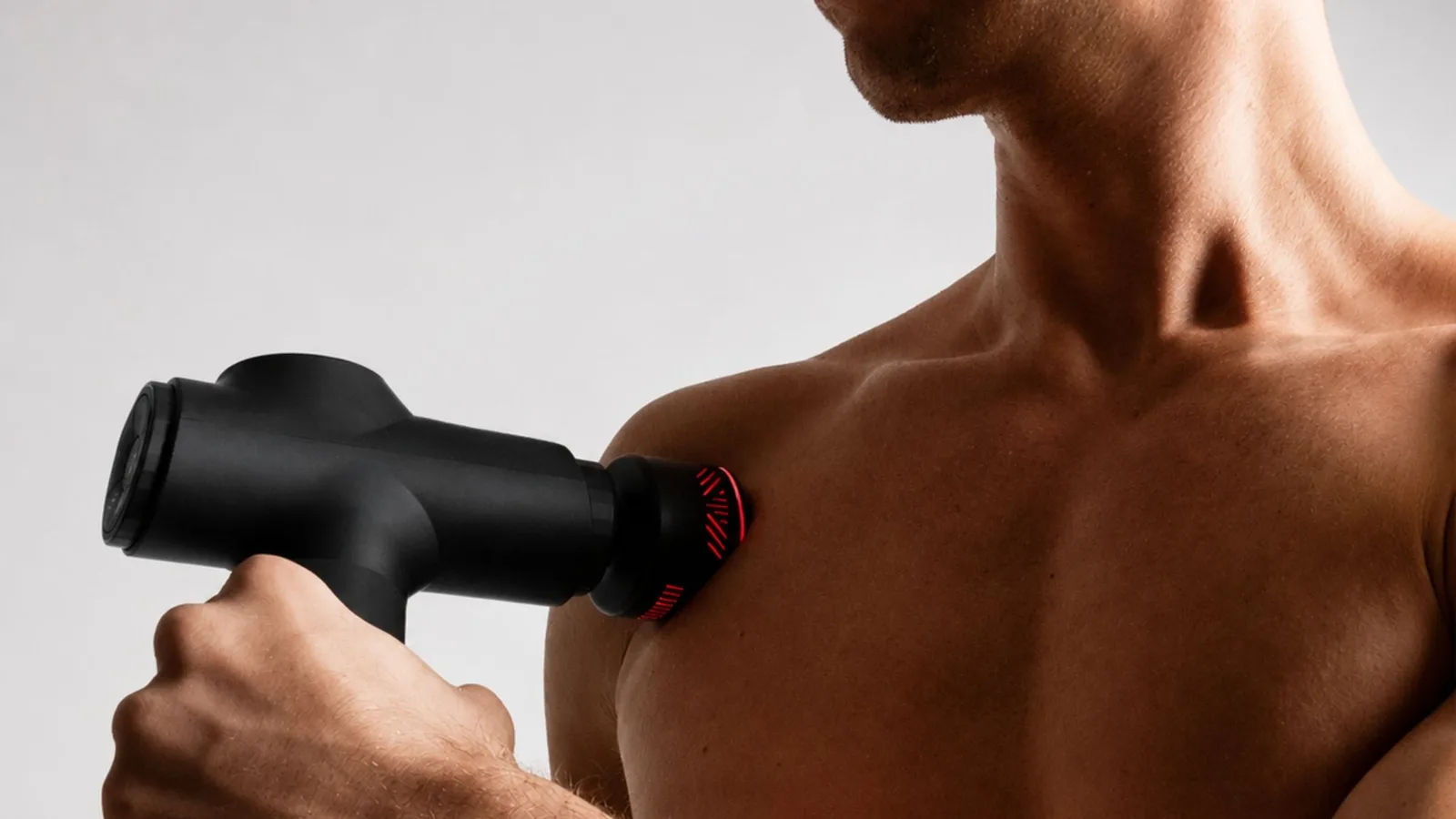
Massage gun for neck tension: how to use it safely after work

You can use a massage gun for neck tension, but only in one place: the upper trapezius, the muscle between the base of your neck and your shoulder. The front and sides of the neck, the cervical spine and the head are off limits at any speed. This is where most people go wrong, because after a long day at the desk the whole area feels tight. In this guide I show you exactly where to put the gun, a 5-minute routine for the end of the working day, when heat beats percussion and which warning signs you should never try to massage away.

Recovery boots & compression

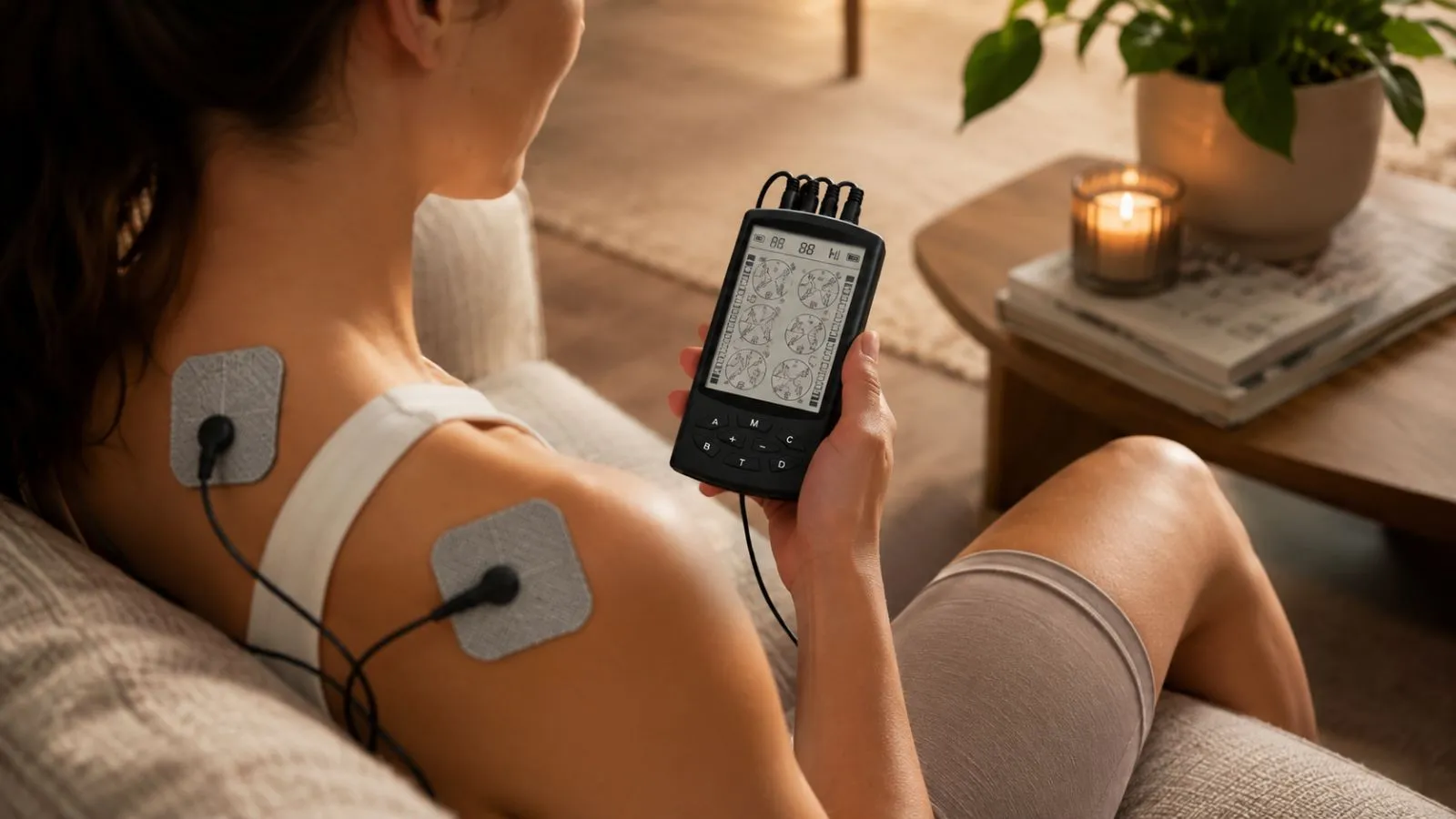
How to Use a TENS Unit: Pad Placement, Intensity, Safety

To use a TENS unit, stick the pads on clean skin at or near the painful area, switch the unit on and turn the intensity up slowly until you feel a strong but comfortable tingling. That is the short version. In this guide you get each step in detail, placement examples, the situations where TENS is off limits, and an honest look at the research. At the end I compare TENS with EMS and compression, because many people searching for a TENS unit, cyclists and runners among them, are really looking for help with tired legs after exercise.

Recovery boots & compression

Recovery boots vs massage: how each works and what studies show

Recovery boots vs massage is above all a question of how each one works: what happens in the muscle when air chambers build pressure, and what happens when a therapist works with their hands? Both are used after training, but they act in different ways. In this article I compare the mechanisms, summarise what studies show on soreness, blood flow and performance, and say openly where the data is thin. I deliberately leave out costs and everyday practicalities here; they have their own article.

Recovery boots & compression

Compression Boots vs Sleeves: Active vs Passive Compression

Compression boots vs sleeves: both rely on pressure, but in completely different ways. Socks, calf sleeves and tights press evenly and constantly, and you wear them while running, travelling or at work. Recovery boots work actively with a moving wave of pressure, but only while you lie down. So the real question is rarely either-or, it is when to use which. I show you what research says about each, which situation suits which, and how the athletes I coach combine both on a training day.

Recovery boots & compression

Benefits of Compression Boots: What the Research Really Shows

The benefits of compression boots sound clear-cut in the adverts: faster recovery, less soreness, better performance. The research is more nuanced. Well supported is higher blood flow while the boots are running and legs that feel less fatigued straight afterwards. For muscle soreness the results are mixed, and a performance gain the next day has not been shown. This article sorts every promised benefit by strength of evidence, names the studies behind it and is upfront about where the research is still thin.

Recovery boots & compression

What Are Compression Boots? Recovery Boots Explained Simply

Compression boots, also sold as recovery boots, are leg sleeves with air chambers that squeeze your legs in waves from the feet up to the thighs and then let go. Athletes use them after training, plenty of other people after long days on their feet. If you are new to them, you probably want three answers: what actually happens inside, what does it feel like, and does it do anything at all? This guide answers exactly that in plain English, with the handful of technical terms you need and an honest look at the limits.

Indoor air & humidifiers

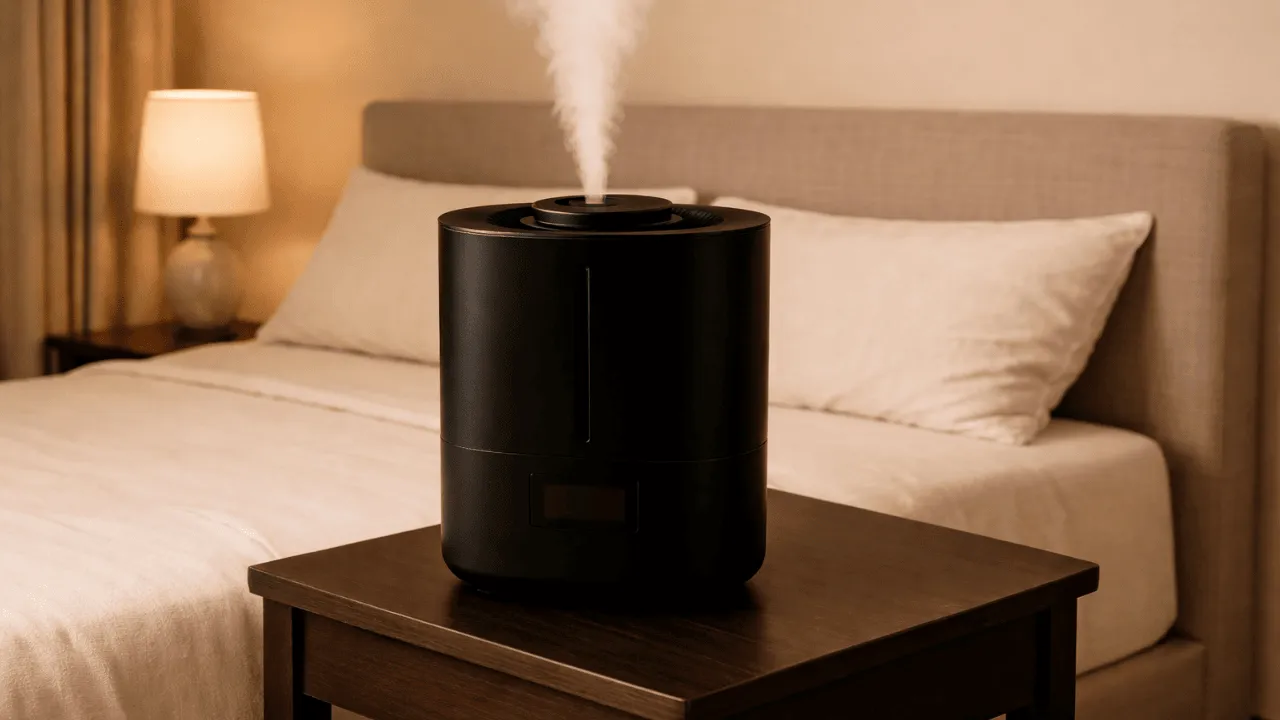
Humidifier in the Bedroom: Placement, Noise and Running It at Night

A humidifier in the bedroom is worth having when your hygrometer regularly drops below 40 % during the heating season. To help rather than disturb your sleep, three things matter: a spot one to two metres from the bed, a quiet setting and a humidistat that stops at 45 to 50 %. This article is about the practical side of the bedroom: placement, noise, overnight use, cool rooms and children's rooms. Which reading is ideal has its own article, which I link to below.

Recovery boots & compression

Tired Legs After Standing All Day: A Routine for Work

Tired legs after standing all day, or after eight hours at a desk, usually have the same cause: your calf muscles have hardly worked, so blood and fluid pool in your lower legs. The fix comes in two parts, small movement breaks during the shift and a short routine in the evening. This article is exactly that, an everyday plan for office workers, nurses, retail and hospitality staff and commuters. You get specific breaks for each type of job, an honest answer to the question "legs up or recovery boots?" and an evening routine that takes 20 minutes.

Indoor air & humidifiers

Dry Air at Home: Signs, Causes and What Actually Helps

Dry air at home shows up as dry eyes, a dry nose, chapped lips and tight skin, and most reliably as a hygrometer reading below 30 to 40 % while the heating is on. Many of the complaints we blame on dry air also have other causes, though: rooms that are too warm, screen work or dust. This article gives you a checklist of typical signs, the levels at which studies measure an effect, the causes in winter and an honest comparison of simple fixes and a humidifier.

Massage guns & trigger points

Tight calves after running? Massage gun tips for runners & footballers

Tight calves after running are almost always a sign of load: your calf muscles take a large share of your body weight with every stride, and after long runs, hills, intervals or 90 minutes of football they are simply tired. A massage gun can help loosen them if you use it properly, and for the calves that mainly means gently and at the right time. In this guide you get the causes, the red flags you should never try to massage away, a step-by-step calf routine with a massage gun and a plan that combines local work on the calves with recovery boots for the whole leg.

Indoor air & humidifiers

How to Use Essential Oils in a Humidifier: Drops, Timing, Safety

Using essential oils in a humidifier is simple, but most people put in far too much. The short version: check that your humidifier allows oil, start with 2 to 4 drops, run the scent for 30 to 60 minutes and then carry on with plain water. Leave the oil out in rooms with babies, cats, birds or anyone with asthma. This guide gives you exact amounts, a step-by-step routine, the limits set by health authorities and vets, and an honest look at what research says about scent and indoor air.

Indoor air & humidifiers

Best Humidifier UK: 7 Buying Criteria for Output, Noise and Tank

Finding the best humidifier is easier if you flip the usual order: choose the technology first, then the output for your room, then noise and tank size. Extras come last. Most bad buys happen the other way round: an aroma function or a nice design wins, and the unit ends up in a cupboard because it is too loud, too weak or too fiddly to clean. This buying guide gives you seven criteria with real numbers, an honest look at what a 2025 consumer test found about ultrasonic models, and a checklist to tick off.

Indoor air & humidifiers

Humidifier Tips for Beginners: 9 Mistakes and How to Avoid Them

These humidifier tips for beginners come down to three things: the reading, hygiene and ventilation. Almost every problem, from steamed-up windows to a musty smell or white dust on the furniture, traces back to the same nine mistakes. For each one you get the cause and a fix you can put in place tonight. The target values come from public health bodies and research rather than from manufacturers, and I will also tell you when a humidifier is the wrong answer, which in damp-prone British homes is more often than you might think.