Sore legs after skiing: recovery on your ski trip and after
Sore legs after skiing are part of almost every ski trip: on the second morning you can barely get down the chalet stairs, and your thighs are burning on the first run. That comes from the particular way skiing loads your leg muscles.
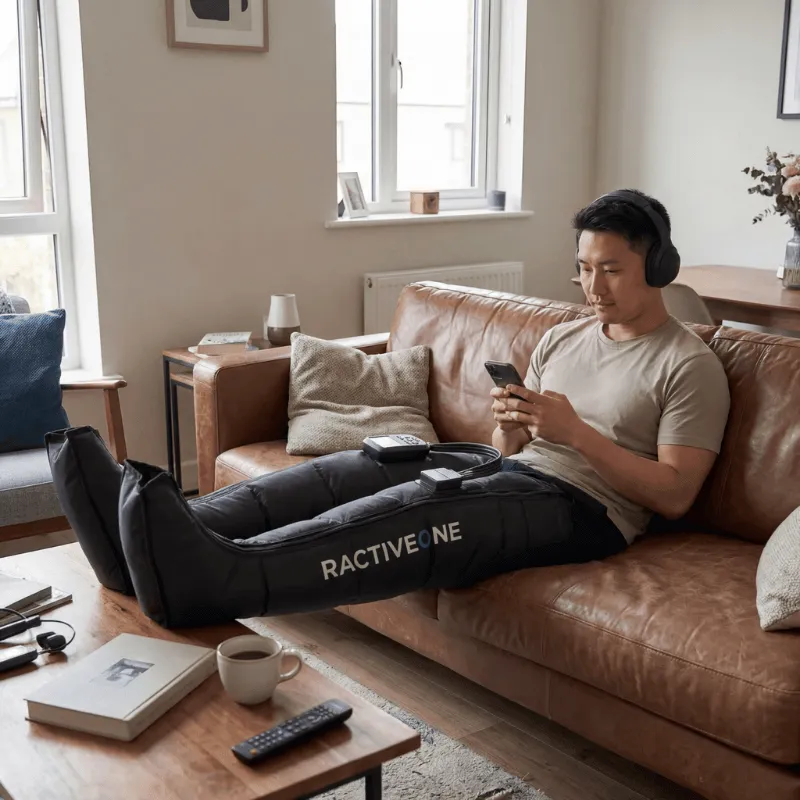
Here you will find out why your thighs suffer most, how to prepare in the weeks before, and what a daily plan on the trip looks like, with heat in the morning, cold for an irritated knee and compression boots in the evening. Plus what to do in the days after you get home.
A half-term week in the Alps means six days in a row of a load your legs barely know for the rest of the year. No wonder your thighs go on strike on the second morning. How compression boots work in principle is covered in our guide on how compression boots support recovery. This article is about the ski week itself, from training beforehand to the days after you get home.
Why does skiing make your legs so sore?
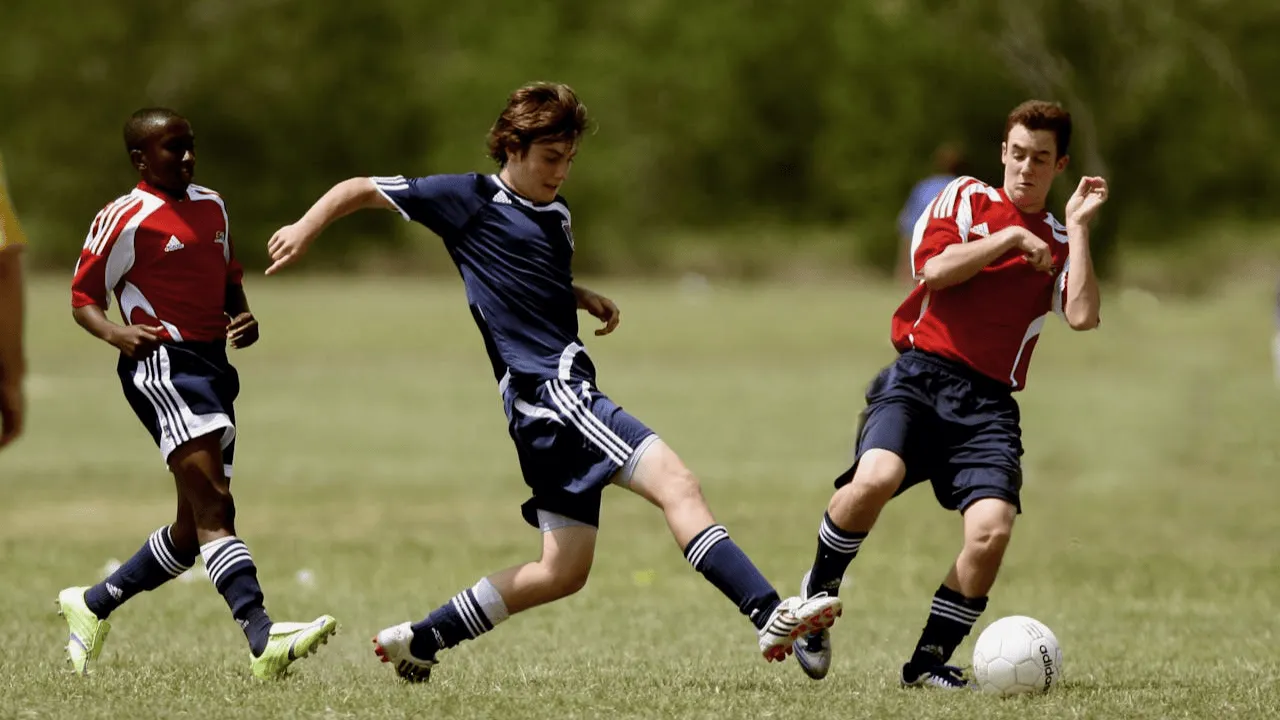
On skis, your thighs work almost non-stop. In every turn you hold a flexed position against the forces pushing you outwards and brake the movement. A 2010 review (Ferguson) describes alpine skiing as a series of forceful holding and braking contractions. Because nearly all muscle fibres are working at once, blood flow in the muscle is restricted, less oxygen gets in and metabolites build up. That is the burn you feel in your thighs after a long run.
Braking, eccentric work is also exactly the type of load that causes the most soreness. If you only ski once a year, it meets muscles that are not used to it. Add cold, altitude, long days, too little to drink and the odd long après-ski evening. More on muscle soreness in general and what helps is in 9 tips to reduce muscle soreness.
How do you prepare your legs for a ski trip?
The best protection against soreness on the slopes starts weeks earlier. Muscles that have been through an unfamiliar braking load once react with less damage and soreness the next time. This protective effect is well researched (McHugh 2003).
- Timeframe: four to six weeks before the trip, two sessions a week.
- Exercises: squats lowering slowly over three seconds, lunges, wall sits, lateral jumps, walking down stairs.
- Progression: go moderate in week one so you are not sore before you even leave, then add sets or longer holds.
- Endurance: cycling or running helps with long ski days but does not replace strength work. How to recover your legs after long rides is covered in cycling recovery after long rides. If you already combine running and strength work for a Hyrox in the autumn, see recovery between Hyrox training blocks.
What does a daily recovery plan on a ski trip look like?
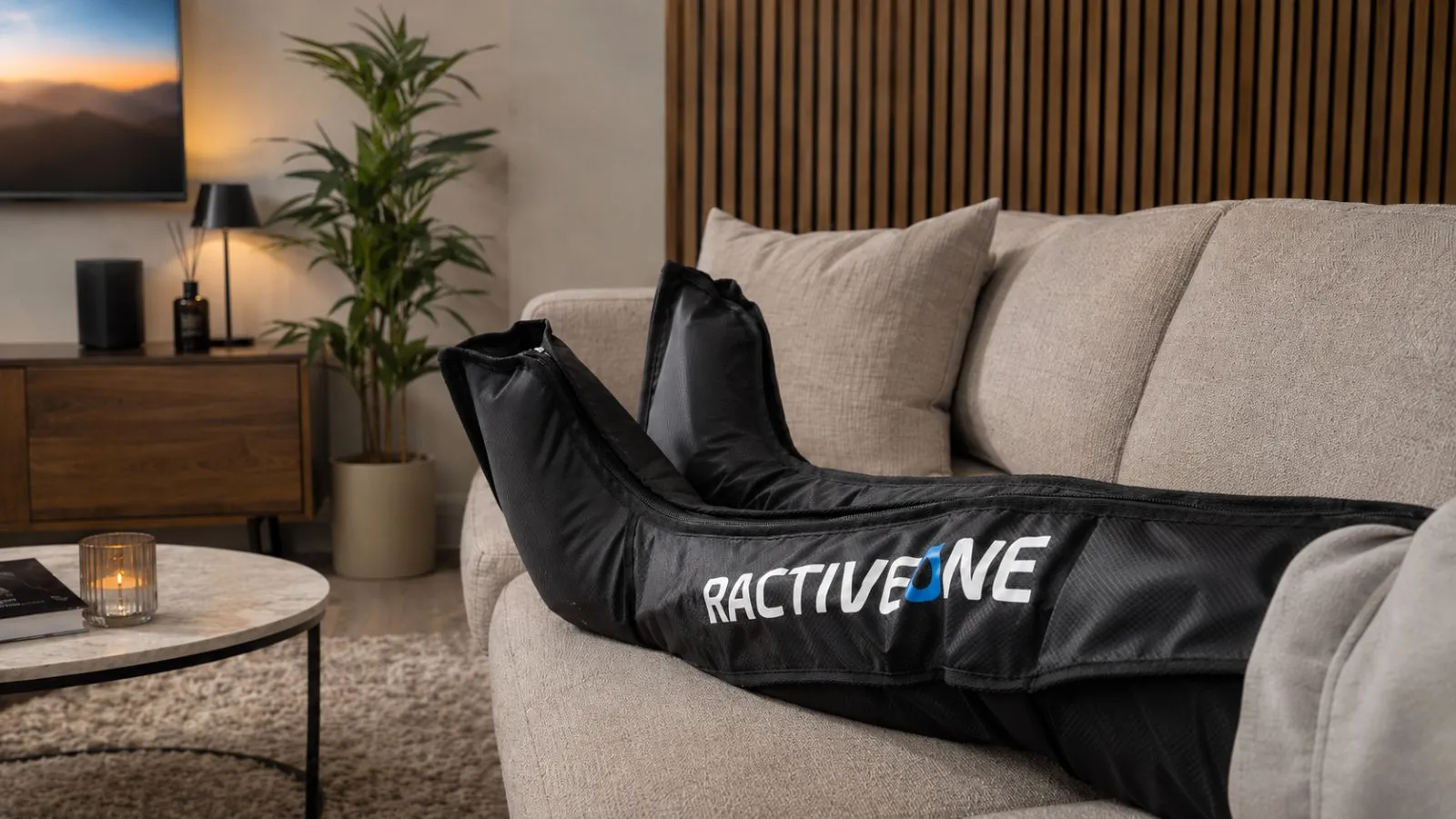
Pressure levels refer to the Revive Active recovery boots with 7 pressure levels between 30 and 240 mmHg. The controller runs on a 3200 mAh battery for up to 180 minutes, so you do not need a socket by the bed. Sizing goes by inside leg length, with S/M fitting up to 84 cm and L from 85 cm.
| When | What you do | How long |
|---|---|---|
| Morning | heat on stiff thighs or the lower back, then 5 minutes of mobility | 10–15 minutes |
| First runs | easy, wide pistes to warm up | 2–3 runs |
| Lunch | eat and drink properly, not just coffee | 30–60 minute break |
| After skiing | drink, eat, warm shower | straight away |
| Before dinner | compression boots, level 1–3, wave or sequential | 20–30 minutes |
| If a knee feels irritated | cold on the knee | 10–15 minutes |
For heat and cold, the Thermo Flex is handy: three heat levels up to 42 °C and three cold levels down to 5 °C, strapped to the thigh, knee or lower back, and cordless. Heat and cold can also be used on joints such as the knee. When each temperature fits is explained in heat or ice for sore muscles.
“On days two and three everyone wants to make up for lost time and skis until the last lift. But tired legs lose control. Better to stop at three, put your feet up and be fresh the next morning.”
Daniel Volpe, coachDo compression boots really help after skiing?
There are no studies on skiers specifically. What we do know: pneumatic compression increases muscle blood flow after exercise (Zuj et al. 2018). In a study of 72 ultramarathon runners (Hoffman et al. 2016), runners felt less fatigued straight after 20 minutes of compression, but there was no difference in soreness or performance over the following days. For your ski week, that means boots can ease the feeling of heavy legs in the evening and give you a proper rest break. Do not expect them to make the soreness disappear. General guidance on duration and pressure is in how to use compression boots: how long and how often.
How should you spread the load over a ski week?
| Day | Skiing | Recovery |
|---|---|---|
| Day 1 | half to full day, easy pistes | boots for 20 minutes in the evening, early night |
| Days 2–3 | shorter, more breaks, take soreness seriously | heat in the morning, boots for 20–30 minutes in the evening |
| Days 4–5 | a full day is usually possible again | boots in the evening, cold for an irritated knee |
| Day 6 | by feel, finish early before travelling home | boots before the long journey |
What should you eat and drink on a ski trip?
A ski day often lasts six hours or more, and your muscles mainly burn carbohydrate. If you hit the slopes on an empty stomach and only have a coffee at lunch, your legs will be tired by the afternoon, however well you trained beforehand.
- Breakfast: bread, muesli or porridge plus some protein such as yoghurt, eggs or cheese.
- On the go: a bar, a banana or nuts in your jacket pocket for the chairlift.
- Lunch: a proper meal with carbohydrate rather than just a bowl of soup.
- Drinking: in cold, dry mountain air you feel less thirsty but still lose fluid through breathing. Carry water or tea and drink at every break.
- Après-ski: alcohol worsens sleep. If you go, go early and drink water in between.
How long does muscle soreness from skiing last?
Soreness usually starts on the evening or night after your first ski day, peaks on day two and fades on its own after a few days. Because muscle protects itself after the first bout, it is often much milder by day four or five even though you keep skiing. If the pain gets worse from day to day instead, sits in one specific spot or comes with swelling, it is no longer normal soreness.
What helps in the days after the trip?
After the transfer, flight or long drive home, your legs often feel heavy and stiff. For the first two or three days:
- Gentle movement: a walk, an easy bike ride or a swim, no hard leg training.
- Boots in the evening: 20 to 30 minutes on level 2–3. What compression can and cannot do for lymph flow is covered in lymphatic drainage boots at home.
- Heat: 15 to 20 minutes for a stiff back or thighs.
- Sleep and food: what really counts is in our complete guide to recovery after training.
After a fall
Knee pain with swelling, a feeling of the knee giving way, a pop when you fell or pain that does not ease within a few days is not muscle soreness. No boots and no heat on a fresh injury; get it checked by a doctor.
Who is this routine (not) right for?
A good fit if you
- are planning a full ski week or several ski weekends this winter
- struggle with heavy soreness on day two every year
- want a simple evening routine in the chalet or hotel
- ski tour and have heavy legs after long climbs and descents
Not, or only after medical advice, if you
- have had a thrombosis or one is suspected, for example after a long journey
- have heart failure or circulation problems
- have fresh injuries, swelling or frostbite on your legs
- are pregnant or have reduced sensation (heat and cold)
If symptoms do not ease within a few days, always get them checked by a doctor. Which conditions rule out compression is set out in compression boot contraindications explained.
Conclusion
Sore legs after skiing come from the unfamiliar holding and braking work of your thighs, and you reduce them best with strength training in the weeks before, a sensible daily plan and recovery in the evening. Heat in the morning, cold for an irritated knee and compression boots before dinner suit anyone who wants an easier ski week. They will not take the soreness away completely, and injuries after a fall always need a doctor.
Frequently asked questions
Why do my legs hurt so much after skiing?
How do I get rid of sore legs after skiing?
Should I keep skiing with sore legs?
Heat or ice after skiing?
Can I take compression boots on a ski trip?
How do I prepare my legs for a ski trip?
Sources
- Ferguson, R. A. (2010). Limitations to performance during alpine skiing. Experimental Physiology, 95(3), 404–410.
- McHugh, M. P. (2003). Recent advances in the understanding of the repeated bout effect: the protective effect against muscle damage from a single bout of eccentric exercise. Scandinavian Journal of Medicine & Science in Sports, 13(2), 88–97.
- Zuj, K. A. et al. (2018). Enhanced muscle blood flow with intermittent pneumatic compression of the lower leg during plantar flexion exercise and recovery. Journal of Applied Physiology, 124(2), 302–311.
- Hoffman, M. D. et al. (2016). A Randomized Controlled Trial of Massage and Pneumatic Compression for Ultramarathon Recovery. Journal of Orthopaedic & Sports Physical Therapy, 46(5), 320–326.
- Malanga, G. A., Yan, N. & Stark, J. (2015). Mechanisms and efficacy of heat and cold therapies for musculoskeletal injury. Postgraduate Medicine, 127(1), 57–65.