Compression boots for gyms and physio clinics: setup and hygiene
Compression boots for a gym, physio clinic or recovery lounge work differently from a pair at home: lots of different legs, fixed bookings, cleaning between clients and the question of who shouldn't have a session at all. If you're buying for a business, you'll choose less on maximum pressure and more on adjustability, sizes, charging and how quickly the cuffs can be cleaned.
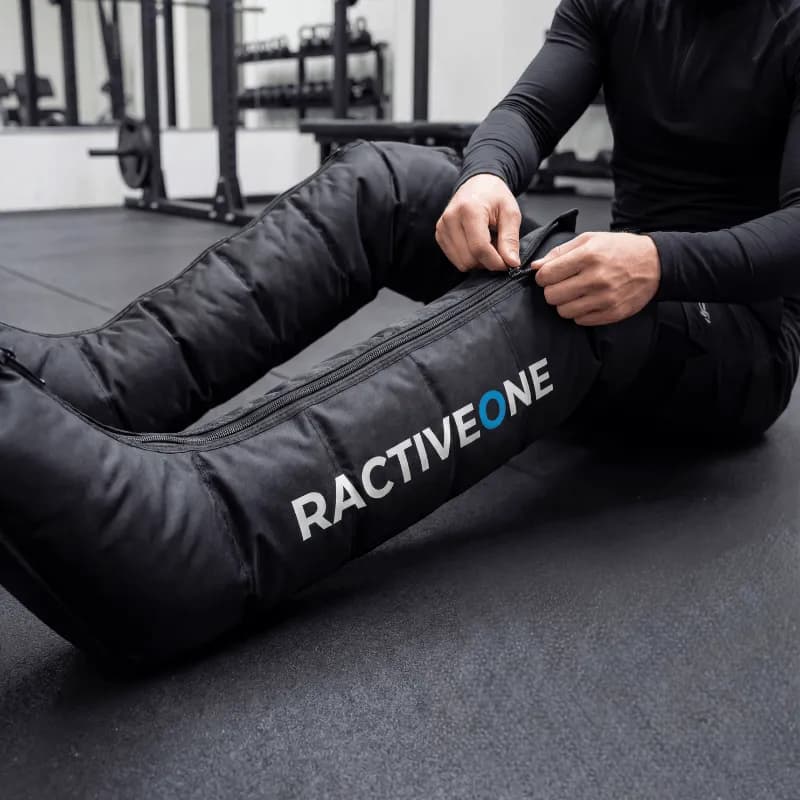
This article shows you what a 40-minute booking slot looks like, how to look after the cuffs between two clients, which screening questions belong before the first session, and how to promote the service without promising more than the research supports.
How compression boots work technically is explained in our main guide, how compression boots work for recovery. This article is for anyone who wants to use them with clients rather than at home: physio clinics, gyms and boutique studios, personal trainers and sports clubs.
What compression boots can and can't do in a business
Put honestly, they're a recovery and comfort service. A meta-analysis of 17 studies found trivial to small benefits of intermittent pneumatic compression for muscle function after exercise and, above all, less perceived muscle soreness. Most studies used 20 to 30 minutes at around 80 mmHg (Maia et al. 2024). The data show no big jumps in performance.
For your business that means: sell lighter-feeling legs and a quiet half hour after training. Don't sell a cure. The Revive Active Pro manual states explicitly that the device is not intended to diagnose or treat disease. In a physio clinic it sits alongside treatment, not in place of prescribed lymphatic drainage.
Which unit suits a clinic or gym?
At home, fixed programmes are enough. In a business, leg length, sensitivity and time slots change with every client, so other criteria matter:
| Criterion | Why it matters commercially | Revive Active Pro (manufacturer data) |
|---|---|---|
| Adjustable time | fit sessions around your booking system | 10 to 90 minutes in 5-minute steps |
| Chambers you can switch off | leave out sensitive areas such as the knee | 8 chambers, each can be deactivated |
| Pressure range | gentle start for beginners, more room for regulars | 80 to 260 mmHg |
| Default settings | every session starts safely low | 30 minutes, 80 mmHg, mode 1 |
| Power | no cables across the floor | 5200 mAh battery, about 4 hours to charge |
| Cleaning | quick turnaround between clients | wipe-clean, alcohol-based disinfectant allowed |
One point people miss: according to the manual, the Pro doesn't run while it's charging, and the manufacturer doesn't state a runtime per charge. Build charging windows into quiet hours or keep a second unit on standby. How the Pro differs from the standard 4-chamber model is covered in Fabian's Revive Active vs Pro comparison.
Sizes: why you need both S/M and L
The cuff has to match the leg, otherwise the top chamber digs into the groin or stops halfway up the thigh. Inside leg length is what counts: size S/M fits up to 84 cm, from 85 cm you need L. As a rough guide, S/M suits people of about 165 to 180 cm in height. With a mixed membership, one size won't be enough.
What does a session look like in a gym or clinic?
A 40-minute slot works well: 30 minutes of compression, 10 minutes for changeover and cleaning. In an 8-hour day that gives up to 12 sessions per pair, minus charging breaks.
- Before the first booking: short screening (see below), note inside leg length, assign a size.
- On arrival: client changes into long, thin leggings or trousers. The German clinical guideline on pneumatic compression recommends a textile layer under the cuff.
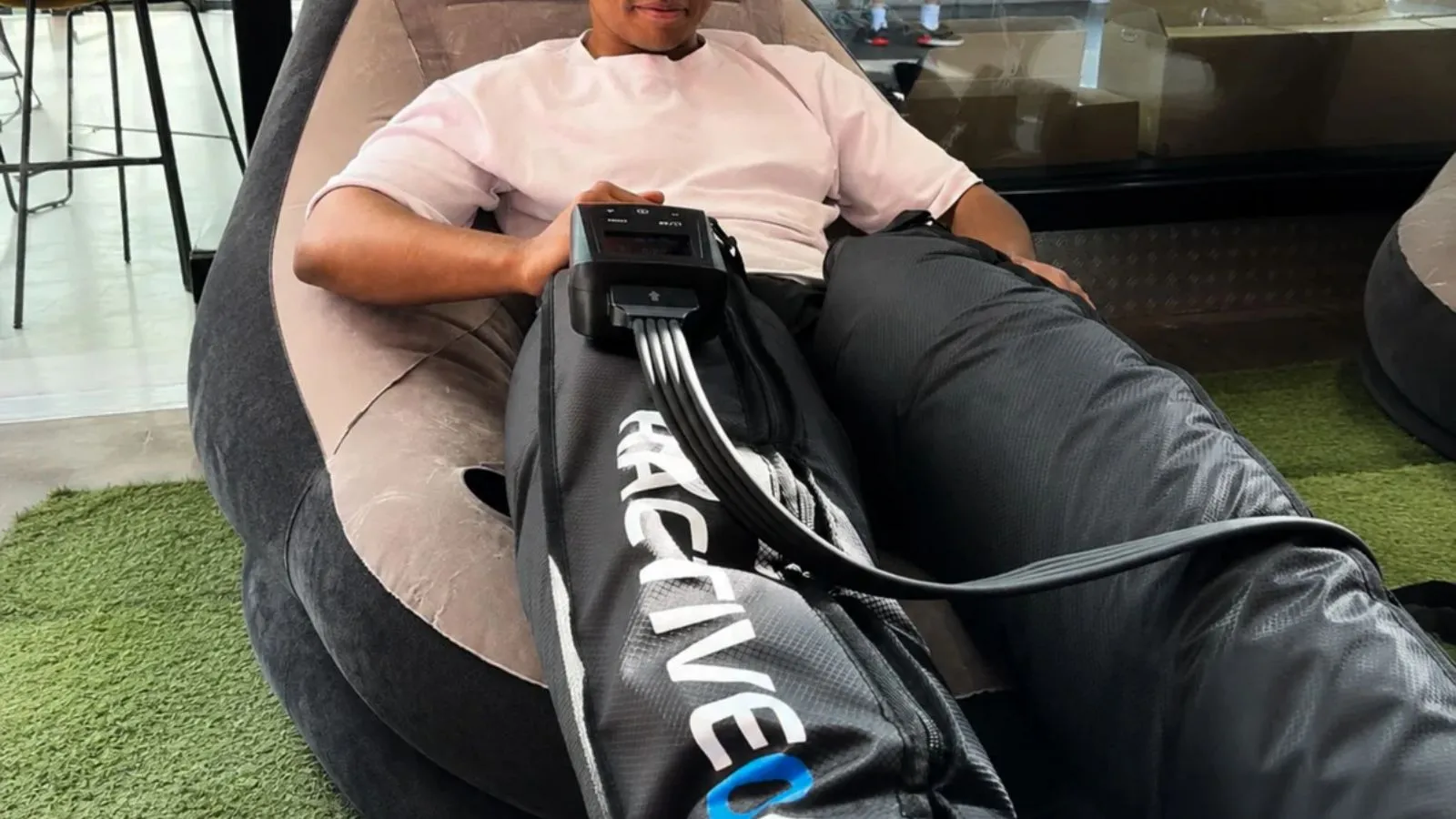
- Position: half-reclined on a couch or recliner, legs straight.
- Start: the unit starts at 80 mmHg. Check in after two or three cycles and raise it only if needed.
- During the session: no standing up or walking in the boots. The manual says the same.
- Finish: switch the unit off before opening the zips. Client sits for a moment, then stands up slowly.
- Changeover: clean the cuffs, reset the settings, next client.
Longer isn't better, by the way. Distance runners who had an hour of compression on five days after a hard run were no less sore than those without (Draper et al. 2020). 20 to 30 minutes is the sensible standard, as our guide on how long and how often to use compression boots explains in detail.
Hygiene between clients
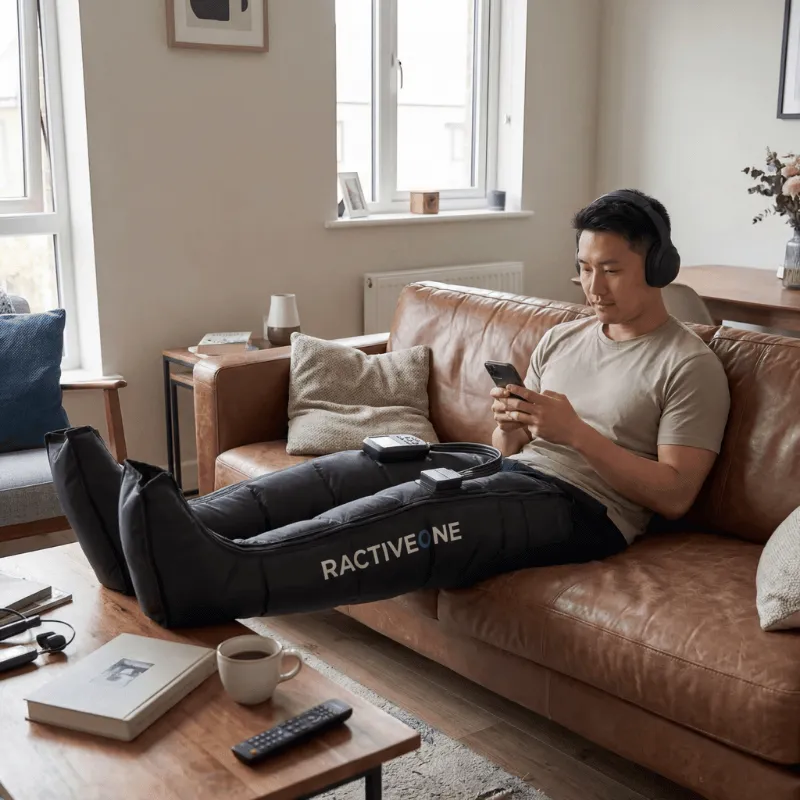
The cuffs touch clothing and sometimes skin. In a business, cleaning after every client is a must, not something you do when it looks dirty. The Revive Active Pro manual is clear:
- the fabric is not washable: no detergent, no soaking
- clean with an alcohol-based disinfectant or a clean, damp cloth, a spray bottle is fine
- wipe the pump only with a dry or slightly damp cloth, switched off
- keep the pump dry and on a flat surface
In practice: a spray bottle and disposable wipes next to every couch, cuffs wiped inside and out, a minute to air. Anyone who turns up in shorts gets a pair of leggings from your stock or a new booking. That protects both skin and kit.
Which clients should you screen out?
Screening before the first session
The Revive Active Pro manual lists these contraindications: acute skin inflammation, irregular heartbeat, cellulitis (erysipelas), deep vein inflammation, pulmonary oedema, acute venous thrombosis, unstable blood pressure and a pacemaker. The German clinical guideline adds, among others, decompensated heart failure and compartment syndrome (Schwahn-Schreiber et al. 2025). With open wounds, pregnancy, severe neuropathy, circulation problems or a fresh injury: the client should check with their doctor first.
A short yes/no questionnaire with a signature is enough for most gyms. The reasons behind each point are explained in who should not use compression boots. If a client reports tingling, numbness or pain during a session, lower the pressure straight away or stop.
How do you promote it honestly?
With wording that matches the evidence. Good: “30 minutes of compression after training for lighter legs”, “post-run recovery session”, “may support recovery”. Avoid: promises to relieve medical conditions, “detox”, “cures DOMS” or “replaces lymphatic drainage”. That's not only legally risky under advertising rules, it also disappoints clients who then don't feel a miracle.
“Boots work as a service when they're built into a fixed routine: session, cool-down, 30 minutes in the boots. As a single unit in the corner that anyone can use however they like, they mostly just sit there.”
Daniel Volpe, coachEnquiring for your business
Ractiveone runs a dedicated partner programme for gyms and clinics with terms for commercial use. Questions about quantities, size mix or setup are easiest through our contact form. Full specifications are on the page for the Revive Active Pro with 8 chambers.
Which businesses it suits, and which it doesn't
It suits gyms with running, Hyrox or strength groups, physio clinics with sporty clients as an add-on, football and rugby clubs after match days, and personal trainers with fixed recovery slots.
It doesn't suit businesses without a quiet corner or without someone who reliably handles screening and cleaning. Nor any offer that's meant to be marketed as medical treatment. Compression boots of this kind aren't made for that.
Conclusion
Compression boots fit well into a clinic or gym once the routine, hygiene and screening are in place: 30 minutes of compression, 10 minutes of changeover, both sizes and cleaning after every client. Businesses with active clients who build the boots into their training sessions benefit most. They're a recovery service with small, mostly felt effects and don't replace medically prescribed treatment.
Frequently asked questions
What compression boots are best for a gym?
How do you clean compression boots between clients?
How many sessions can one pair of compression boots do per day?
Can physiotherapists use compression boots as lymphatic drainage treatment?
Who shouldn't use compression boots?
What should clients wear in compression boots?
Sources
- Maia, F. et al. (2024). Effects of lower-limb intermittent pneumatic compression on sports recovery: A systematic review and meta-analysis. Biology of Sport, 41(4), 263–275. – Most common protocols 20–30 minutes at about 80 mmHg, small effects
- Schwahn-Schreiber, C. et al. (2025). S1 guideline Intermittent pneumatic compression (IPK, AIK). AWMF register no. 037/007 (German).
- Draper, S. N. et al. (2020). Effects of Intermittent Pneumatic Compression on Delayed Onset Muscle Soreness (DOMS) in Long Distance Runners. International Journal of Exercise Science, 13(2), 75–86.
- Ractiveone: Revive Active Pro user manual (manufacturer information on operation, cleaning and contraindications).
- Ractiveone: Revive Active Pro product page (manufacturer information), as of 15 October 2026.