Heat for a stiff neck: infrared, heat pad or massage?
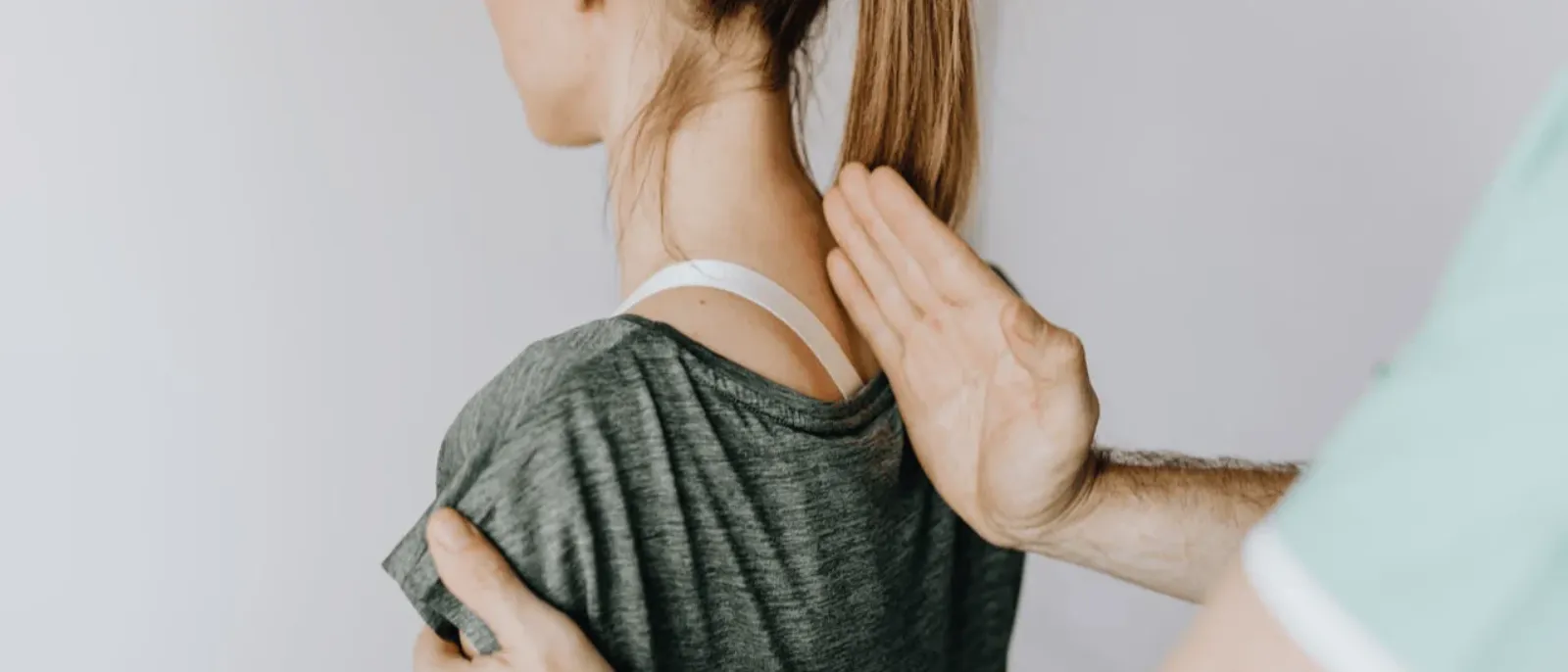
Heat for a stiff neck is the remedy almost everyone reaches for first, and with good reason: it feels good, costs little and carries few risks. The real question is which heat. Hot water bottle, electric heat pad, infrared lamp, a device with infrared warmth, or a massage instead?

I compare the options by depth, practicality and evidence, give you a 20-minute routine followed by gentle movement, and tell you plainly where the research is thin. By the end you will also know when a stiff neck is not a job for a hot water bottle.
Whether heat or ice is the better choice in general is covered in our explainer heat or ice for sore muscles. This article deals with one very common case: the stiff, tight neck after a long day at a desk, a night in an awkward position or a session with lots of overhead work. As a coach I hear the question almost daily, and my answer nearly always starts with heat.
01. Does heat help a stiff neck?
Yes, in the short term and especially for that stiff feeling. Heat increases blood flow, makes tissue more extensible and dulls pain, as a 2015 review (Malanga et al.) sums up. The evidence specific to the neck is thin, though.
The most direct trial comes from an emergency department (Garra et al. 2010): 60 patients with acute neck or back strain were given ibuprofen and then 30 minutes of either a heat pad or a cold pack. Both groups felt slightly better, with no difference between warm and cold. Three quarters or more said they would use the same method again. For the lower back, a Cochrane review (French et al. 2006) found a small short-term benefit from heat wraps, especially when combined with exercise. That is the logic I recommend for the neck too.
02. Hot water bottle, heat pad, infrared or massage? Compared
| Option | How the heat feels | Day to day | Neck evidence |
|---|---|---|---|
| Hot water bottle, wheat bag | surface warmth, cools after 15–20 minutes | cheap, but no control | studied as a heat pack, small short-term effect |
| Electric heat pad | even, adjustable temperature | usually corded, lies flat | as for heat packs |
| Infrared lamp or device with infrared heat | often felt as deeper | lamp: mind distance and eyes; device: targeted | one small study: less stiffness, pain as placebo |
| Cordless heat/cold device with strap | steady settings, cold also possible | hands-free, portable | no dedicated studies, same principle as heat packs |
| Massage (hands, massage gun) | warmth from friction and blood flow | hands: appointment; gun: trapezius only | Cochrane 2024: little difference from placebo |
In practice the differences are smaller than the marketing suggests. What matters is using the heat regularly and for long enough, then moving your neck. Which option makes that easiest depends on your day.
03. Is infrared worth it for neck tension?
Infrared heat does not just warm the air or the skin surface; it is absorbed by the skin, which is why many people feel it as deeper. Solid neck-specific data are scarce. A small double-blind study from 2014 (Lai et al.) gave 48 patients with chronic neck pain either a neck band with far-infrared ceramic or a placebo band for one week. Pain fell in both groups with no difference between them. Only trapezius stiffness dropped more in the infrared group.
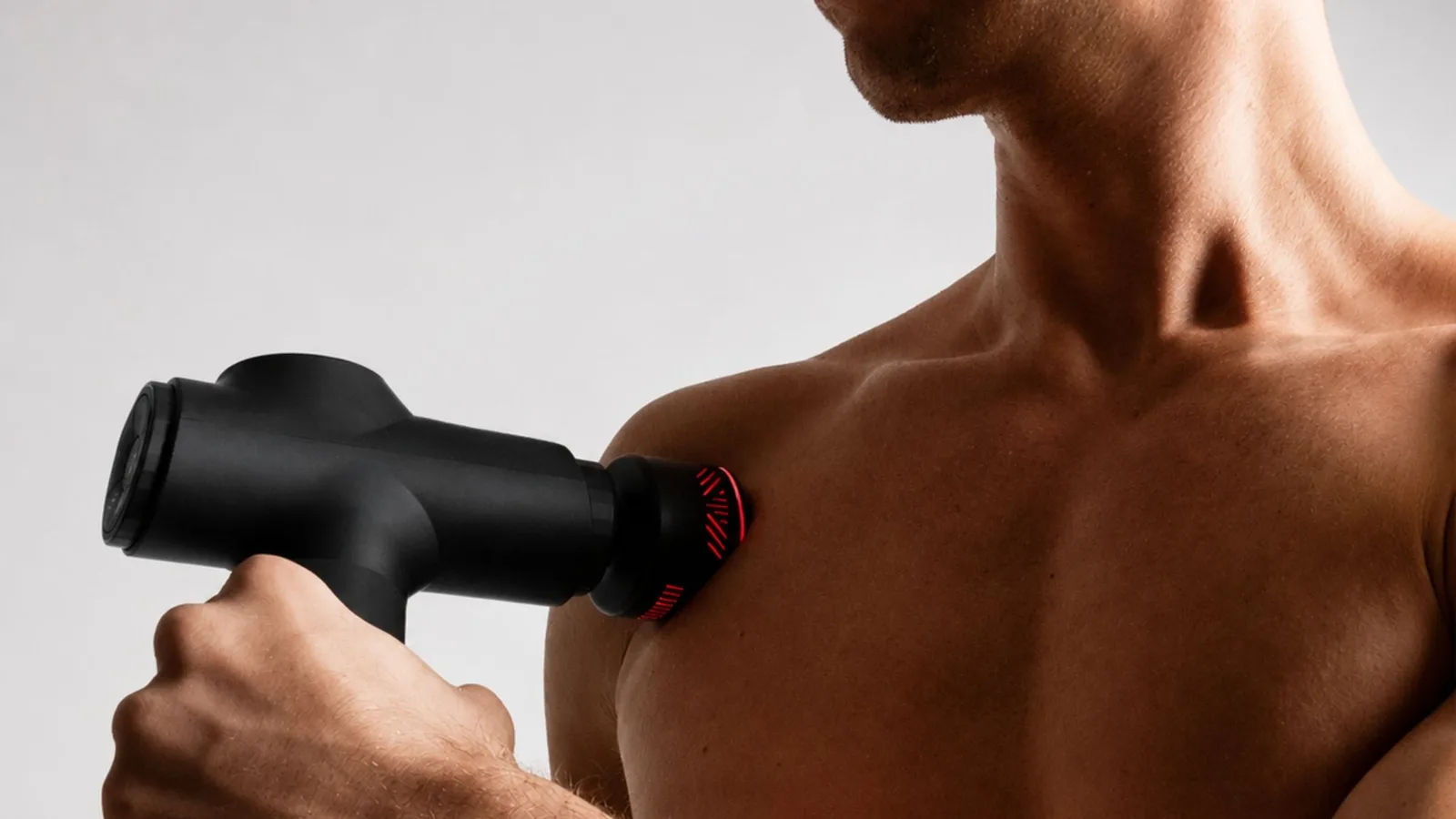
My take: infrared is a pleasant form of heat, not a miracle. With a lamp, keep the distance in the instructions and do not look into it. A device like the Vibra Grip puts infrared heat on the trapezius in three settings (40, 45 and 50 °C) without you sitting in front of a lamp.
04. What about massage or vibration on the neck?
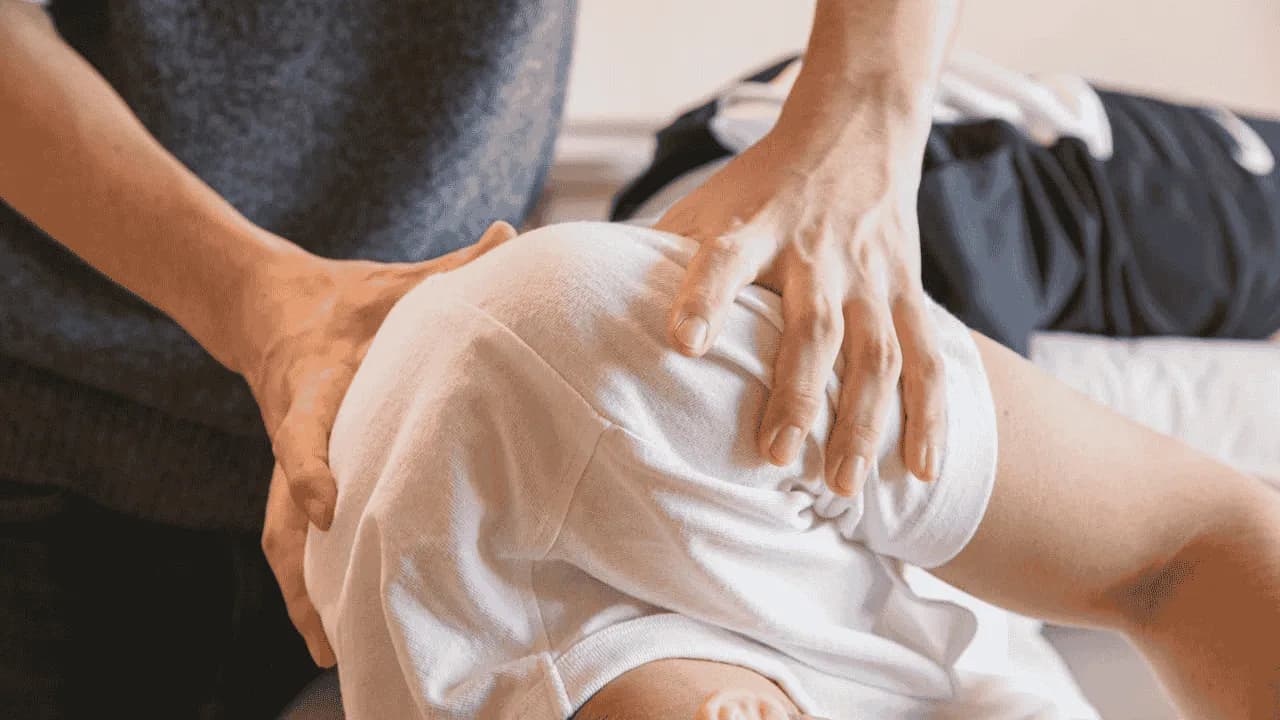
Massage feels good, but the evidence is sobering. A 2024 Cochrane review (Gross et al.) of 33 trials with almost 2,000 participants concluded that, for ongoing neck pain, massage probably makes little or no difference to pain and function compared with a placebo treatment. The evidence is weak, and well-dosed trials are missing.
If you still want to use a massage gun, use it only on the upper trapezius, on the lowest speed, and never on the front or sides of the neck. Our guide to massage guns for neck tension shows how. With vibration devices the rule is stricter: the Vibra Grip's vibration belongs on muscles such as the shoulder, calf or back, never on the neck, spine, joints or head. On the neck you use only the heat or cooling setting, without vibration. What vibration does in a muscle is explained in vibration massage benefits and how to.
Remember
On the neck: heat yes, cooling yes, vibration no. Massage gun percussion only on the upper trapezius between neck and shoulder, never on the neck itself.
05. How do you heat your neck properly? Five steps
- Get comfortable. Sit back supported or lie on your back with a small pillow under your head. The neck should be relaxed, not hanging forward.
- Start low. Lowest setting or comfortably warm, never hot. Put a tea towel between skin and a hot water bottle or wheat bag. With the Thermo Flex start at 38 °C, with the Vibra Grip at 40 °C.
- 15 to 20 minutes. Longer adds nothing. The NHS suggests a hot water bottle for 20 minutes, two to three times a day.
- Check your skin. Mild redness is normal. Burning, blisters or blotchy skin means stop straight away.
- Move afterwards. 2 to 3 minutes: slow shoulder rolls, gently draw your chin back, tilt your head to each side and hold for 20 seconds. No pain, no jerking.
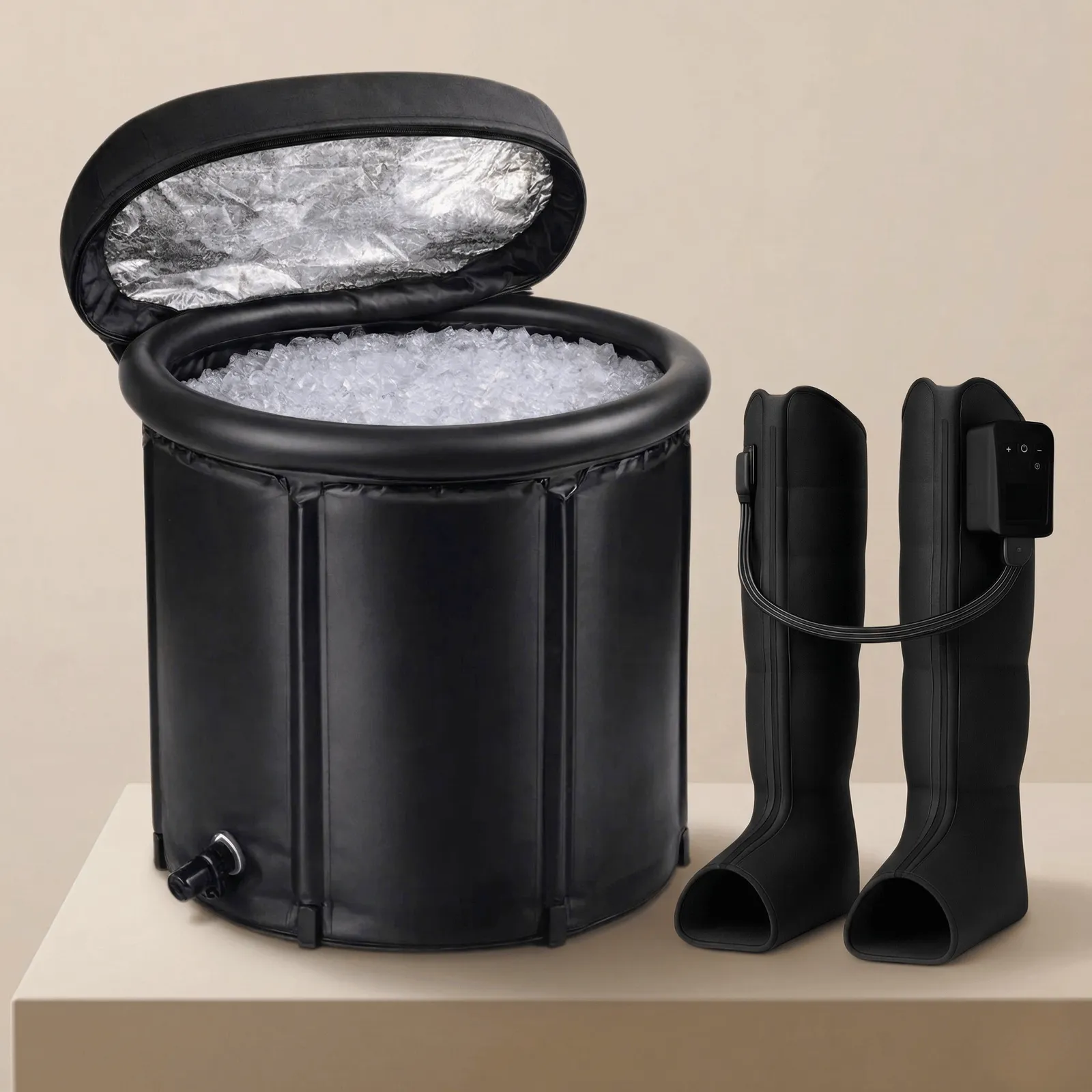
A cordless device makes this hands-free. The Thermo Flex with three heat settings (38, 40 and 42 °C) can be strapped to the shoulder so you can read or work in the meantime. According to the manufacturer, its heat and cold settings can also be used on the neck.

06. Heat or ice on the neck?
For tension without injury I reach for heat, because it relaxes the muscle and feels nicer. The Garra trial shows, however, that cold can work similarly well for an acute strain. If you prefer cold, go ahead: briefly and wrapped; the NHS suggests a bag of frozen peas in a tea towel for 5 minutes, three times a day. If you want to alternate, our contrast therapy guide has the intervals.
"Most necks I see are not injured, they have just been stuck in one position for too long. Heat brings relief, but the real work is the movement afterwards and the breaks during the day. Twenty minutes of heat change nothing if you then spend another eight hours with your head pushed towards the screen."
07. What helps a stiff neck day to day?
Heat treats the symptom. To stop your neck tightening up every evening, three things help: screen at eye level, stand up and move your shoulders every 30 to 45 minutes, and two or three sessions a week of upper back and shoulder strengthening, such as band rows. Over 40, it pays to plan strength work and recovery even more deliberately; how heat, cold and compression fit in is covered in recovery over 40. If you game late into the evening, there is a full neck and sleep routine in our gaming routine for neck and sleep.

Vibra Grip trigger massager
Infrared heat in 3 settings and cooling in 3 settings, usable on the neck without vibration. The 10 vibration levels are for shoulders, back and calves.
08. Who is heat on the neck for, and who should skip it?
A good fit for anyone with tension from desk work, commuting, gaming or overhead training, with no accident and no symptoms spreading into the arm. Here heat is a cheap, low-risk tool, ideally paired with movement.
Not a fit for fresh injuries such as after a fall or whiplash, for inflammation or fever, on irritated or broken skin, or if you cannot feel heat well, for example with diabetes and nerve damage. See a GP if things have not improved after a few weeks, if pins and needles, numbness or weakness in the arm appear, or after an accident. Fever with a stiff neck or a sudden, severe headache needs urgent help: call 999 or NHS 111.
Conclusion
Heat eases a stiff neck in the short term, whether from a hot water bottle, a pad, infrared or a cordless device, and works best as 15 to 20 minutes of warmth followed by movement. People with tension from long hours sitting and at screens benefit most. The evidence for infrared and massage on the neck is thin, vibration does not belong on the neck, and persistent or spreading symptoms need a medical check.
Frequently asked questions
Does heat help a stiff neck?
How long should you put heat on your neck?
Is heat or ice better for a stiff neck?
Does infrared help neck tension?
Can I use the Vibra Grip on my neck?
Can I fall asleep with a heat pad on my neck?
When should I see a GP about neck pain?
Sources
- Garra, G. et al. (2010). Heat or cold packs for neck and back strain: a randomized controlled trial of efficacy. Academic Emergency Medicine, 17(5), 484–489.
- Lai, C.-H. et al. (2014). Effects of far-infrared irradiation on myofascial neck pain: a randomized, double-blind, placebo-controlled pilot study. Journal of Alternative and Complementary Medicine, 20(2), 123–129.
- Gross, A. R. et al. (2024). Massage for neck pain. Cochrane Database of Systematic Reviews, 2, CD004871. – 33 trials, 1,994 participants
- French, S. D. et al. (2006). Superficial heat or cold for low back pain. Cochrane Database of Systematic Reviews, CD004750.
- Malanga, G. A., Yan, N., Stark, J. (2015). Mechanisms and efficacy of heat and cold therapies for musculoskeletal injury. Postgraduate Medicine, 127(1), 57–65.
- NHS: Neck pain (self-care and when to see a GP), accessed 15 Oct 2026.
- Ractiveone: Thermo Flex (heat 38/40/42 °C) and Vibra Grip (infrared 40/45/50 °C, vibration on muscles only), specifications and safety notes, as of 15 Oct 2026.