Padel recovery: forearm, shoulder and calves after a match
Padel recovery is about more than your legs. After two hours on court, the forearm and shoulder of your hitting arm feel tight and your calves are hard from all the sprints and lunges. Play three or four times a week and sooner or later your elbow lets you know.
This guide gives you a routine for the evening after a match, the next day and a tournament weekend, using heat, cold and vibration. It also shows you where self-care stops and when an elbow needs to be seen by a professional.
Padel looks relaxed from the outside: a small court, short distances, plenty of laughs. For your body it is still hard work. You grip a compact, stringless racket, hit volley after volley, play overheads and push off in every direction from a standing start. Whether heat or ice helps more after a match is explained in our core article heat or ice for sore muscles. This one is about the forearm, shoulder and calves after padel.
Where does padel put the most strain on your body?
The best overview so far is a 2023 systematic review (Dahmen et al.) of eight studies. In every study that looked at individual body sites, the elbow was the most commonly affected, followed by the knee, shoulder and lower back. Tendon and muscle injuries were the most frequent types. The authors point out that the number of studies is small.
| Area | Why it suffers | What you feel afterwards |
|---|---|---|
| Forearm and elbow | firm grip, lots of volleys, wrist stabilising the bandeja and vibora | tightness on the outside of the forearm, tired grip |
| Shoulder | overheads such as the bandeja, vibora and smash | stiff back of the shoulder, heavy arm |
| Calves | short sprints, split steps, stopping on sand-filled artificial grass | hard calves, soreness the next day |
| Thighs and glutes | low stance, lateral lunges | soreness after long matches |
Not a diagnosis
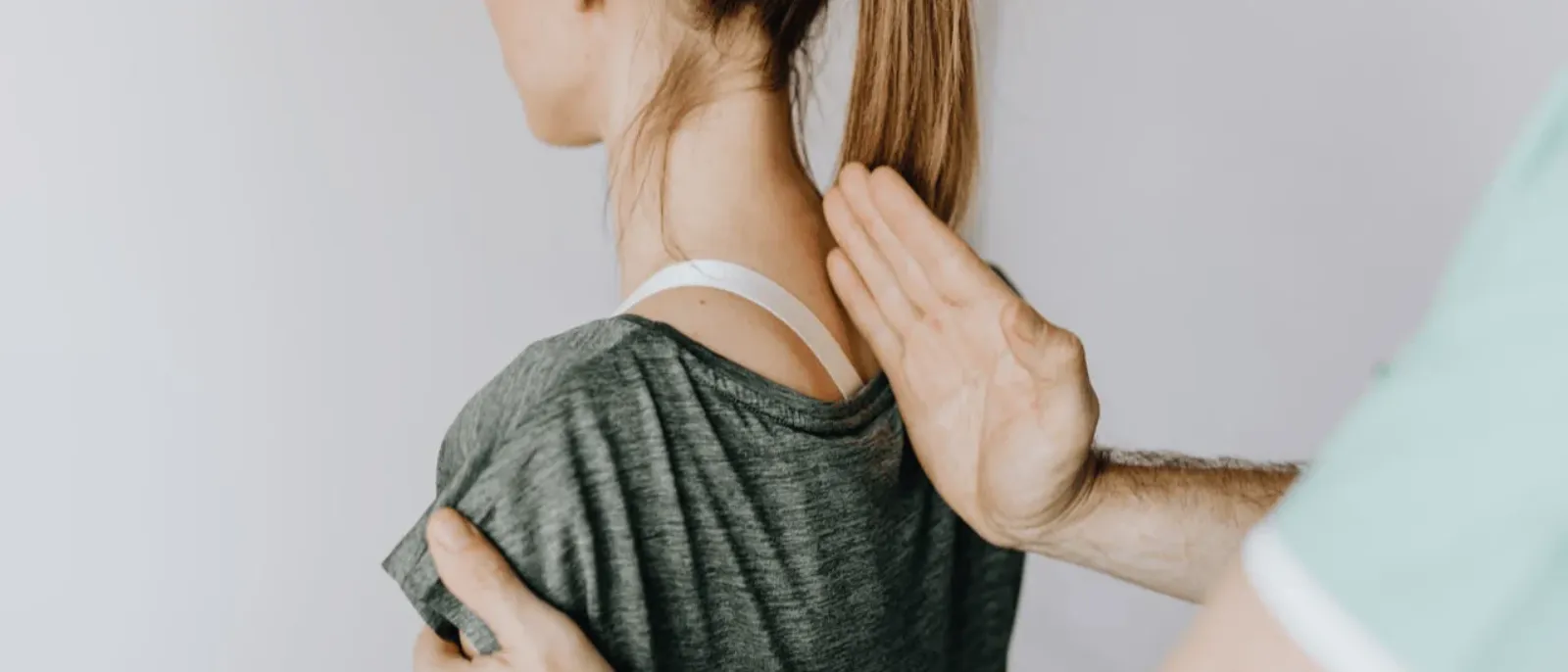
A tight forearm after playing is normal. Pain on the outside of the elbow that lasts more than one or two weeks, gets worse when you grip or lift a mug, or wakes you at night should be checked by a doctor or physiotherapist. No device replaces that assessment.
Heat or ice after padel?
A 2015 review (Malanga et al.) sums it up: cold reduces pain, blood flow and swelling, while heat relieves pain and increases blood flow and the elasticity of connective tissue. For muscle soreness, heat wraps gave more pain relief than cold in the studies. The authors are also open that most recommendations rest more on experience than on strong trials. For everyday padel, that gives you a simple rule:
- Cold: straight after a match or between matches, if your elbow, forearm or shoulder feels irritated or warm. 10 to 15 minutes.
- Heat: the next day for stiff muscles, and before your next game as part of your warm-up. 15 to 20 minutes.
- Alternating: if you want to combine both, the routine is in our guide to hot and cold contrast therapy.
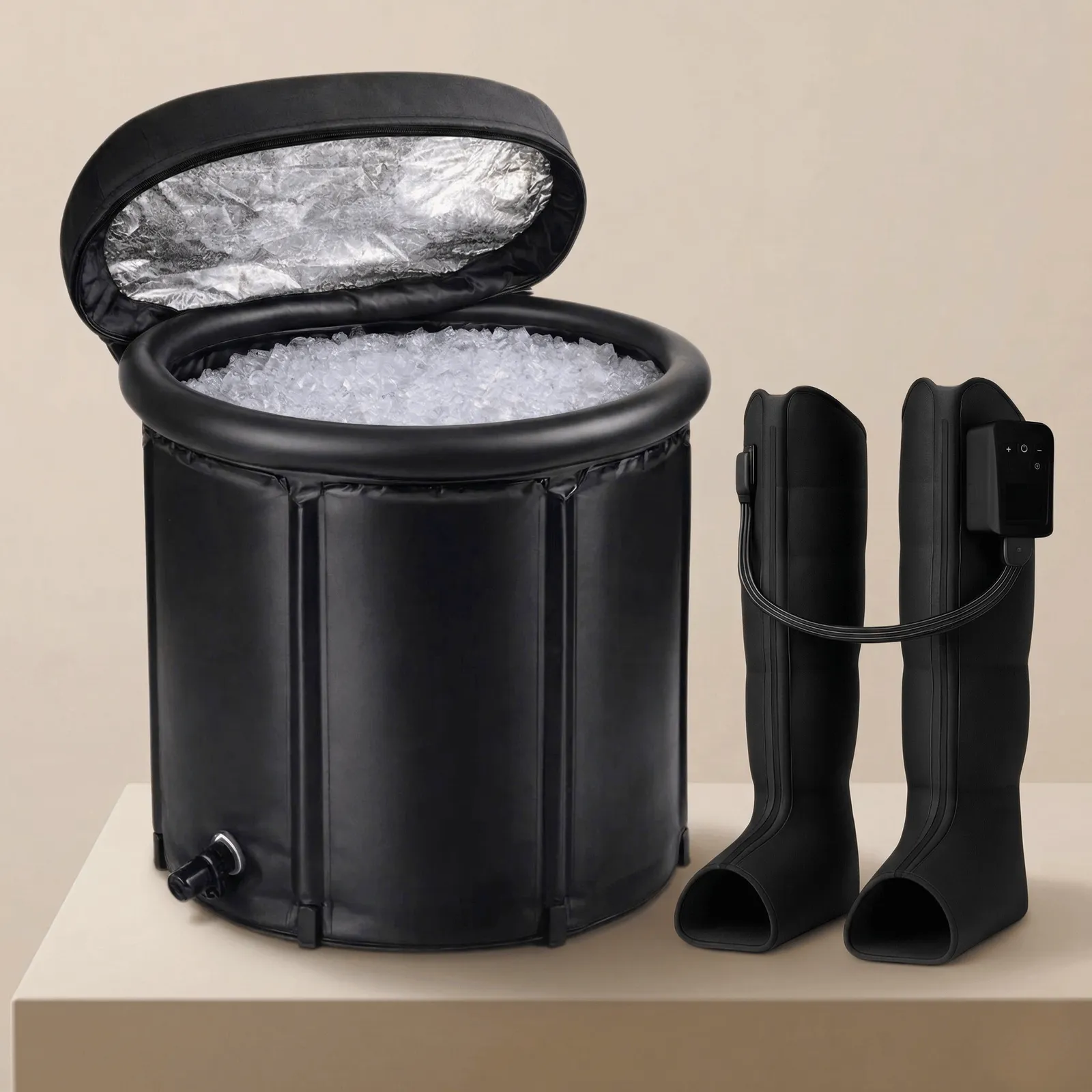
The Thermo Flex is handy for the court: three cold levels (15, 10 and 5 °C) and three heat levels (38, 40 and 42 °C), held on the forearm, elbow, knee or shoulder with a strap, and battery powered. Heat and cold can also be applied directly to joints such as the elbow and knee, and to the neck.
How do you use vibration on the forearm and shoulder?
A 2019 meta-analysis (Lu et al.) pooled 10 randomised trials with 258 participants. With vibration, muscle soreness was lower 24, 48 and 72 hours after unaccustomed exercise. The trials were small and used lab exercises rather than padel. As an add-on for tight forearm and shoulder muscles, vibration is still a sensible option. What local vibration actually does in the muscle is covered in our vibration massage benefits and how-to.
The Vibra Grip has 10 vibration levels, a fine nub for single spots, plus infrared heat (40, 45 and 50 °C) and cooling (15, 10 and 5 °C). Here is how to use it:
- Forearm: rest your arm on a table, palm down. Find the belly of the extensor muscles, the soft area two to three finger-widths below the elbow towards the wrist. Work there for 1 to 2 minutes on a low to medium level, slowly up and down. Stay off the bony point on the outside of the elbow.
- Flexor side: palm up, give the muscles on the inside of the forearm another minute. Your grip uses both sides.
- Shoulder: the rear and side deltoid and the muscles over the shoulder blade, 1 to 2 minutes each. Not on the shoulder joint itself, not on the spine and not on the neck.
- Add heat or cooling: cooling suits the evening after a match, heat the next day.
If you already own a massage gun, it works too. The Revive Pulse Pro has 5 intensity levels, 5 attachments and a heating and cooling head. For the forearm and shoulder, use the lowest level and the round ball or flat head for 30 to 60 seconds per muscle. The same rule applies: muscle only, never bone, joints or the neck. Which of the two devices suits you better is covered in trigger point massager vs massage gun.
Vibration on muscle only
Vibration belongs on muscle tissue only. Joints, bony points such as the outer elbow, the spine and the neck are off limits. Heat and cold, on the other hand, can be used on joints and on the neck.
What helps your calves after padel?
Calves and thighs take a lot of short, explosive loading in padel. In the evening after a long match or tournament, two approaches help:
- Compression boots: 20 minutes on a low to medium level when both legs feel heavy. The Revive Active has 7 pressure levels and 5 modes.
- Massage gun: 1 to 2 minutes per calf for single tight spots. How long and with which attachment is covered in how to use a massage gun, and calves in particular in loosening tight calves after sport.
A sudden, sharp pain in the calf mid-match, as if someone had kicked you, is not muscle soreness. Stop straight away and get it checked by a doctor.
Protocol after a match
| When | Forearm and shoulder | Legs |
|---|---|---|
| Straight after the match | shake out the forearm, gently stretch the wrist | walk for 5 minutes, drink |
| Evening | cold for 10–15 minutes if irritated, then vibration 1–2 minutes per muscle | compression boots for 20 minutes or massage gun on the calves |
| Next day | heat for 15–20 minutes on stiff muscles, light mobility | easy walk or bike ride |
| Before the next match | heat for 10 minutes, then warm up with shoulder circles and easy shots | running drills, short sprints |
How do you recover over a tournament weekend?
At tournaments you often play two to four matches in a day. Between matches, less is more:
- Eat and drink: something with carbohydrate, water, and some salt in the heat.
- Cool briefly: 10 minutes of cold on the forearm or shoulder if irritated.
- Stay loose: walk, stretch lightly. No deep massage between matches.
- In the evening: the full routine with cold, vibration and legs. The basics of sleep and food are in our complete guide to recovery after training.
“Most padel players I work with look after their legs and forget the forearm, yet that is the first thing to complain. Two minutes on the forearm muscles in the evening and an honest look at how often you play do more than any brace.”
Daniel Volpe, coachWhat can you do between matches to stay ahead?
- Build up slowly: jumping from one to four sessions a week overloads tendons, which adapt more slowly than muscles.
- Relax your grip: hold the racket loosely between shots and only squeeze at contact.
- Strengthen forearm and shoulder: light dumbbell or band work for the wrist extensors and rotator cuff, two to three times a week. How to plan recovery around several strength sessions is explained in our recovery protocol for strength training.
- Warm up: 10 minutes of mobility, shoulder circles and easy shots before you play for points.
Who is this routine (not) right for?
A good fit if you
- play twice a week or more
- have a tight forearm, stiff shoulder or hard calves after matches
- play tournaments with several matches a day
- want a short routine for home or your kit bag
Not, or only after medical advice, if you
- have ongoing pain in the elbow, shoulder or knee
- have a fresh injury, swelling or bruising
- have reduced sensation, circulation problems or diabetes with neuropathy (heat and cold)
- take blood thinners, are pregnant or have an implant in the area (vibration)
If symptoms do not ease within a few days, always get them checked by a doctor.
Conclusion
After padel, cold in the evening, heat the next day and vibration on the forearm and shoulder muscles help your hitting arm and calves feel loose again sooner. The routine suits anyone who plays regularly or competes in tournaments and wants something short. The studies behind it are small and not done in padel, and persistent elbow pain belongs with a professional rather than in self-treatment.
Frequently asked questions
Why does my forearm hurt after padel?
What helps padel elbow?
Heat or ice after padel?
Can I use vibration on my elbow?
How do I recover between matches on tournament day?
What helps tight calves after padel?
Sources
- Dahmen, J. et al. (2023). Incidence, prevalence and nature of injuries in padel: a systematic review. BMJ Open Sport & Exercise Medicine, 9(2), e001607.
- Lu, X. et al. (2019). Does vibration benefit delayed-onset muscle soreness?: a meta-analysis and systematic review. Journal of International Medical Research, 47(1), 3–18.
- Malanga, G. A., Yan, N. & Stark, J. (2015). Mechanisms and efficacy of heat and cold therapies for musculoskeletal injury. Postgraduate Medicine, 127(1), 57–65.
- Ractiveone: Vibra Grip technical data (product page, as of 15 Oct 2026)
- Ractiveone: Thermo Flex technical data (product page, as of 15 Oct 2026)