Bodybuilding Recovery: Fabian's Protocol Between Training Splits
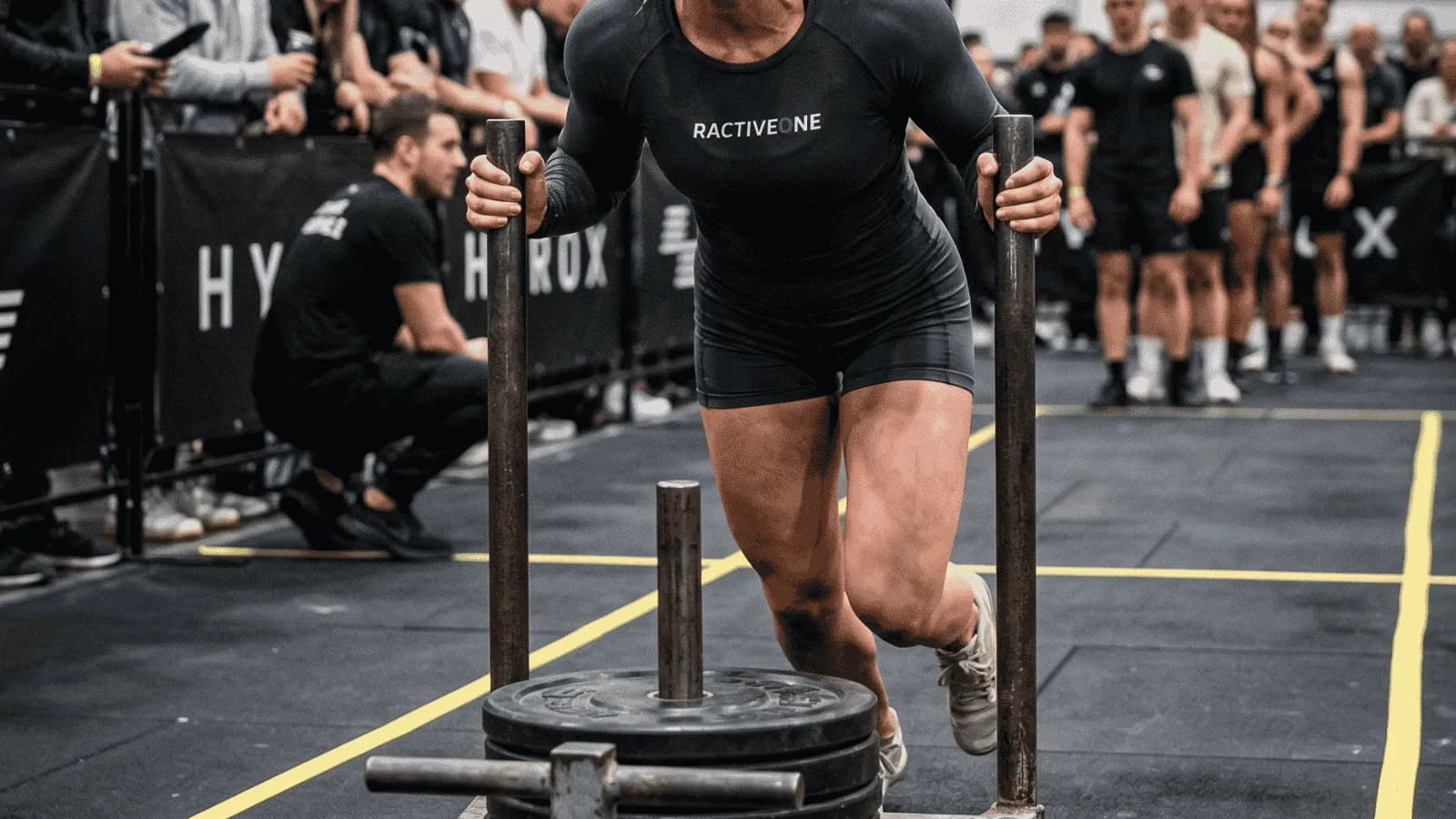
Bodybuilding recovery decides whether your split moves you forward or just leaves you tired. You hit each muscle group more than once a week, usually with plenty of volume, and during contest prep you do it on fewer calories. A rest day on the calendar is not a plan.

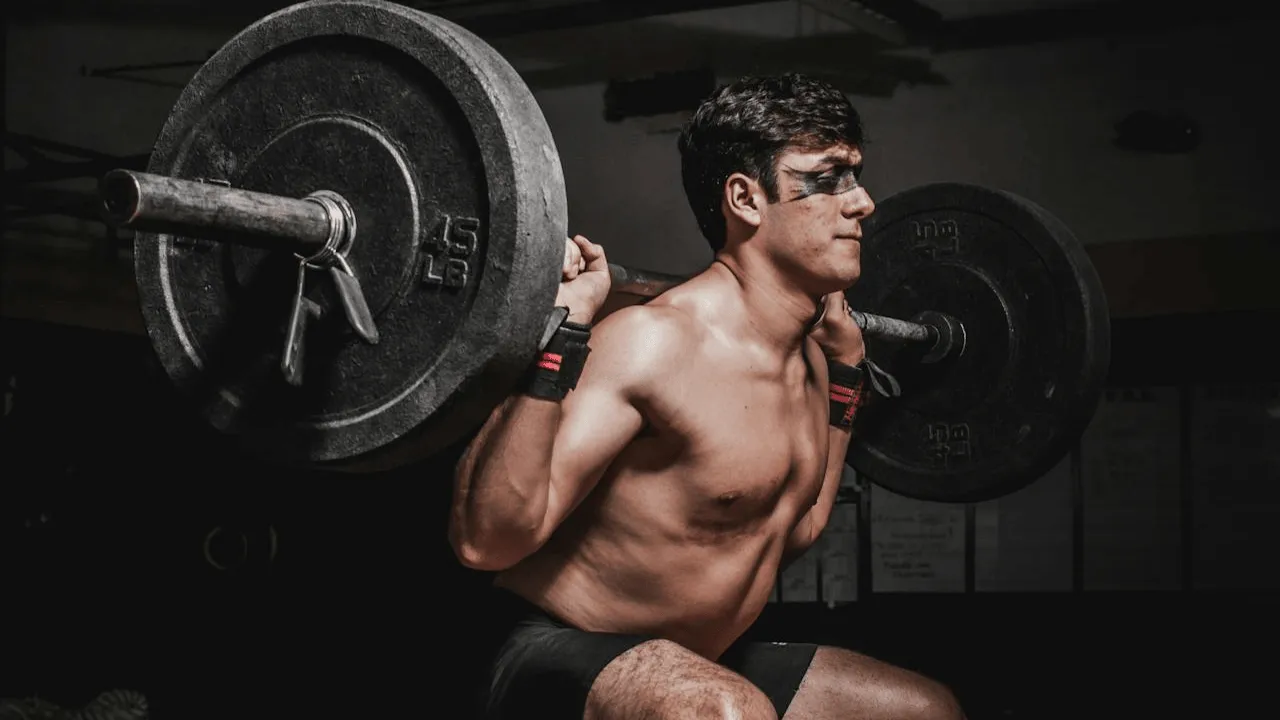
In this article I show you how I plan rest per muscle group as a coach, how sleep and protein fit in, and when compression boots, a massage gun, heat or cold are worth using between sessions. Every recommendation is backed by research, and where the evidence is thin, I tell you.
In bodybuilding, muscle is not built in the gym but in the days after it. That sounds like a poster slogan, yet it decides how you build your split: if your chest is still beaten up on Thursday, the second chest session of the week does very little. The basics of sleep, nutrition and recovery tools are covered in our complete guide to muscle recovery. This article is about what is different when you lift: high volume, several sessions per muscle and the diet phase before a show.
How long does a muscle need to recover after lifting?
After a hard session with plenty of sets close to failure, the fibres are stressed, glycogen is low and your nervous system is tired. How long recovery takes depends on volume, exercise choice and training age. New exercises and lots of eccentric work, such as Romanian deadlifts or deep walking lunges, stretch it out considerably.
A meta-analysis by Schoenfeld and colleagues (2016) helps with planning. With weekly volume matched, training a muscle group on two days a week produced more growth than training it on one. Whether three days is better still, the authors could not say. In practice, most athletes I coach land on 48 to 72 hours between two hard sessions for the same muscle. Small muscles such as calves and abs cope with shorter gaps; hamstrings after heavy deadlifts often need longer.
Which training split suits recovery?
Your split is your most important recovery tool, ahead of any device. It sets how much rest each muscle group gets.
| Split | Days per week | Sessions per muscle | Rest per muscle |
|---|---|---|---|
| Full body | 3 | 3 | about 48 hours, low volume per session |
| Upper/lower | 4 | 2 | about 72 hours |
| Push/pull/legs | 6 | 2 | about 72 hours |
| Classic bro split | 5 | 1 | a full week, lots of volume in one go |
Watch for overlap. Shoulders and triceps work on push day, biceps and rear delts on pull day. Put heavy deadlifts the day after squats and you hammer your lower back and hamstrings twice in a row. Clashes like that cost more recovery than any missed session in the boots.
What matters more than any recovery tool?
- Sleep: An expert consensus (Walsh et al. 2021) names less than 7 hours a night as a risk factor for athletes and advises taking individual needs seriously. During my contest prep, a fixed bedtime is non-negotiable.
- Protein: The ISSN (Jäger et al. 2017) recommends 1.4–2.0 g per kg body weight a day, split into servings of 20–40 g every 3–4 hours.
- Energy: Eat too little for too long and you recover more slowly. You feel that most during a cut.
If performance and sleep get worse for several days in a row, another session in the boots will not fix it. You need less volume or a lighter week.
Which tools help between sessions?
Recovery tools are optional in bodybuilding. They can ease soreness and make a muscle feel better, so your next session runs more smoothly. A meta-analysis on sports massage (Davis et al. 2020) found small gains in flexibility and soreness, but no better strength. Expect the same from devices.
Compression boots after leg day
After heavy squats and leg press, quads and glutes often stay stiff for two days. A small study of 20 trained men (Haun et al. 2017) had them squat heavy on three consecutive days, followed by pneumatic compression or a sham treatment. The compression group kept their pressure-pain threshold and flexibility better; maximal strength did not differ. A boots manufacturer part-funded the study, so read it with that in mind.
My approach: 20–30 minutes on a low to medium setting on the evening after leg day, and another session the next day if needed. The Revive Active compression boots have 7 pressure levels, 5 modes and session times of 15, 30 or 45 minutes. Exact figures for time, pressure and frequency are in how to use compression boots. Whether 4 chambers are enough for your leg days or the 8 chambers of the Pro make more sense is covered in Revive Active vs Revive Active Pro.
Massage gun for single muscles
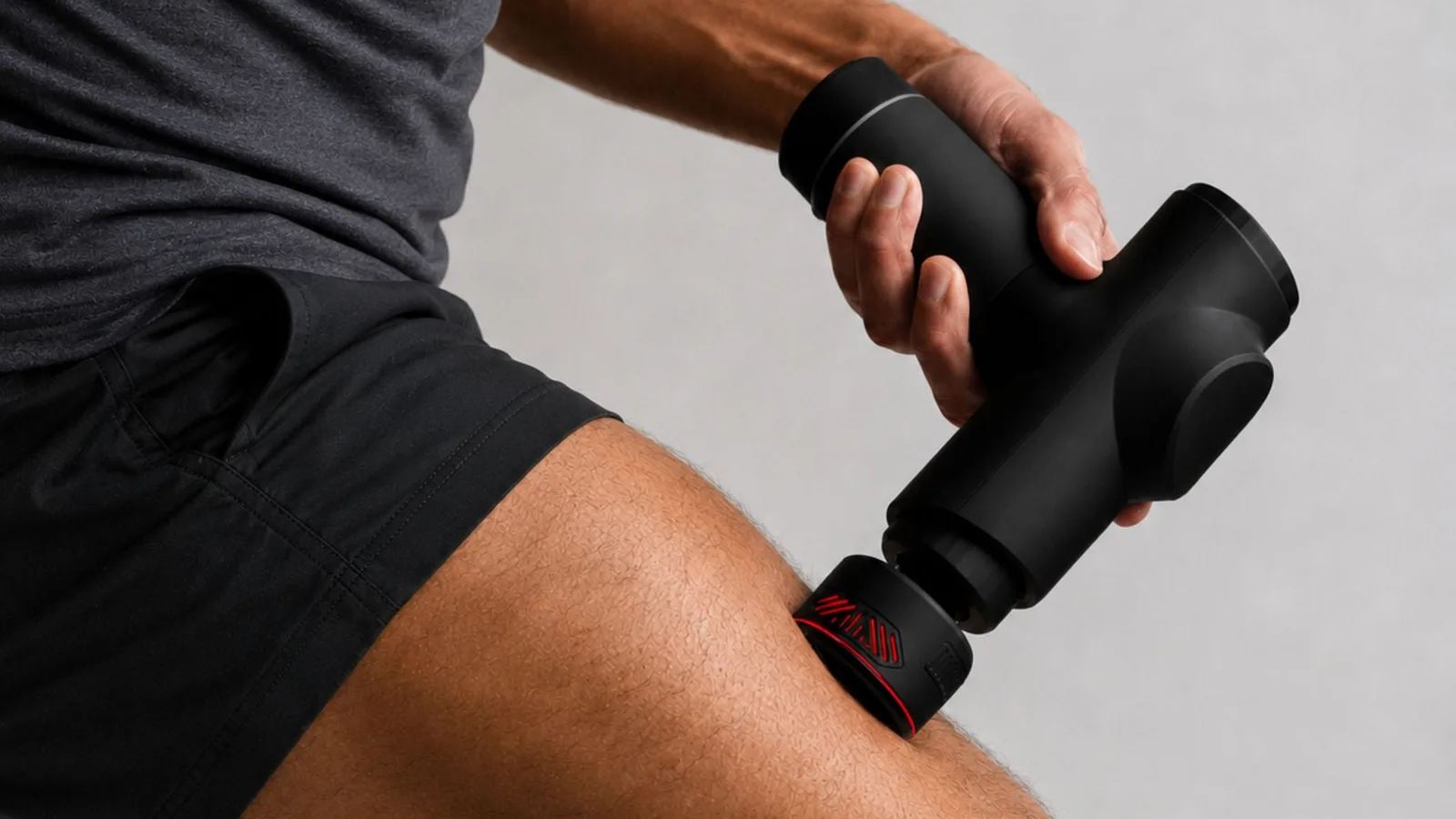
For chest, lats, shoulders or calves, a massage gun is more targeted. Konrad and colleagues (2020) treated the calf with five minutes of percussion: ankle range of motion rose by just over 5 degrees and strength stayed the same. Before training, 30–60 seconds per muscle on a low speed is enough; afterwards or on a rest day, 1–2 minutes. After deadlifts and rows your back has its own rules: the guide to using a massage gun on your back shows where to work and what to avoid. For single knots in the neck or shoulder, have a look at trigger point massager vs massage gun. The Revive Pulse Pro massage gun has 5 speeds and 5 attachments, including a heating and cooling head. Where not to use it and which head suits which muscle is covered in how to use a massage gun properly. If you are torn between the two devices, read compression boots or a massage gun.
Heat for soreness, cold with care
Heat is the simpler tool when you are building muscle. In a study of 100 participants (Petrofsky et al. 2013), heat reduced soreness after squats, most clearly moist heat applied straight after exercise. I am careful with cold in a building phase: Roberts et al. (2015) had men sit in cold water for 10 minutes after every strength session for twelve weeks. They gained less strength and muscle than the group that did an easy spin on the bike instead. When cold still fits and how to dose it by training goal is covered in does cold therapy slow muscle growth?
The Thermo Flex heat and cold device has 3 heat and 3 cold levels and straps on, which works well on the lower back after deadlifts. When to choose which is explained in heat or ice for sore muscles.
My weekly protocol for a push/pull/legs split
This is a typical plan I use with athletes in an off-season phase. The tools are options, not appointments.
| Day | Training | Recovery |
|---|---|---|
| Monday | Push (chest, shoulders, triceps) | massage gun 1–2 min on chest and front delts |
| Tuesday | Pull (back, biceps) | heat on the upper back if it feels tight |
| Wednesday | Legs | boots 20–30 min in the evening, carbs and protein |
| Thursday | Push | heat or boots for 20 min if legs are sore |
| Friday | Pull | massage gun on lats and biceps |
| Saturday | Legs | boots in the evening, early night |
| Sunday | Rest | walk, meal prep, no tools needed |
What changes during contest prep?
In a diet, less energy comes in while training volume often stays high. Many athletes notice that soreness lingers and the weights feel heavier. A review on natural bodybuilding prep (Helms et al. 2014) recommends losing only about 0.5 to 1 per cent of body weight a week and eating 2.3–3.1 g of protein per kg of lean body mass to hold on to muscle.
During my own prep I pay even closer attention to sleep in this phase and would rather keep volume a little lower than add another set every week. I tend to use recovery tools more often then, because they cost little energy and help me switch off in the evening. For soreness in general, have a look at nine tips to reduce muscle soreness.
“Most athletes I coach are not training too little, they are recovering too little. Once we spread the split out and take sleep seriously, progress often comes back on its own.”
Common recovery mistakes in bodybuilding
- Using soreness as proof of a good session. Measure progress by load and reps, not pain.
- Adding volume every week. Without lighter weeks, fatigue piles up.
- Ice baths after every session. Leave them out while building.
- Running the massage gun too long and too hard. More than 2 minutes per muscle rarely adds anything.
- Trying to massage away joint pain. Sharp pain in a shoulder, elbow or knee needs checking by your GP or a physio.
Who is this protocol for, and who should be careful?
A good fit if you
- train four to six times a week on a split
- regularly have heavy, stiff legs after leg day
- are in contest prep and training in a deficit
- want a set routine for rest days
Check with your doctor first if you
- want to use compression and have had a DVT, have heart failure or are pregnant
- have open wounds or fresh injuries in the area
- take blood thinners (massage gun)
- have circulation problems or reduced sensitivity to temperature (heat, cold)
If pain does not ease within a few days, get it checked by a doctor.
Conclusion
Bodybuilding recovery starts with a split that hits each muscle group about twice a week with 48 to 72 hours of rest in between, backed by sleep and protein. Compression boots after leg day, a massage gun for single muscles and heat for soreness suit lifters with high volume or those in a cut. Studies show less soreness and better range of motion but no direct strength gain, and regular cold after training can blunt muscle growth.
Frequently asked questions
How long should a muscle rest after weight training?
What is the best training split for recovery?
Are compression boots worth it after leg day?
Should I use a massage gun before or after lifting?
Does an ice bath after training reduce muscle gains?
Is recovery worse during a cut?
Sources
- Schoenfeld, B. J., Ogborn, D., Krieger, J. W. (2016). Effects of Resistance Training Frequency on Measures of Muscle Hypertrophy: A Systematic Review and Meta-Analysis. Sports Medicine, 46(11), 1689–1697.
- Haun, C. T. et al. (2017). Does external pneumatic compression treatment between bouts of overreaching resistance training sessions exert differential effects on molecular signaling and performance-related variables compared to passive recovery? PLoS One, 12(6), e0180429.
- Konrad, A. et al. (2020). The Acute Effects of a Percussive Massage Treatment with a Hypervolt Device on Plantar Flexor Muscles' Range of Motion and Performance. Journal of Sports Science and Medicine, 19(4), 690–694.
- Petrofsky, J. et al. (2013). Moist heat or dry heat for delayed onset muscle soreness. Journal of Clinical Medicine Research, 5(6), 416–425.
- Roberts, L. A. et al. (2015). Post-exercise cold water immersion attenuates acute anabolic signalling and long-term adaptations in muscle to strength training. Journal of Physiology, 593(18), 4285–4301.
- Helms, E. R., Aragon, A. A., Fitschen, P. J. (2014). Evidence-based recommendations for natural bodybuilding contest preparation: nutrition and supplementation. Journal of the International Society of Sports Nutrition, 11, 20.
- Jäger, R. et al. (2017). International Society of Sports Nutrition Position Stand: protein and exercise. Journal of the International Society of Sports Nutrition, 14, 20.
- Walsh, N. P. et al. (2021). Sleep and the athlete: narrative review and 2021 expert consensus recommendations. British Journal of Sports Medicine.
- Davis, H. L., Alabed, S., Chico, T. J. A. (2020). Effect of sports massage on performance and recovery: a systematic review and meta-analysis. BMJ Open Sport & Exercise Medicine, 6(1), e000614.