Compression boots vs massage gun: which helps after which session
Compression boots vs massage gun is the question most people ask when they have room or budget for one recovery tool. The short answer: boots treat both legs at once while you lie back; a massage gun treats one muscle at a time and you have to guide it. Which one helps more depends on what you have just done.

So rather than stopping at the technology and the research, I go through seven typical training days, from a long run to a Saturday football match, and tell you what I would reach for and why.
Both devices promise the same thing: being ready for your next session sooner. Technically, though, they have almost nothing in common. I explain how the air chambers in boots work in detail in the guide on how compression boots support recovery. This article is about which device does more after which kind of session.
What is the difference between compression boots and a massage gun?
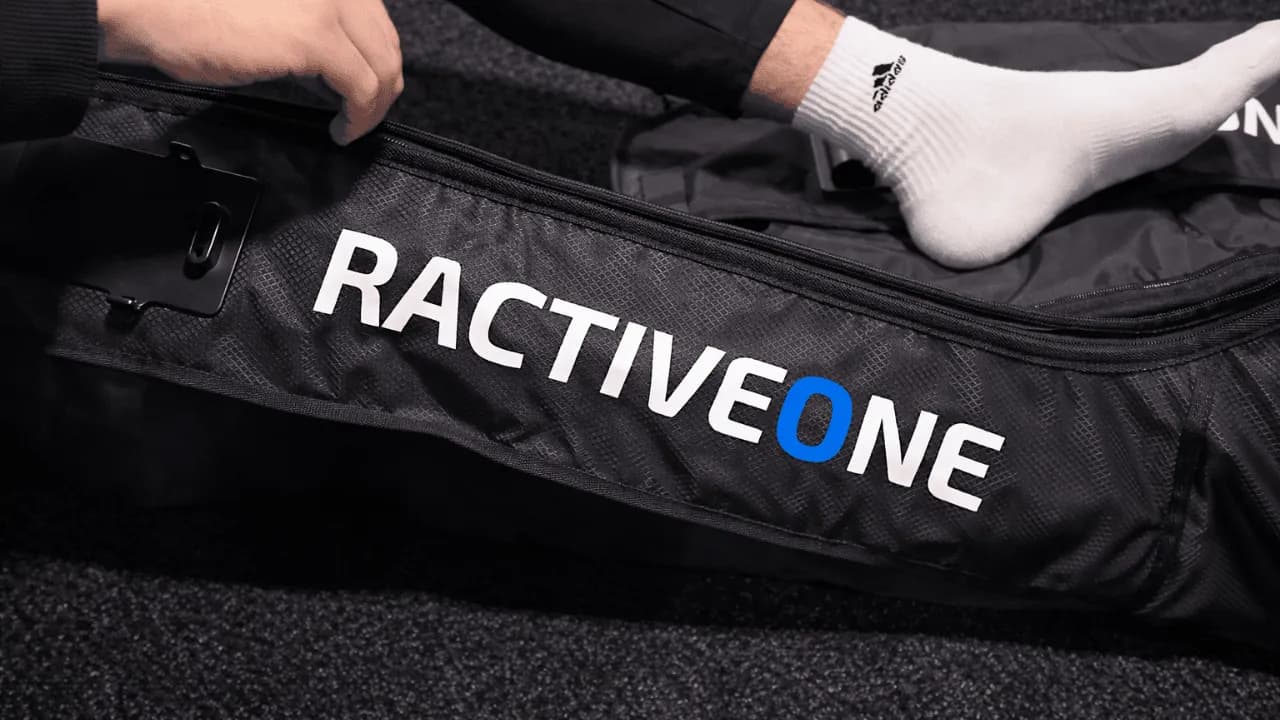
Compression boots are air sleeves that you pull over both legs. Several chambers fill one after another from the foot towards the hip, then release. The method is called intermittent pneumatic compression. A massage gun drives an attachment a few millimetres into a muscle many times per second. You guide it yourself and only ever treat a patch a few centimetres across.
That gives you the key practical difference. Boots work over a large area and passively: you lie back and do nothing. The gun works locally and actively: you choose the spot, the pressure and the time.
How do compression boots work?
The pressure wave is meant to stand in for the muscle pump that pushes blood back towards your heart when you walk. A 2018 study (Zuj et al.) measured higher blood flow in the leg when the lower leg was compressed during recovery from calf exercise. Whether that translates into faster recovery of performance is less clear. In ultramarathon runners, Hoffman et al. (2016) found that 20 minutes of compression straight after the race reduced how tired runners felt immediately afterwards, but made no difference over the following seven days compared with simply lying down.
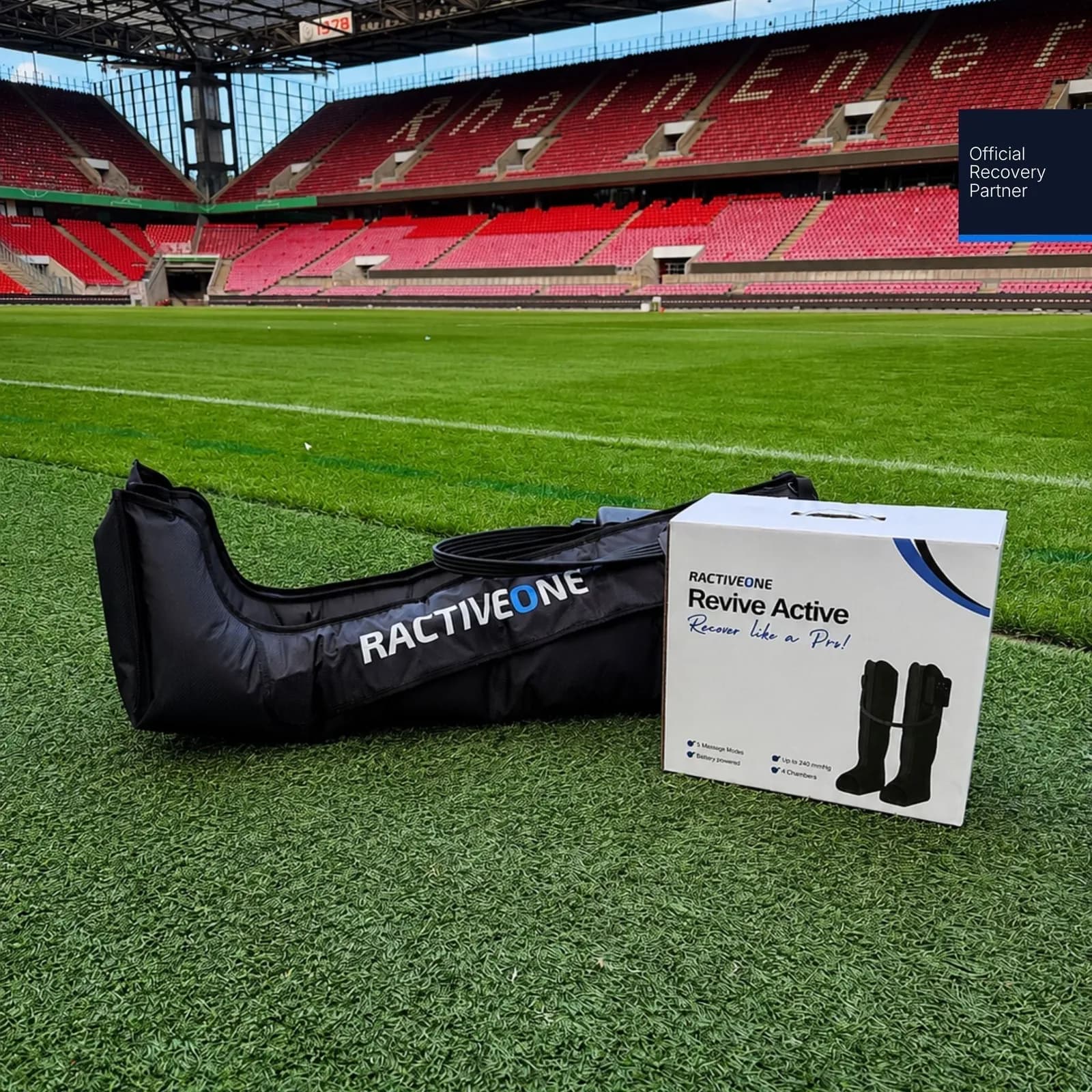
The Revive Active compression boots have 4 chambers per leg, 7 pressure levels between 30 and 240 mmHg, 5 modes and programmes of 15, 30 or 45 minutes. The controller runs on a battery, so you don't need a socket next to the sofa.
How does a massage gun work?
The rapid strokes work on muscle and fascia at one precise spot. The best-studied effect is the short-term gain in range of motion: Konrad et al. (2020) found more ankle mobility after five minutes of percussion on the calf, with no loss of calf strength. A 2023 systematic review (Ferreira et al.) is cautious: signs of better flexibility and less stiffness, no improvement in strength, jumping or speed, and only eleven studies with very different protocols.
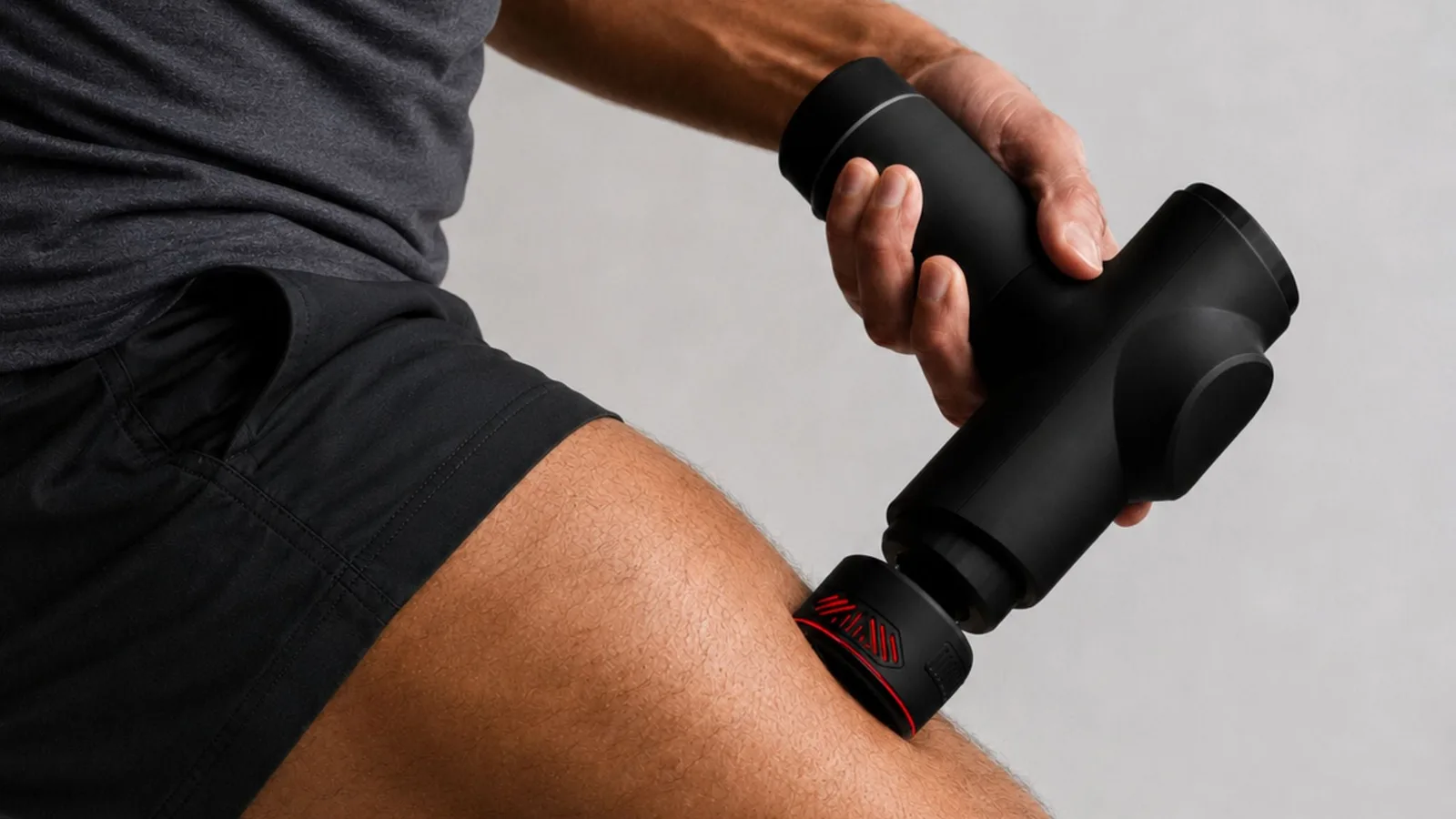
The Revive Pulse Pro massage gun has 5 speed levels, 5 attachments including a heat and cooling head, weighs approx. 776 g and charges via USB-C. That makes it the tool for individual spots, including in your kit bag on the way to training. How long and how hard to use it is covered in how to use a massage gun.
To be honest
Neither device has large studies showing a reliably faster return of performance. What both do well is make your legs feel better afterwards. That is not a small thing if it helps you train more consistently, but it is worth seeing it for what it is.
Compression boots vs massage gun: side by side
| Criterion | Compression boots | Massage gun |
|---|---|---|
| Area treated | both legs from foot to thigh at the same time | a few centimetres at a time, muscle by muscle |
| Your effort | put them on, pick a programme, lie back | guide it yourself, find the spots |
| Typical time | 15–45 minutes per session | 30–90 seconds per muscle, 5–10 minutes in total |
| Before training | not very practical | well suited for a short activation |
| Upper body, back, neck | not possible (leg models) | possible, except on the spine and the front of the neck |
| On the go | possible with a battery controller, but bulkier | fits in any kit bag |
| Evidence | blood flow shown, performance effect mixed | short-term range of motion shown, otherwise few studies |
Which is better after which session?
The table above settles the general question. Day to day, what you have just done decides it. Here is how I would use the two after seven typical sessions:
| Session | First choice | How to do it |
|---|---|---|
| Long run, half marathon, marathon | Compression boots | 30 minutes in the evening on a low to medium level; calves with the gun the next day |
| Long ride on the bike | Compression boots | 20–30 minutes after your shower; gun on the outer thigh if needed |
| Leg day in the gym | both | gun for 30–60 seconds on glutes and thighs beforehand; boots for 20–30 minutes in the evening |
| Intervals, sprints, Hyrox | Massage gun | loosen calves and hip flexors; boots in the evening if your legs feel heavy |
| Football or rugby match | Compression boots | on the evening of the match or the morning after; gun for individual tight spots |
| Upper-body session | Massage gun | chest, shoulders, upper back; boots don't help here |
| Travel day, long hours sitting or standing | Compression boots | 15–30 minutes on a low level for heavy legs |
Runners in particular benefit from having both. A concrete plan for the marathon, half marathon and intervals is in the guide compression boots for runners, and how to work on tight calves with the gun is covered in massage gun tips for tight calves.
How I use both in strength training
In bodybuilding, leg day is the session that takes longest to recover from. Squats, leg press and lunges load the thighs and glutes over many sets. My advice to athletes is a clear split:
- Before training: massage gun on a low level, 30 to 60 seconds per muscle, plus a normal warm-up. No longer, or the muscle tends to feel tired rather than ready.
- In the evening: compression boots for 20 to 30 minutes on a medium level, ideally in wave or sequential mode.
- The day after: if one spot is particularly tight, go after it with the gun. With heavy DOMS keep it light; don't push into the pain.
The most common mistake I see is too much pressure, with both devices. More intensity does not mean faster recovery. How often and how long boots make sense each week is covered in whether recovery boots are worth it for athletes.
"The gun is a scalpel, the boots are a mop. You don't clean a floor with a scalpel, and you don't work out a single knot with a mop."
Is it worth owning both?
If you train your legs three or more times a week, yes. The two do different jobs and don't get in each other's way. If you have to choose one, ask yourself a simple question: is it tired, heavy legs overall, or a few tight spots? For heavy legs after long efforts, choose the boots; for individual problem areas and upper-body training, the gun.
What to look for in pressure, chambers and sizing is in the 7 things to check before buying recovery boots. How boots compare with hands-on treatment is covered in recovery boots vs massage: effects and evidence, and whether boots pay off against regular appointments is worked out in the cost of sports massage vs recovery boots.
Which device suits you (and which doesn't)?
Compression boots suit you if you
- run, ride or play team sport a lot
- would rather lie down after training than massage yourself
- often have heavy legs after travel, sitting or standing
- want recovery as a fixed evening routine
A massage gun suits you better if you
- mainly want to work on individual tight spots
- also want to treat your upper body, shoulders and back
- are looking for something to warm up with before training
- have little space or travel a lot
Don't use either device if you have or suspect a blood clot, over open wounds, fresh injuries or inflammation. If you have heart failure, circulation problems, varicose veins, a pacemaker or are pregnant, speak to your doctor first. The same applies to any symptoms that don't go away.
Conclusion
Compression boots do more after efforts that tire both legs as a whole, such as long runs, rides, matches and travel days; a massage gun does more before training, for individual tight muscles and for the upper body. If you train your legs a lot, combine them: the gun locally, the boots for the whole leg. For both, the evidence mainly shows that your legs feel better, not a reliable performance gain, and neither replaces sleep or sensible training planning.
Frequently asked questions
Is a massage gun or compression boots better after running?
Can I use compression boots and a massage gun on the same day?
Can a massage gun replace compression boots?
Which is better for muscle soreness (DOMS)?
Is a massage gun good for warming up?
Who should avoid compression boots or massage guns?
Sources
- Zuj, K. A. et al. (2018). Enhanced muscle blood flow with intermittent pneumatic compression of the lower leg during plantar flexion exercise and recovery. Journal of Applied Physiology, 124(2), 302–311.
- Konrad, A. et al. (2020). The Acute Effects of a Percussive Massage Treatment with a Hypervolt Device on Plantar Flexor Muscles' Range of Motion and Performance. Journal of Sports Science and Medicine, 19(4), 690–694.
- Ferreira, R. M. et al. (2023). The Effects of Massage Guns on Performance and Recovery: A Systematic Review. Journal of Functional Morphology and Kinesiology, 8(3), 138.
- Hoffman, M. D. et al. (2016). A Randomized Controlled Trial of Massage and Pneumatic Compression for Ultramarathon Recovery. Journal of Orthopaedic & Sports Physical Therapy, 46(5), 320–326.
- Gu, Z. et al. (2025). Effects of intermittent pneumatic compression on delayed onset muscle soreness and recovery of muscular fatigue. PM&R, 17(9), 1080–1090.
- Revive Active and Revive Pulse Pro: specifications from the Ractiveone product pages