


Understanding Heavy Legs: When Recovery Boots and Compression Really Help
Almost everyone knows the feeling of heavy, tired legs – after sport, after a long day on your feet or after hours at a desk. Before you start thinking about recovery boots or compression, it's worth understanding where that heavy feeling comes from and when gentle compression actually makes a difference in everyday life.
In short
Heavy legs often appear when blood returns more slowly from the legs after long periods of standing, sitting or exertion. Gentle compression – for example via recovery boots – can support that return and make the legs feel lighter. It's most useful after exertion, long standing or travel. If heaviness, swelling or pain persists, it should be checked by a doctor.
In this article, you'll learn:
- why legs feel heavy and tired in everyday life
- what compression actually does inside the leg
- in which situations recovery boots make sense – and when they don't
- what an easy start looks like with no prior experience
01. Why legs feel heavy and tired
The feeling of heavy legs is usually linked to circulation. In the legs, blood has to travel back up towards the heart against gravity – helped above all by the calf muscles, the so-called muscle pump. When you move little, such as during long periods of standing or sitting, that pump works less often and blood drains more slowly. The result: legs that feel full, tired and heavy.
Many people also know the feeling after intense exertion, on hot days or after long journeys. In most cases it's harmless and eases on its own with movement and elevation.

Harmless heaviness or warning sign?
The distinction matters: temporarily heavy legs at the end of a long day are normal. But if you notice one-sided swelling, persistent pain, warmth, redness or sudden symptoms, you should have it checked by a doctor. Compression and recovery boots are wellness and recovery aids – not a substitute for medical assessment or treatment.
Good to know
Small habits already help: get up regularly and take a few steps, put your legs up now and then, and drink enough. Compression can add to that, but it doesn't replace movement.
02. What compression actually does
Compression applies gentle pressure to the leg from the outside and supports the return of blood towards the heart – much like the natural muscle pump when you walk. Recovery boots go one step further: they work with alternating air pressure that builds and releases in waves from the bottom up. How this rhythmic application works in detail is explained in our piece on how intermittent pneumatic compression works.


"The principle is simple: when the legs don't move enough on their own, gentle rhythmic pressure helps the return along."
— the core idea behind compression
03. When compression really helps – and when it doesn't
Gentle compression is most useful when the legs have been worked hard or barely moved. Typical situations where recovery boots are experienced as pleasant:
- after sport, when the legs are tired and heavy
- after long standing or a day mostly at a desk
- after long journeys, such as flights or car rides
- as a calm evening ritual to relieve the legs
Compression is less suited as a supposed "treatment" for medical complaints. With venous disease, acute injuries, inflammation, thrombosis risk or unclear, persistent symptoms, the use should be cleared with a doctor first. Recovery boots support recovery – they don't treat a medical condition.
"Heavy legs in everyday life are usually a movement and circulation issue, not an equipment issue. Compression is a sensible building block – ideally combined with regular movement, not as a replacement for it."
Lena Brandt, author at Ractiveone
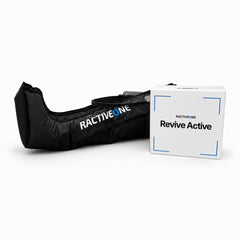
Revive Active Recovery Boots
Gentle, adjustable compression for tired legs – easy to put on at home.
04. Recovery boots in everyday life: an easy start
You don't have to be an athlete to try recovery boots. Getting started is straightforward: put the boots on, sit down comfortably, start at low pressure and relax for about 15 to 20 minutes – while reading, watching TV or simply with your legs up. You only increase the pressure as far as it stays comfortable.
That recovery boots have long moved beyond professional sport shows in real-world use too – for example as a recovery offer at sports events like the Altimate Run, where participants tested them on site. If you want to go further, you'll find the right pair on the Revive Active recovery boots page.

05. Frequently asked questions
What helps against heavy legs?
In everyday life, movement, elevating the legs and drinking enough help most. Gentle compression, for example via recovery boots, can additionally support blood return and make the legs feel lighter.
How do recovery boots help with heavy legs?
Recovery boots use air chambers to apply alternating pressure that travels in waves from the bottom up. This mimics the natural muscle pump and can support venous return.
How long and how often should I use compression?
Usually 15 to 30 minutes makes sense, with around 20 minutes as a good guideline. Regularity matters more than a long session. Start at low pressure and increase by feel.
Do recovery boots make sense without sport?
Yes. They are especially appreciated after long standing, sitting or travel. You don't need to be an athlete.
When should I see a doctor about heavy legs?
With one-sided swelling, persistent or severe pain, warmth, redness or sudden symptoms, you should seek medical advice. Compression does not replace a medical assessment.


