Muscle recovery after a workout: the complete guide
Muscle recovery after a workout decides whether a hard session turns into progress or just fatigue. The good news: the biggest levers cost almost nothing. Sleep, enough protein and carbohydrate, proper hydration and a plan with easy days do more than any gadget. Recovery tools such as compression, massage, heat and cold can build on that and noticeably ease soreness, as long as the basics are in place.

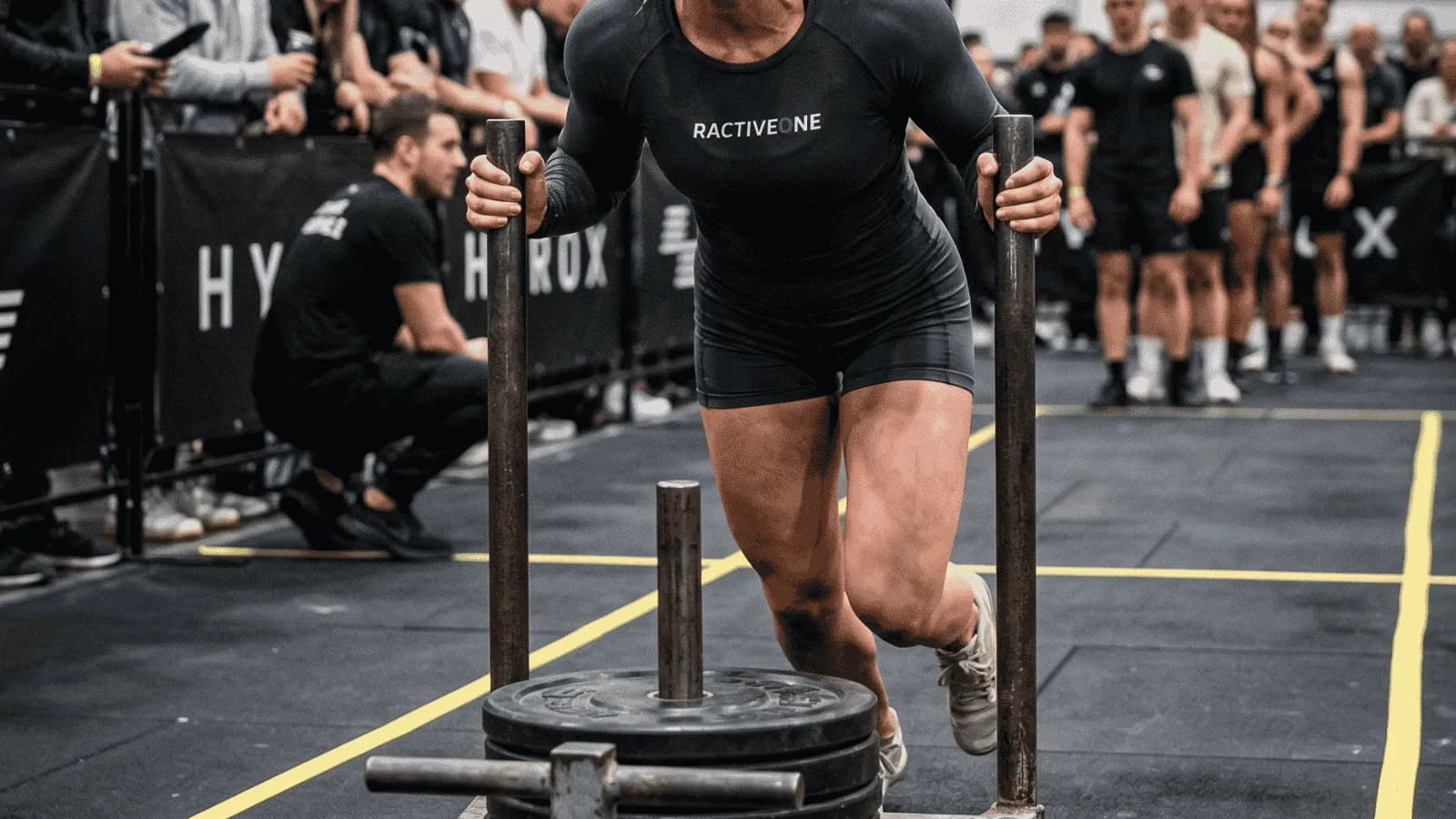
This guide ranks every method by the research behind it, gives you concrete numbers and links to an in-depth article for each topic.
Recovery is the part of training that does not happen in the gym. As a bodybuilder and coach I have learned that progress is made between sessions, not during them. Training sets the stimulus; recovery turns it into adaptation. Neglect recovery and sooner or later you are just training tired.
This guide is the starting point for every recovery topic in our training and recovery guides. It ranks the methods by importance and evidence and points you to the in-depth articles, from sleep and nutrition to compression, massage, heat, cold and vibration.
What actually speeds up recovery?
The order is clear: sleep first, then nutrition and fluids, then a training plan with genuine easy days. Only after that come recovery tools. They can ease soreness and help you feel more recovered, but they will not make up for five hours of sleep and empty glycogen stores.
| Level | Method | Role | Read more |
|---|---|---|---|
| 1 | Sleep | foundation for everything | Sleep section |
| 2 | Protein, carbohydrate, fluids | building material and fuel | Nutrition section |
| 3 | Training plan, active recovery | prevents overload | Active recovery section |
| 4 | Compression, massage, heat, cold, vibration | eases soreness, improves how recovered you feel | Recovery tools section |
What happens in your body after training?
A hard session drains glycogen from your muscles, causes small amounts of damage to muscle fibres and puts strain on your nervous system, tendons and immune system. Over the following hours and days your body refills its stores, repairs the fibres and, if the stimulus was right, builds a little more capacity than before. Soreness is a sign of unfamiliar, mainly eccentric work, not a measure of a good session. A ski trip with long days on the slopes is a classic example, and recovering from sore legs after skiing shows how to handle it.
How long this takes depends on intensity, volume and fitness. After an easy run you are fine the next day. After a marathon, a Hyrox race or a heavy leg day with new exercises, it can take several days. How to plan those days after a race is covered in our guide to Hyrox recovery between blocks and races.
Why is sleep the most important factor?
Sleep is when repair, hormone release and the consolidation of movement patterns take place. An expert consensus in the British Journal of Sports Medicine (Walsh et al. 2021) notes that elite athletes in particular often sleep too little, under 7 hours a night, and that a single night without sleep already reduces performance. The authors do not consider a fixed target such as "7–9 hours for everyone" ideal, though, and recommend taking individual sleep needs seriously. How much sleep athletes need and which habits help is covered in sleep and muscle recovery.
In practice that means regular bedtimes, a dark, cool bedroom and little bright light late in the evening. How to shape the last hour before bed step by step is set out in our evening recovery routine. Whether blue light glasses help is covered in what studies show about blue light glasses; which lens colour suits which evening is explained in red vs orange blue light glasses. A factor many people forget is the air in the bedroom, which often gets very dry once the heating is on. Target values and how to measure them are in ideal bedroom humidity for sleep. Tips for that are in using a humidifier in the bedroom, and common mistakes in how to use a humidifier.
What should you eat and drink after training?
Nutrition provides the materials for repair and the energy for the next session. Three points are well supported.
Protein: spread across the day
The International Society of Sports Nutrition (Jäger et al. 2017) puts the requirement for most athletes at 1.4–2.0 g of protein per kg of body weight per day. Per meal it recommends 20–40 g of high-quality protein, every 3–4 hours. A meta-analysis of 49 studies with 1,863 participants (Morton et al. 2018) found that intakes above roughly 1.6 g per kg per day brought no extra muscle gain. For an 80 kg athlete that is about 130 g a day, or four meals with just over 30 g each.
Carbohydrate: crucial when time is short
After long or intense sessions, glycogen stores are low. If your next session is less than 4 hours away, the ISSN (Kerksick et al. 2017) recommends around 1.2 g of carbohydrate per kg of body weight per hour, preferably from quickly available sources. If you are not training again until tomorrow, normal meals will refill your stores.
Fluids: replace by weight
The American College of Sports Medicine (2007) recommends working out your individual sweat loss by weighing yourself before and after training. During exercise, losses should stay below 2 % of body weight. Afterwards, replace the difference, with electrolyte drinks if you sweat heavily.
No recovery tool can make up for empty glycogen stores, too little protein or a short night. Basics first, extras second.
Does active recovery work?
Active recovery means an easy jog, spin or swim after the session or on a rest day. A review by Van Hooren and Peake (2018) reaches a sober conclusion. An active cool-down clears lactate from the blood faster, but it barely improves same-day or next-day performance and usually does not clearly reduce soreness. It does not harm adaptation either.
My take from practice: an easy day with a walk, mobility work or a gentle ride helps many athletes more, physically and mentally, than a day glued to the sofa. Just do not expect miracles. One interesting detail from Roberts et al. (2015): there, the group doing an easy bike cool-down built more muscle than the group using cold water immersion. How I use cold, sleep and tools around muscle growth is laid out in my recovery protocol for bodybuilding and strength training.
Which recovery tools help, and for what?
The most comprehensive analysis comes from Dupuy and colleagues (2018). Across 99 studies, active recovery, massage, compression garments, water immersion, contrast baths and cold reduced soreness, with small to large effects. Massage came out best for soreness and perceived fatigue. The table shows what each tool is suited to.
| Method | Good for | Evidence | Typical tool |
|---|---|---|---|
| Compression | heavy legs after running, cycling, matches | compression garments positive for soreness and fatigue; few, small studies on boots | Compression boots |
| Massage | soreness, flexibility, single muscle groups | strongest effect on soreness, no effect on strength or sprinting; massage guns rarely studied directly | Massage gun |
| Cold | quick turnaround between matches | positive for soreness, may blunt muscle growth | Ice bath, cold pack |
| Heat | tension, soreness the day after | positive for pain, few good studies | Heat pad |
| Vibration | single tight spots, soreness | positive for soreness, few small studies | Vibration massager |
Compression: recovery boots for your legs
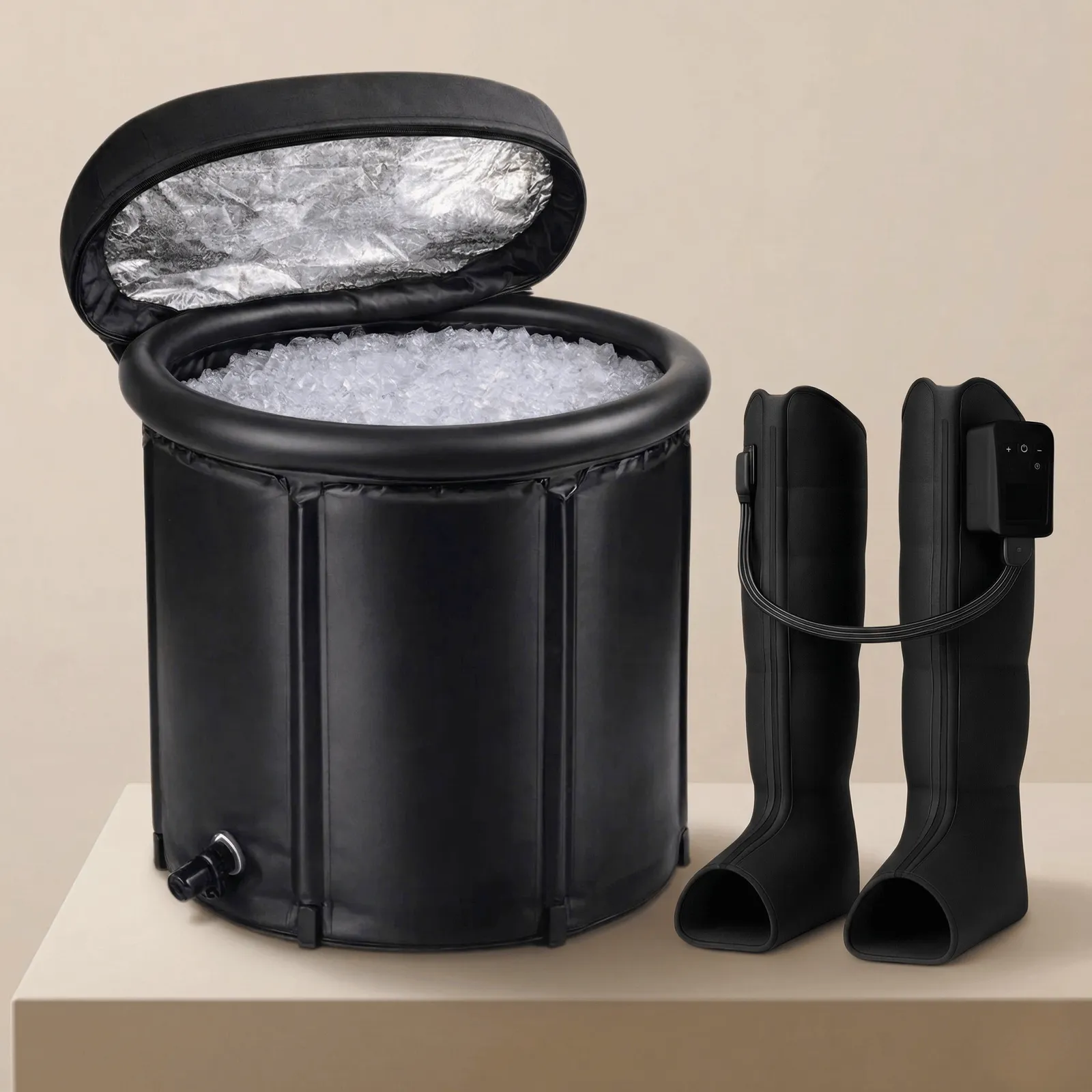
Compression boots use intermittent pneumatic compression: air chambers fill one after another from the feet upwards and then release. How that works is explained in how compression boots support recovery. How long, how often and at what pressure to use them is covered in how to use compression boots. Our Revive Active compression boots have 5 modes, 7 pressure levels and timer settings of 15, 30 and 45 minutes. Whether 4 chambers are enough or the 8-chamber Pro suits you better is covered in Revive Active vs Revive Active Pro. If you want to compare before buying, see the 7 criteria for buying recovery boots.
Massage and massage guns
A meta-analysis of 29 studies with 1,012 participants (Davis et al. 2020) found that massage did not improve strength, jump, sprint or endurance performance, but brought small improvements in flexibility and soreness. A massage gun delivers that kind of effect quickly on single muscle groups. Time, pressure and attachments are explained in how to use a massage gun. Timing is explained in massage gun before or after a workout. Our Revive Pulse Pro massage gun comes with 5 attachments, including a heating and cooling head. Buying criteria are covered in buying a massage gun. If you are torn between the two tools, read compression boots vs massage gun.
Heat, cold and contrast
Cold fits straight after hard sessions and between two matches; heat suits tension and soreness the day after. The decision table is in heat or ice for sore muscles, and the step-by-step guide to switching in contrast therapy with hot and cold. How an ice bath compares with compression is covered in compression boots versus an ice bath. Important for lifters: in the study by Roberts et al. (2015), men who got into cold water for 10 minutes after every session for 12 weeks gained less strength and muscle. What that means for local cooling and your training goal is covered in cold therapy after a workout and muscle growth. For local, flexible use, Thermo Flex for heat and cold offers three cold and three heat levels plus a contrast function.
Vibration: targeted rather than broad
Vibration massage is less well known but no less studied than many other methods. A meta-analysis of 10 studies with 258 participants (Lu et al. 2019) found less soreness 24, 48 and 72 hours after exercise. The studies are small and the authors call for more research. How vibration differs from percussion and how to use it is explained in vibration massage: benefits and use. For single hard spots, for example in the calf or shoulder muscles, Vibra Grip with targeted vibration combines 10 vibration levels with infrared heat and cooling. That is handy after racket sports with lots of forearm and shoulder work, as padel recovery for forearm and shoulder explains. Vibration belongs on muscles only, not on joints, the spine, the neck or the head; heat and cooling without vibration can also be used on joints and the neck.
"I often see athletes spend a lot on recovery kit and then go to bed at midnight. The order is wrong. Tools are the icing on a solid base, not a replacement for it."
What does a recovery week look like in practice?
Here is an example for someone training four to five times a week. Adapt the tools to your sport and your goal.
| Day | Training | Recovery |
|---|---|---|
| Monday | Strength, legs | protein-rich meal, compression boots in the evening, early night |
| Tuesday | easy, mobility | heat for soreness, a walk |
| Wednesday | intervals | carbohydrate after training, massage gun on the calves |
| Thursday | Strength, upper body | heat or vibration for upper back tension |
| Friday | rest day | catch up on sleep, nothing forced |
| Saturday | long run or match | cold or contrast, compression boots, fluids by weight |
| Sunday | off or easy | active recovery, meal prep |
If you are training for a half or full marathon, compression boots for runners has protocols around long runs and intervals. Runners and footballers with tight calves will find practical tips in loosening tight calves after running. Footballers have their own plan in football recovery after a match, and cyclists will find theirs in resting your legs after long rides. If soreness is your main problem, the 9 tips to reduce muscle soreness will help.
How can you tell whether you are recovering well?
Recovery cannot be measured with a single number, but a few simple signals help you keep track. Note them briefly in a training diary for two or three weeks and patterns will appear.
- Performance: are you moving similar weights or paces to last week without it feeling much harder? Falling performance over several sessions is the most important warning sign.
- Morning resting heart rate: take it straight after waking. If it is well above your usual value for several days, that points to fatigue, stress or an infection coming on.
- Sleep: struggling to fall asleep or waking often despite being tired can also be a sign of too much load. If you spend late evenings on screens, try our plan for late-night gaming sessions.
- Mood and motivation: if you have stopped looking forward to training for days, take an honest look at volume and intensity.
- Soreness: if it regularly lasts longer than three days after normal sessions, the load was too high or the recovery too short.
When several of these signals appear together, another tool rarely helps; a lighter week usually does. That is not lost time but the condition for your next hard sessions to work.
Common recovery mistakes
- Tools before basics: if you sleep badly and eat too little, no device will fix your recovery.
- Every day hard: without easy days and rest days, fatigue builds up however good your recovery routine is.
- Ice after every lifting session: use it sparingly in building phases.
- Soreness as a measure of success: judge progress by performance, not by pain.
- Ignoring warning signs: persistent drops in performance, poor sleep and frequent infections can point to overtraining or illness.
Who these methods suit, and where the limits are
Suitable for
- lifters who want to combine muscle gain with good recovery
- runners, cyclists and triathletes with high volume
- football, rugby and Hyrox athletes with busy competition phases
- recreational athletes who want to feel ready again sooner
- athletes over 40; what changes with age and how to adapt heat, cold and compression is covered in recovery over 40
Check with your doctor first
- compression: thrombosis, open wounds, heart failure, pregnancy
- heat and cold: circulation disorders, reduced temperature sensation, Raynaud's
- massage and vibration: fresh injuries, inflammation, blood thinners
- pain that does not improve after a few days
Recovery tools ease soreness and fatigue. They do not treat injuries or medical conditions. If you have symptoms, please get them checked by a doctor.
Conclusion
Muscle recovery after a workout starts with sleep, enough protein and carbohydrate, fluids and a plan with easy days; compression, massage, heat, cold and vibration come after that. Athletes with high volume or busy competition phases who already have the basics covered benefit most. Studies on recovery tools are often small, mainly show less soreness rather than better performance, and regular cold can blunt muscle growth.
Frequently asked questions
How long does it take to recover after a workout?
How can I recover faster after a workout?
What should I eat after training?
How much sleep do athletes need?
Is active recovery better than complete rest?
What is the best recovery tool?
Should I use ice after training?
Sources
- Dupuy, O. et al. (2018). An Evidence-Based Approach for Choosing Post-exercise Recovery Techniques to Reduce Markers of Muscle Damage, Soreness, Fatigue, and Inflammation: A Systematic Review With Meta-Analysis. Frontiers in Physiology, 9, 403.
- Walsh, N. P. et al. (2021). Sleep and the athlete: narrative review and 2021 expert consensus recommendations. British Journal of Sports Medicine.
- Jäger, R. et al. (2017). International Society of Sports Nutrition Position Stand: protein and exercise. Journal of the International Society of Sports Nutrition, 14, 20.
- Morton, R. W. et al. (2018). A systematic review, meta-analysis and meta-regression of the effect of protein supplementation on resistance training-induced gains in muscle mass and strength in healthy adults. British Journal of Sports Medicine, 52(6), 376–384.
- Kerksick, C. M. et al. (2017). International Society of Sports Nutrition position stand: nutrient timing. Journal of the International Society of Sports Nutrition, 14, 33.
- American College of Sports Medicine, Sawka, M. N. et al. (2007). Exercise and fluid replacement. Medicine & Science in Sports & Exercise, 39(2), 377–390.
- Van Hooren, B., Peake, J. M. (2018). Do We Need a Cool-Down After Exercise? Sports Medicine, 48(7), 1575–1595.
- Davis, H. L., Alabed, S., Chico, T. J. A. (2020). Effect of sports massage on performance and recovery: a systematic review and meta-analysis. BMJ Open Sport & Exercise Medicine, 6(1), e000614.
- Lu, X. et al. (2019). Does vibration benefit delayed-onset muscle soreness? A meta-analysis and systematic review. Journal of International Medical Research, 47(1), 3–18.
- Roberts, L. A. et al. (2015). Post-exercise cold water immersion attenuates acute anabolic signalling and long-term adaptations in muscle to strength training. Journal of Physiology, 593(18), 4285–4301.