Contrast therapy: how to alternate hot and cold properly
Contrast therapy means switching several times between heat and cold after training, in water, in the shower or with a device. In high-level team sports such as football and rugby it has been routine for years, usually with the promise of fresher legs. The research supports it when the comparison is simply resting. Against cold water, compression or an easy cool-down, though, it is not clearly better.

Here you get the honest state of the evidence, concrete intervals for the shower, two tubs and a device, and a straight answer on when to give it a miss.
Contrast therapy is one of the tools I use mainly when recovery time is short: a competition weekend, two sessions in a day, travel between two events. At its core it is about alternating heat and cold. When each one makes sense on its own is covered in our core article heat or ice for sore muscles. This one is about combining them.
What is contrast therapy?
With contrast therapy you switch several times between warm and cold. In sport this traditionally happens in two tubs, one with cold water at 10–15 °C and one with warm water. A review from the Australian Institute of Sport (Versey et al. 2013) defines cold water as 20 °C or below and hot water as 36 °C or above. At home you can do it in the shower, or locally with a device that both heats and cools.
The idea: cold narrows blood vessels, heat widens them. The switch is meant to create a pumping effect that helps move fluid out of the tissue. That pump theory is plausible but not properly proven. What studies actually measure is mainly muscle soreness, strength and how recovered people feel.
What does the research on contrast therapy show?
The key paper is a meta-analysis by Bieuzen, Bleakley and Costello (2013). It looked at 18 trials, all with a high risk of bias. Compared with passive rest, participants had less soreness and less strength loss after contrast baths, measured from under 6 hours up to 96 hours after exercise. Compared with cold water, warm water, compression, active recovery or stretching, there was little sign of an advantage.
| Study | What was tested | Result |
|---|---|---|
| Bieuzen et al. 2013 | 18 trials, contrast baths after exercise | better than rest, not better than other methods |
| Higgins et al. 2017 | 23 studies, 606 team sport athletes | less perceived fatigue at 24 and 48 h, no benefit for jumps or sprints |
| Bleakley et al. 2012 (Cochrane) | cold water versus contrast (5 trials) | no difference in soreness |
| Wiecha et al. 2025 | 29 reviews on muscle soreness | contrast reduces pain straight after exercise; evidence mostly low quality |
| Hing et al. 2008 | 12 randomised trials | insufficient evidence, low study quality |
In short: contrast therapy beats doing nothing and is roughly as good as other common recovery methods. It is not a miracle. And nearly all the data come from water baths. As far as I know, there are no dedicated studies on local devices. It is plausible that the effect carries over, but it is not proven.
How do you do contrast therapy properly?
Versey and colleagues draw three rules for water from the studies: equal time in warm and cold, short phases of about 1 minute, and a total of up to roughly 15 minutes. Longer sessions added nothing in the data. That gives you three options:
Option 1: the shower
- 1 minute warm, comfortable rather than hot
- 1 minute as cold as possible, legs and worked muscles first
- repeat 4 to 5 times; after training, finish on cold
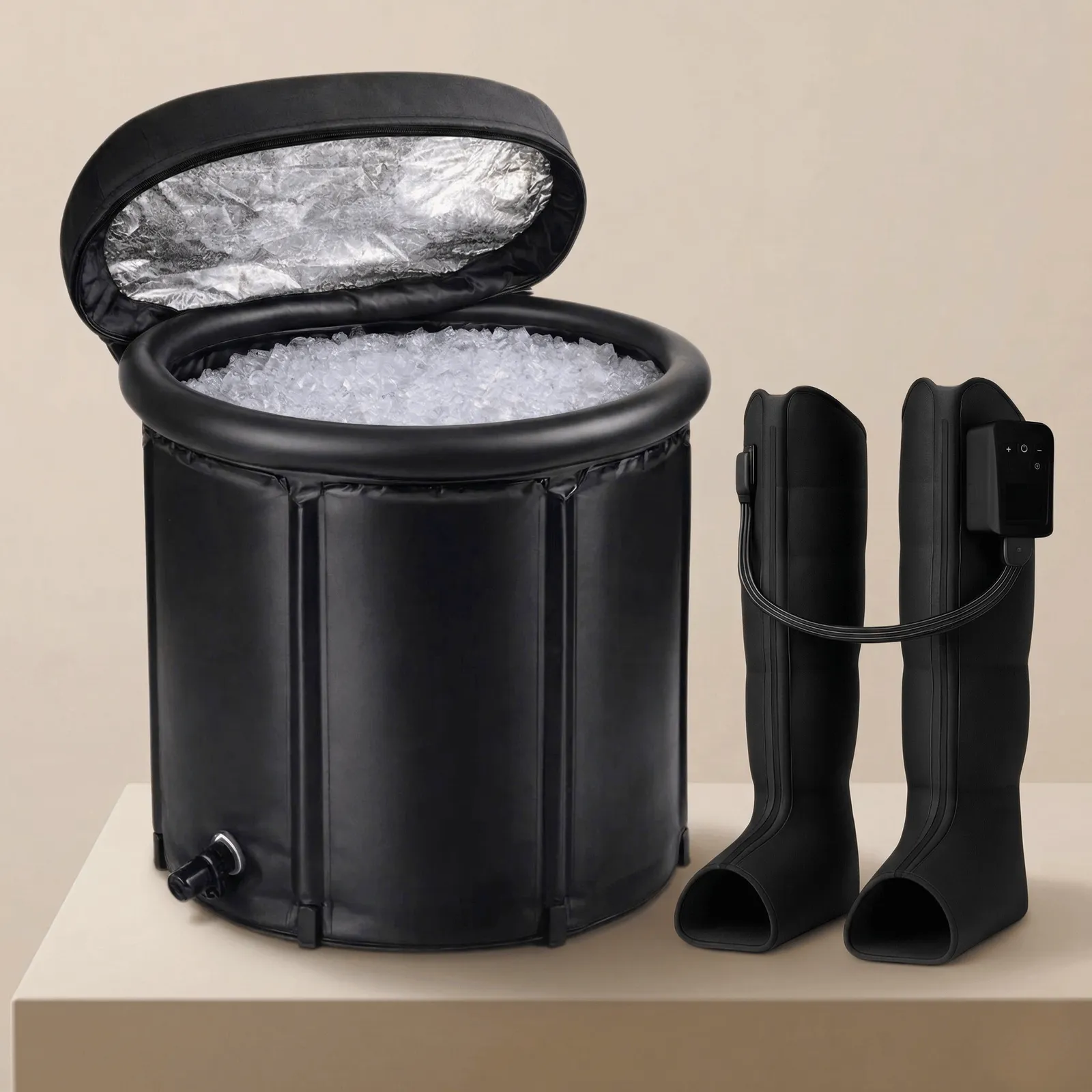
Option 2: two tubs or bins
- cold 10–15 °C, warm from about 36 °C; use a thermometer
- 1 minute each, switch 5 to 7 times, up to about 15 minutes in total
- switch quickly so the contrast stays noticeable
Option 3: locally with a device
For single muscle groups such as calves, thighs or shoulders, a device is more practical than two tubs. Thermo Flex for heat, cold and contrast has three cold levels (15, 10 and 5 °C), three heat levels (38, 40 and 42 °C) and a contrast function. The strap keeps it on the muscle hands-free; according to the manufacturer, heat and cold can also be used on joints such as the knee and shoulder or on the neck. The manufacturer suggests around 15–20 minutes per session and starting on a moderate level.
A pad on the skin works more slowly than a bath because it covers a small area. Locally I therefore use slightly longer phases: 2–3 minutes warm, 2–3 minutes cold, three to four rounds. That is a practical recommendation, not a study protocol. After a few sessions, be honest with yourself about whether your legs feel better the next day.
"I use contrast when there is little time between two efforts. In normal building weeks I often leave it out. Sleep, food and a good plan matter more there than any hot and cold routine."
When is the best time?
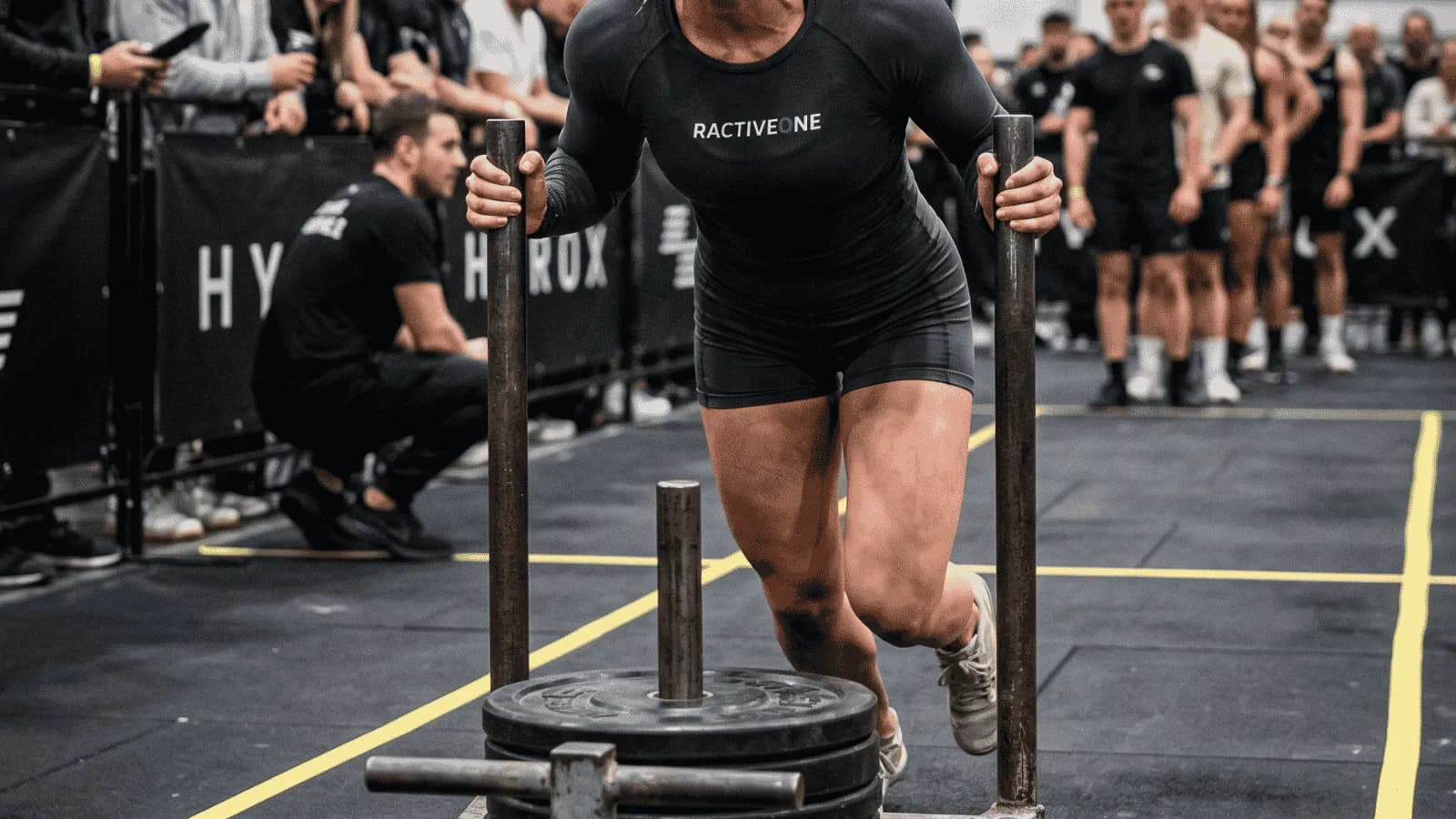
Contrast therapy makes most sense in the first few hours after hard exercise, especially when the next session or match is coming up soon. Typical examples are football or rugby festivals, multi-day cycling events or a Hyrox race weekend with a long drive home. Higgins et al. (2017) found that team sport athletes mainly felt more recovered; there was no measurable advantage in sprint or jump performance. That still counts for something: athletes who feel fresher often go into the next effort more relaxed and focused.
In phases where you want to build strength and muscle, I would be careful. A study with regular cold water immersion after lifting showed smaller gains. Whether that also applies to contrast has not been studied. There is more on this in the heat or ice article. How cold and compression compare is covered in compression boots or an ice bath after sport.
Examples from different sports
How contrast therapy fits into your week depends a lot on your sport. Three typical situations from my work with athletes:
Football on Saturday, training on Tuesday
After the match, the changing-room shower is the simplest option: five switches between warm and cold, legs first, finishing on cold. On Sunday, use heat and easy movement if soreness appears. Players with two matches in a week benefit more than those with one match and four training days.
Running or cycling with two sessions a day
Between a morning and an afternoon session there is little time. A short contrast block after the first session fits well, together with carbohydrate and fluids. Warm up thoroughly before the second session so your muscles are back up to temperature after the cold.
Strength training in a building phase
Here I use contrast sparingly, for example after particularly hard leg days or when a competition is coming up the next day. In normal weeks I stick to heat for stiffness, good sleep and enough protein, because it is still unclear whether alternating cold dampens the adaptation to training.
Common mistakes
- Too hot: warm means comfortably warm. Scalded or very red skin is not a sign that it is working.
- Too long on cold: more than a few minutes at a time on a very cold setting brings no benefit, just more risk to the skin.
- Right before competing: cold muscles react more slowly. If you still have to sprint, warm up again.
- On fresh injuries: with a knock, a strain or swelling, get it assessed rather than experimenting.
Who contrast therapy suits, and who should skip it
Suitable for
- football and rugby players during tournaments and busy fixture weeks
- endurance athletes between two hard sessions
- anyone who finds a full ice bath too unpleasant
Not suitable, or only after medical advice
- fresh injuries, broken or irritated skin
- circulation disorders, thrombosis, heart conditions
- cold intolerance such as Raynaud's
- reduced temperature sensation, pregnancy, pacemaker
Contrast therapy is one building block among many. How it fits with sleep, nutrition, compression and massage is set out in our complete guide to muscle recovery after a workout. More how-to articles are in our training and recovery guides.
Conclusion
Contrast therapy eases muscle soreness and strength loss better than passive rest, but it is not clearly better than cold water, compression or active recovery. It is most worthwhile for athletes with little time between two efforts. The studies are small and almost all done in water, and with injuries, circulation or heart problems the decision belongs with your doctor.
Frequently asked questions
What is contrast therapy?
How long should contrast therapy last?
Should I finish on hot or cold?
Is contrast therapy better than an ice bath?
Can I do contrast therapy in the shower?
Who should avoid contrast therapy?
Sources
- Bieuzen, F., Bleakley, C. M., Costello, J. T. (2013). Contrast water therapy and exercise induced muscle damage: a systematic review and meta-analysis. PLoS One, 8(4), e62356.
- Versey, N. G., Halson, S. L., Dawson, B. T. (2013). Water immersion recovery for athletes: effect on exercise performance and practical recommendations. Sports Medicine, 43(11), 1101–1130.
- Higgins, T. R., Greene, D. A., Baker, M. K. (2017). Effects of Cold Water Immersion and Contrast Water Therapy for Recovery From Team Sport: A Systematic Review and Meta-analysis. Journal of Strength and Conditioning Research, 31(5), 1443–1460.
- Bleakley, C. et al. (2012). Cold-water immersion (cryotherapy) for preventing and treating muscle soreness after exercise. Cochrane Database of Systematic Reviews, CD008262.
- Wiecha, S. et al. (2025). Physical Therapies for Delayed-Onset Muscle Soreness: An Umbrella and Mapping Systematic Review with Meta-meta-analysis. Sports Medicine, 55(5), 1183–1212.
- Hing, W. A. et al. (2008). Contrast therapy – a systematic review. Physical Therapy in Sport, 9(3), 148–161.