Cold therapy after a workout: helpful or a brake on muscle growth?
Cold therapy after a workout feels like elite recovery, yet it can blunt exactly what you train for. Several studies show that people who sit in cold water after every strength session build less muscle and strength over the following weeks. At the same time, cold reliably eases soreness after brutal sessions. Both are true, and the answer depends on your goal and your phase of training.

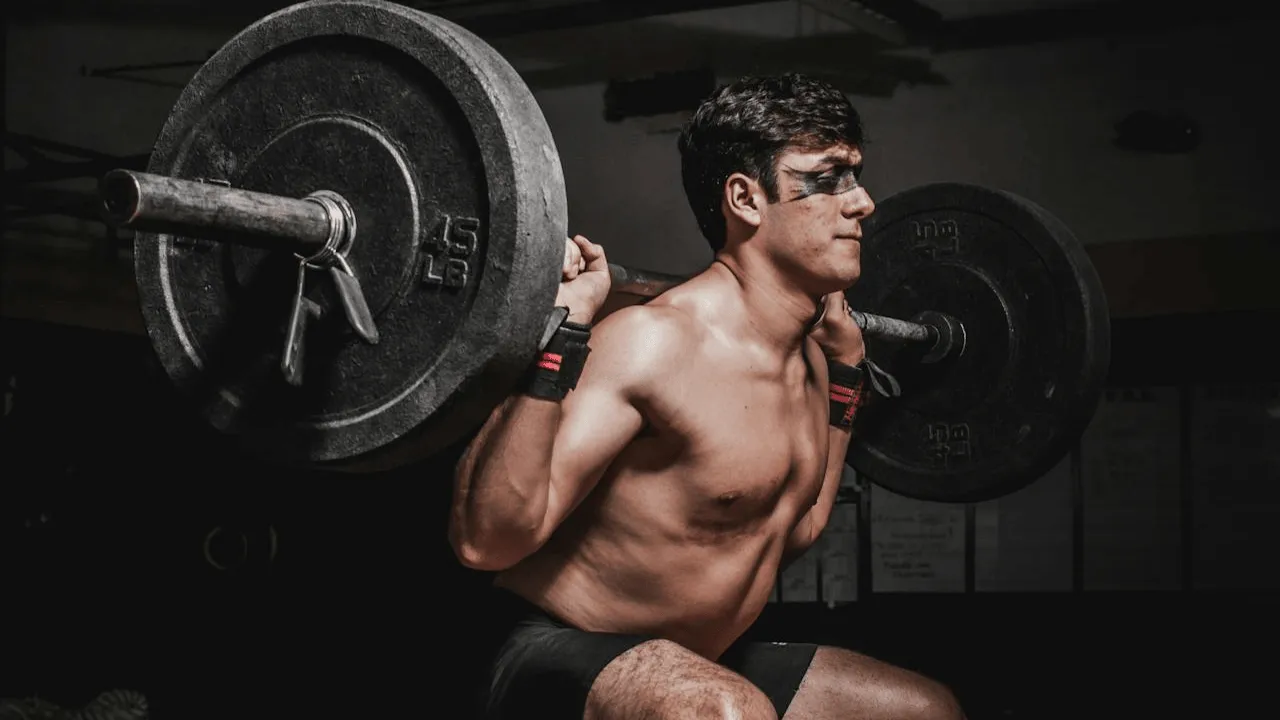
I put the key studies in one table, explain what they say about local cooling and what they do not, and show how I use cold as a bodybuilder in building and contest phases.
The basic question of when to use heat and when to use cold is answered in our explainer heat or ice for sore muscles, which also has the short version on muscle growth. Here I go deeper, because for lifters this is the question that matters most. I have trained for muscle mass for years, and cold is the one recovery tool I know can work against me in the wrong phase.
01. Does cold therapy after a workout reduce muscle growth?
Used after every strength session: probably yes, but the effect is small. A 2024 meta-analysis (Piñero et al.) of 8 studies found that strength training without cold water afterwards produced slightly more muscle growth than strength training followed directly by cold water. The authors put the probability of a real disadvantage at around 96 per cent, but rate the quality of the studies as only fair to poor.
That does not make cold a bad tool. After single very hard sessions it reduces soreness and improves how recovered you feel. So the question is not "cold, yes or no" but "when and how often".
02. What happens in the muscle when you cool straight after training?
After lifting, repair and building processes start in the muscle: blood flow rises, a controlled inflammatory response kicks in, pathways for protein synthesis switch on and muscle stem cells, called satellite cells, multiply. Cold dampens exactly this phase. It narrows the blood vessels and lowers tissue temperature.
Roberts and colleagues analysed muscle biopsies after training in 2015. After cold water, the increase in satellite cells and the activity of a key growth pathway were smaller than after an easy spin on a bike. That explains why cold feels good and can still blunt adaptation: it also quietens the signals you need for growth.
03. What do the studies show? The overview
| Study | Who and how | Result |
|---|---|---|
| Roberts et al. 2015 | 21 men, 12 weeks of strength training twice a week, then 10 minutes of cold water or easy cycling | strength and muscle mass rose more with active recovery; type II fibres grew only in that group (+17%) |
| Fyfe et al. 2019 | 16 men, 7 weeks of full-body training three times a week, then 15 minutes in 10 °C water or passive recovery | strength rose equally, type II fibres grew less with cold |
| Malta et al. 2021 (meta-analysis) | 8 studies, regular cold water at 15 °C or below during a training programme | smaller strength gains; endurance performance unchanged |
| Piñero et al. 2024 (meta-analysis) | 8 studies on cold water straight after strength training | small disadvantage for muscle growth, study quality fair to poor |
| Yamane et al. 2006 | leg or forearm training, then only the trained limb in cold water, 4–6 weeks | training effects clearly less frequent in the cooled limbs |
| Tseng et al. 2013 | 11 men, 15-minute cold packs after eccentric arm training, repeated over 3 days | muscle damage markers rose more, fatigue at 72 hours higher |
| Moore et al. 2022 (meta-analysis) | 52 studies, single cold water immersion after hard exercise | less soreness and better perceived recovery at 24 hours, no strength benefit |
The picture is consistent: single sessions help you feel recovered, regular sessions straight after lifting cost some adaptation over the weeks. The studies are small, though, mostly with 10 to 25 participants, and nearly all in young men.
04. Does this apply to local cooling with a pack or device?
This is the honest gap. Almost every study uses cold water immersion, usually of the legs or the whole lower body. A cold pack on one muscle cools less tissue, and usually less deeply. You could conclude it is harmless. Two small studies suggest local does not automatically mean harmless.
In Yamane et al. only the trained limb was cooled, and its training effects were still weaker. In Tseng et al. simple cold packs on the upper arm slowed recovery from muscle damage rather than speeding it up. And in the Piñero meta-analysis the result barely changed when the studies with local cooling were removed. My conclusion: local cooling is probably weaker in both directions, but it is not a free pass for the time straight after lifting.
05. When does cooling after sport still make sense?
Whenever fast recovery matters more than adapting to training. The Moore et al. (2022) meta-analysis of 52 studies shows that after intense exercise, cold water reduced soreness and improved perceived recovery and muscular power 24 hours later. Maximal strength did not benefit. In practice that means:
- Tournaments and competition weeks: two matches in a weekend, a Hyrox race with travel the next day, a multi-day sportive.
- Heat: after sessions in hot weather, to bring your temperature down.
- Endurance training: according to Malta et al., regular cold water had no measurable effect on endurance performance, so runners and cyclists can be more relaxed about it.
- Local niggles unrelated to training: a spot that simply feels better with cold. Get fresh injuries checked by a doctor.
06. Cool or not? The grid by training goal
| Situation | Cold straight after training? | Better |
|---|---|---|
| Building muscle, normal training week | no, not as a routine | easy cool-down, heat, compression, sleep |
| Strength block before a meet | no | cold on rest days at most |
| Competition week, tournament, two matches in 48 hours | yes, deliberately | 10–15 minutes of cold water or local cooling of the worked muscles |
| Running or cycling training | possible | after very hard sessions or in the heat |
| Heavy soreness, no lifting in the next few days | possible | brief cooling or heat, whichever feels better |
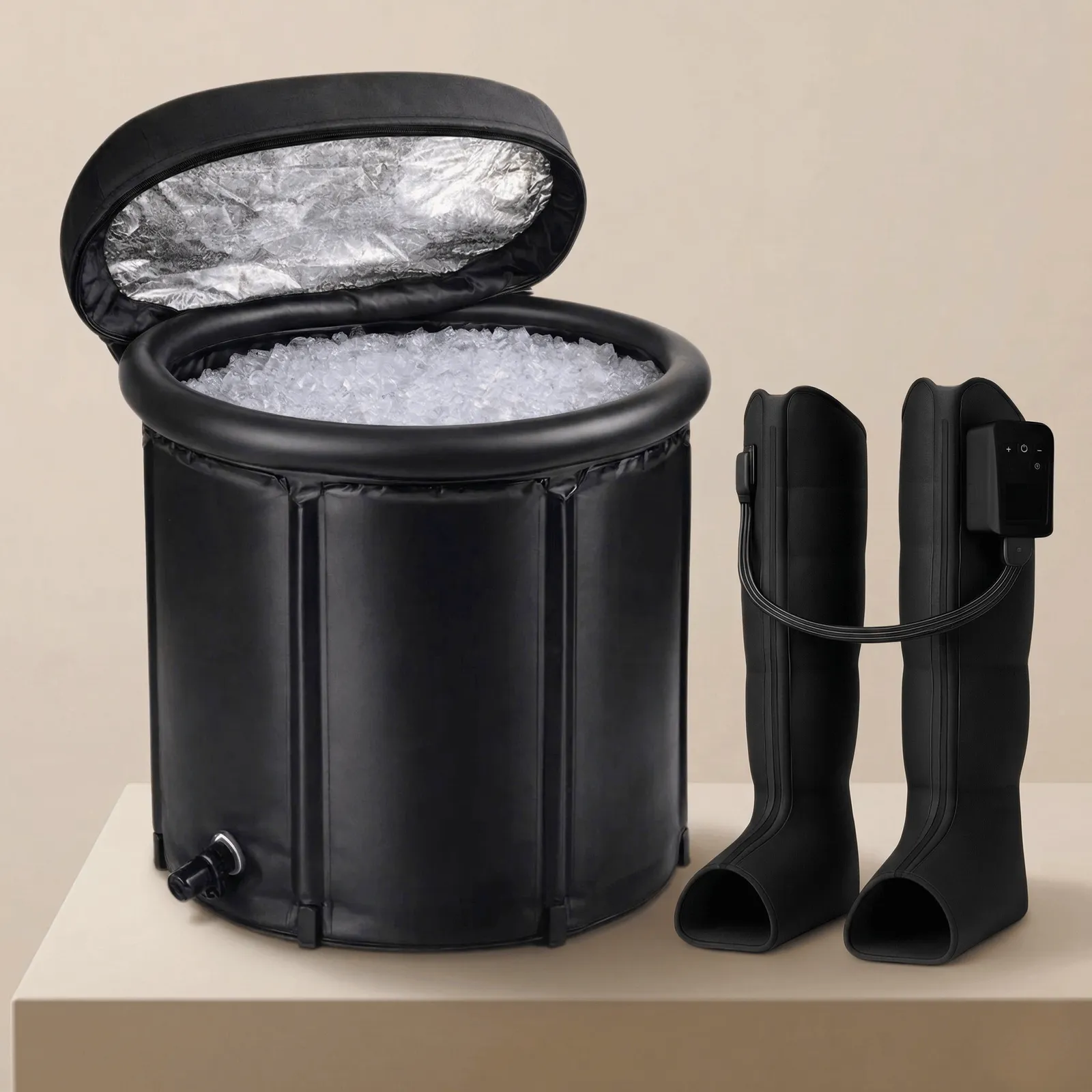
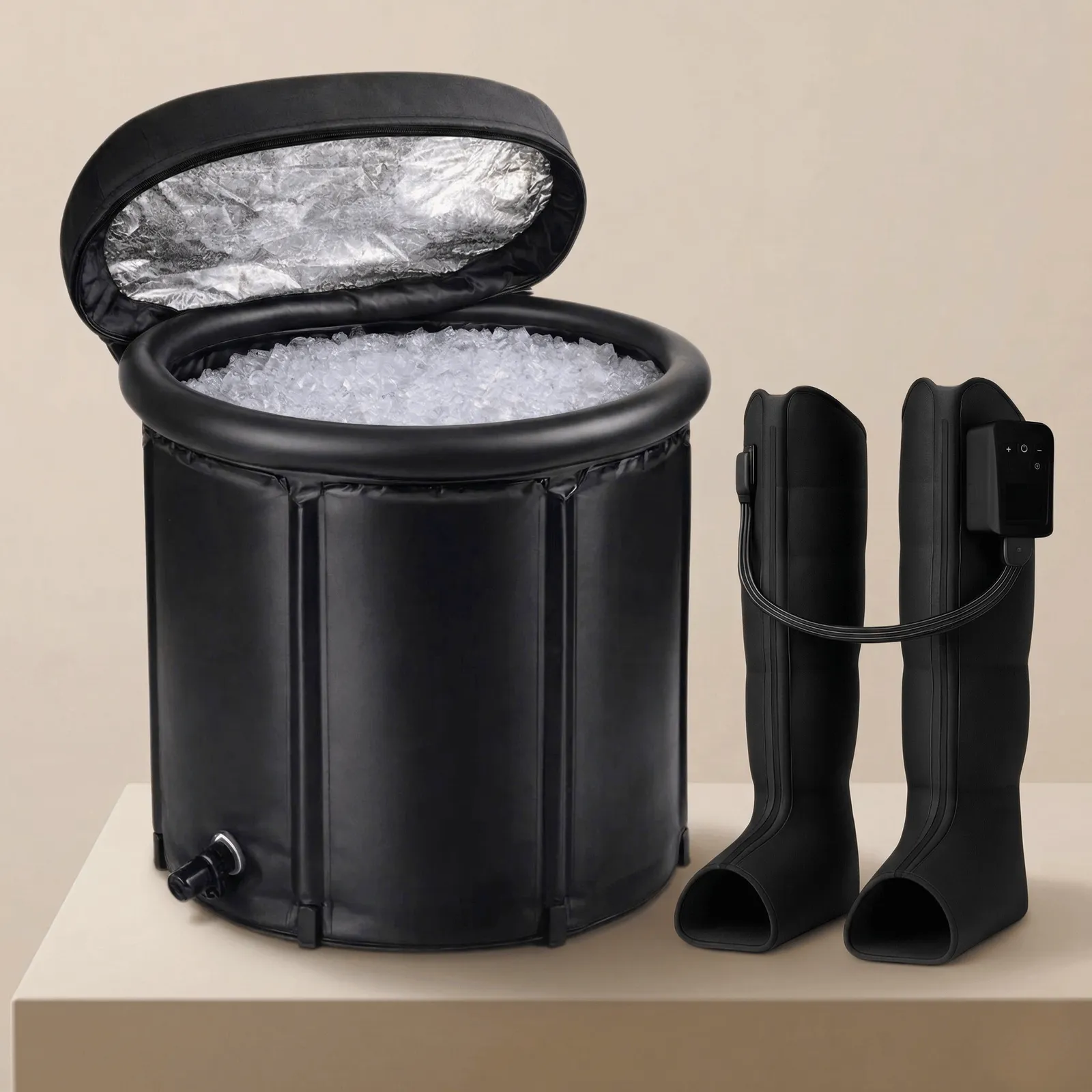
How cold water and compression boots differ in effect and everyday use is compared in compression boots vs ice bath.
"In a building phase I do not cool after leg day at all. I spin easy on the bike for ten minutes and put my legs up in the evening. I save cold for days when I need to perform the next morning, not grow. That is the simplest rule I know."
07. If you cool: how cold and how long?
For cold water, studies show that 10–15 °C for 10–15 minutes is enough. Colder and longer adds nothing but strain. For local cooling, 15–20 minutes per area is typical, never ice directly on bare skin, and then a break until the skin feels normally warm again.
The Thermo Flex for local cooling and heat has three cold settings (15, 10 and 5 °C) and three heat settings (38, 40 and 42 °C). For cold I start at 15 °C. In building phases I use it after lifting with heat instead, or as contrast on rest days. How the switching works is explained in our contrast therapy guide.
08. What helps recovery in a building phase instead of cold?
The group with the biggest gains in Roberts et al. simply pedalled easily on a bike after training. That is a useful hint: the best tools between strength sessions are unglamorous. Enough sleep, enough protein, sensibly spaced training days, easy movement and, if you like, compression or heat, which do not interfere with adaptation. Why sleep sits at the top of that list is explained in sleep and muscle recovery. My full weekly protocol is in our bodybuilding recovery protocol.
Thermo Flex
3 cold and 3 heat settings plus contrast in one cordless device, hands-free with a strap on calf, knee, shoulder or back.
09. Who is cooling after sport for, and who should skip it?
A good fit for team and endurance athletes in competition phases, for tournament days and after sessions in the heat. If you mainly run or cycle, current evidence gives little reason to worry about your adaptation.
Less suitable as a routine straight after lifting for anyone whose goal is muscle or maximal strength. Not suitable with cold sensitivity such as Raynaud's, circulation problems, reduced sensation, open wounds, or heart and circulatory conditions without medical clearance. If in doubt, ask your GP.
Conclusion
Cooling after sport makes sense when you need to be ready again quickly, but as a daily habit after lifting it probably costs some muscle and strength gain. Lifters in a building phase skip it after training, while endurance and team athletes use it deliberately in competition phases. The studies are small, and how strongly local cooling with a pack acts is barely researched.
Frequently asked questions
Does cold therapy after a workout reduce muscle growth?
Is an ice bath after lifting bad?
How long after training should I wait before using cold?
Does an ice pack on one muscle also reduce gains?
Does cold help with muscle soreness?
Is cold therapy bad for runners and cyclists?
Who should avoid cold therapy?
Sources
- Roberts, L. A. et al. (2015). Post-exercise cold water immersion attenuates acute anabolic signalling and long-term adaptations in muscle to strength training. Journal of Physiology, 593(18), 4285–4301.
- Fyfe, J. J. et al. (2019). Cold water immersion attenuates anabolic signaling and skeletal muscle fiber hypertrophy, but not strength gain, following whole-body resistance training. Journal of Applied Physiology, 127(5), 1403–1418.
- Piñero, A. et al. (2024). Throwing cold water on muscle growth: A systematic review with meta-analysis of the effects of postexercise cold water immersion on resistance training-induced hypertrophy. European Journal of Sport Science, 24(2), 177–189. – Meta-analysis, 8 studies
- Malta, E. S. et al. (2021). The Effects of Regular Cold-Water Immersion Use on Training-Induced Changes in Strength and Endurance Performance: A Systematic Review with Meta-Analysis. Sports Medicine, 51(1), 161–174.
- Yamane, M. et al. (2006). Post-exercise leg and forearm flexor muscle cooling in humans attenuates endurance and resistance training effects on muscle performance and on circulatory adaptation. European Journal of Applied Physiology, 96(5), 572–580.
- Tseng, C.-Y. et al. (2013). Topical cooling (icing) delays recovery from eccentric exercise-induced muscle damage. Journal of Strength and Conditioning Research, 27(5), 1354–1361.
- Moore, E. et al. (2022). Impact of Cold-Water Immersion Compared with Passive Recovery Following a Single Bout of Strenuous Exercise on Athletic Performance in Physically Active Participants: A Systematic Review with Meta-analysis and Meta-regression. Sports Medicine, 52(7), 1667–1688. – 52 studies
- Ractiveone: Thermo Flex, specifications (cold 15/10/5 °C, heat 38/40/42 °C, contrast), as of 15 Oct 2026.