Jet lag tips: light, heavy legs and sleep when you travel
The most useful jet lag tips all come back to one tool: light at the right time. You cannot avoid jet lag completely, but you can shorten it. After flying east, your body clock shifts by just under an hour a day on average, a little faster after flying west. On top of that come heavy, swollen legs after hours in a seat.
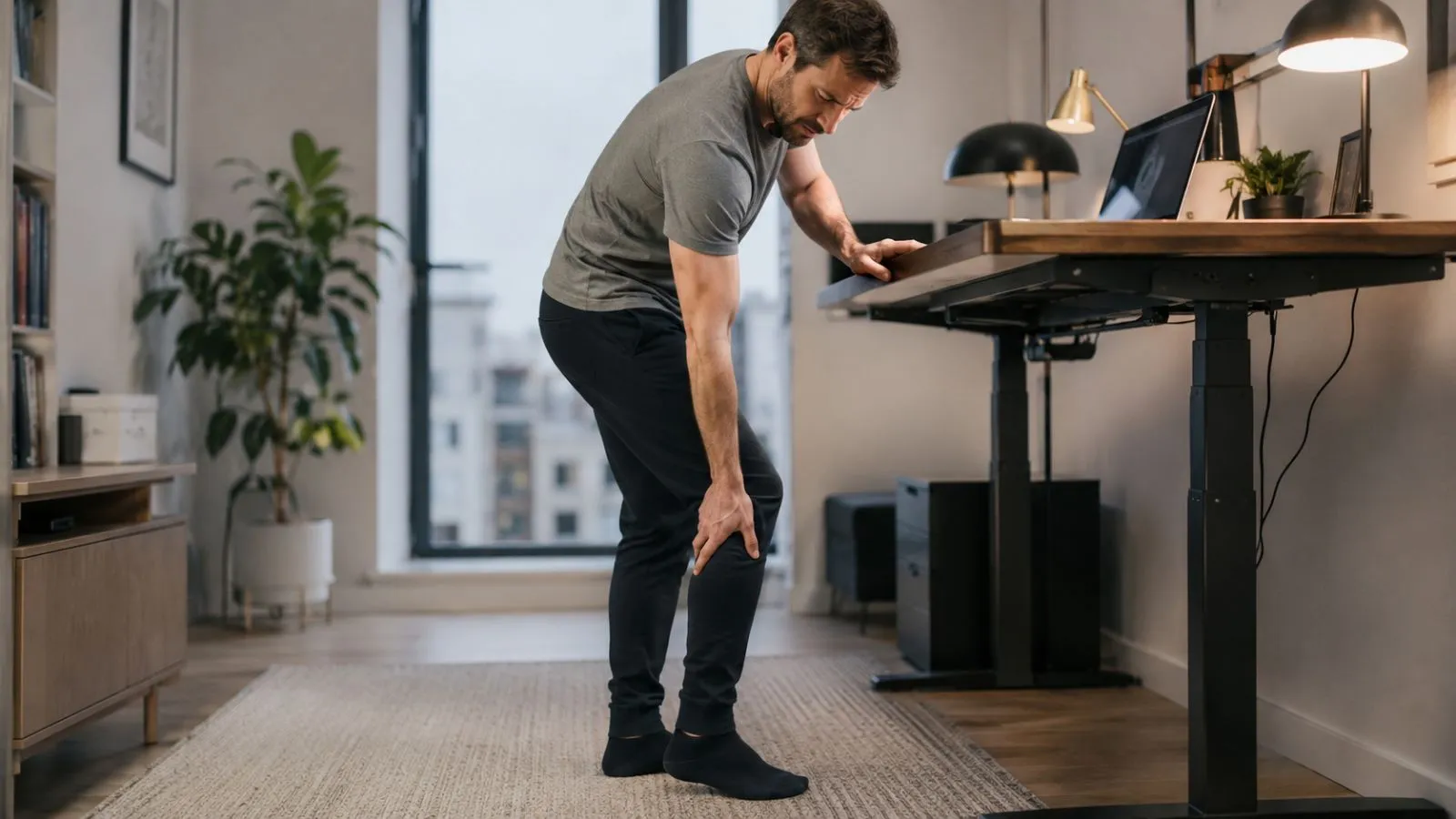
This guide covers when to seek light and when to avoid it, what studies show about compression stockings on flights, where compression boots make sense after landing, and which warning signs can point to a blood clot.
If you fly across several time zones for a race, a training camp or work, you know the pattern: wide awake at 3 am, a wall of tiredness mid-afternoon and legs like lead. At its core, jet lag is a light problem. How light steers your body clock is explained in our main article blue light and sleep: do the glasses work. This guide is the travel version: light, legs, sleep.
What actually happens with jet lag?
After the flight your body clock is still on home time while daylight, meals and meetings are on local time. A clinical review in the New England Journal of Medicine (Sack 2010) describes jet lag as exactly this mismatch. The result is poor sleep at night, sleepiness during the day, an unsettled stomach and lower performance.
How fast the clock adjusts has been estimated in real travellers. According to a 2009 review (Eastman and Burgess), it shifts by around 92 minutes a day after westward flights and only around 57 minutes a day after eastward flights. The reason: most people's internal clock runs a little longer than 24 hours, so getting later is easier than getting earlier. London to New York is usually easier to get over than the flight home.
Rule of thumb
Going east, allow roughly one day per time zone; going west, a bit less. For trips of only two or three days, the NHS suggests keeping your usual sleeping and eating times instead.
When to seek light and when to avoid it
Light is the strongest signal for your body clock, but it pushes in opposite directions depending on the time of day. Light late in the evening and in the first half of the night shifts the clock later; light in the early morning shifts it earlier. That gives you the plan:
| Direction | Seek light | Avoid light |
|---|---|---|
| West, e.g. to New York | afternoon and early evening at your destination | hardly needed, just do not go to bed too early |
| East, a few time zones, e.g. to Dubai | morning and late morning at your destination | late evening, screens before bed |
| East, around 8 time zones or more | for the first days from midday, especially 3 to 6 hours after | light before midday for the first days |
The last row feels counter-intuitive. A 2019 review (Roach and Sargent) explains it: after a big jump east, the local morning still falls in your biological night, and light at that time pushes the clock the wrong way. For an eight-hour eastward shift the authors therefore suggest avoiding sunlight before midday and getting as much of it as possible in the hours after.
To avoid light, sunglasses work in the morning and tinted glasses in the evening. The red blue light glasses for hotel evenings filter 100 % of blue light from lamps, laptop and TV, according to the manufacturer. A 2021 review (Hester et al.) found signs that such lenses shorten the time to fall asleep in jet lag too. The studies are small and the evidence is thin. When red or orange lenses suit better is covered in red vs orange blue light glasses. Do not wear them to drive.
Before you fly: shift your sleep step by step
With three days' notice you can do part of the adjustment at home. In a 2003 study (Burgess et al.), 28 adults went to bed and got up an hour earlier each day for three days. Those who got bright light after waking shifted their clock by about two hours; with ordinary room light it was just over half an hour. Roach and Sargent suggest 30 to 60 minutes a day over three to four days.
- Flying east: go to bed a little earlier each day and get daylight straight after waking.
- Flying west: go to bed a little later each day, keep some light in the evening and stay in the dark longer in the morning.
- Training: if your plan allows, move hard sessions towards the new time in the days before you fly.
On the plane: what helps heavy legs
Hours of sitting, too little to drink, barely any movement: afterwards your legs feel heavy and your ankles swell. That is usually harmless. The more serious issue is the risk of a blood clot. According to a systematic review (Kuipers et al. 2007), long-distance travel raises the risk of a venous clot roughly two- to fourfold. In absolute terms it is small: about one event per 4,600 flights longer than four hours.
The NHS lists journeys of more than four hours by plane, car or train as a risk factor and advises loose clothing, plenty of water, no alcohol and moving about, for example getting up roughly every hour. The data on compression stockings are good. A Cochrane review (Clarke et al. 2021) pooled twelve trials with 2,918 passengers on flights of more than five hours. Of 2,637 people followed up, 50 had a symptomless clot: 3 wearing stockings and 47 without. Swelling was also lower with stockings, though the evidence there is weak. Whether flight socks are right for you, and which strength, is worth asking your GP or pharmacist about before you travel, especially if you have risk factors.
Warning signs of a blood clot
The NHS lists throbbing pain in one leg, usually in the calf or thigh, swelling in one leg, red or darkened skin around the painful area and swollen veins. If you notice these, contact your GP urgently or call NHS 111, and do not use compression boots. If you also feel short of breath or have chest pain, it may be a pulmonary embolism: call 999 straight away.
After landing: where compression boots fit
First, the honest view: no study has tested compression boots after flights. They do not prevent clots and do not replace moving about on the plane or wearing flight socks. What they can do: if your legs simply feel heavy and tired after travelling, with no warning signs, many people find a session pleasant. Why that is, and where the limits are, is explained in heavy legs and compression.
This is how I use them with athletes after long-haul: a walk first, then 20 to 30 minutes on a low setting at the hotel or at home, ideally in the local afternoon. The Revive Active with its rechargeable battery is portable, so you do not need a socket next to the sofa. If you have had a blood clot, have a heart condition or are pregnant, check with a doctor first. All the reasons not to use them are listed in when not to use compression boots.
“For away competitions I never plan the arrival day as a training day. Get outside into the light at the right time, move easily, legs up, eat early. Anyone who trains hard on the first evening pays for it during the first night.”
Daniel Volpe, coachHow do you get your sleep back on track fastest?
- Local time straight away. Eat, sleep and get up on the new time. Set an alarm so you do not sleep until lunchtime.
- Keep naps short. Roach and Sargent suggest limiting them to an hour at most so night-time sleep does not suffer.
- Go easy on caffeine and alcohol. The NHS advises not drinking too much of either, as both can make jet lag worse.
- Wind down in the evening. Dim the lights and cut back on screens. What a set hour before bed can look like is shown in the evening recovery routine.
- No melatonin on your own initiative. The NHS does not recommend melatonin for jet lag because there is not enough evidence. If you are considering it, talk to your GP or pharmacist.
What does this mean for athletes?
For athletes, the evidence is surprisingly weak. A systematic review in the British Journal of Sports Medicine (Janse van Rensburg et al. 2020) found only twelve athlete-specific studies on jet lag, of low overall quality. What remains are the basic principles from sleep research: time your light, protect your sleep, do not overload the first days. Why sleep is the most important lever, Fabian explains in sleep and muscle recovery. For key fixtures in the east, plan one day per time zone of lead time if you can. Which season highlights are coming up in 2027, and how to plan recovery around them, is in our recovery calendar 2027.
Who this suits, and who should check first
A good fit if you
- fly across several time zones for races, camps or holidays
- travel long-haul for work
- regularly get heavy, swollen legs after long flights
- want to be back at your best quickly after arriving
Check with a doctor first if you
- have had a blood clot or pulmonary embolism before
- have recently had surgery, are pregnant or use oestrogen-based contraception and are flying long-haul
- have a heart or vein condition
- notice warning signs after the flight, such as one swollen leg or calf pain
Conclusion
The most effective way to shorten jet lag is well-timed light: afternoon and evening light after flying west, morning light after flying east, light only from midday for the first days after big eastward jumps, and dim evenings throughout. Frequent flyers and athletes who start adjusting a few days before departure and keep their legs moving on board benefit most. Compression boots and blue light glasses are comfort tools with thin evidence, not clot prevention, and warning signs such as one swollen, painful leg need medical attention straight away.
Frequently asked questions
How can I avoid jet lag?
How long does jet lag last?
Why is jet lag worse flying east?
Do flight socks work?
Can I use compression boots after a long-haul flight?
Do blue light glasses help with jet lag?
Sources
- Sack, R. L. (2010). Clinical practice. Jet lag. New England Journal of Medicine, 362(5), 440–447.
- Eastman, C. I. & Burgess, H. J. (2009). How To Travel the World Without Jet lag. Sleep Medicine Clinics, 4(2), 241–255. – Re-entrainment rates after eastward and westward flights
- Burgess, H. J. et al. (2003). Preflight adjustment to eastward travel: 3 days of advancing sleep with and without morning bright light. Journal of Biological Rhythms, 18(4), 318–328.
- Roach, G. D. & Sargent, C. (2019). Interventions to Minimize Jet Lag After Westward and Eastward Flight. Frontiers in Physiology, 10, 927.
- Janse van Rensburg, D. C. C. et al. (2020). How to manage travel fatigue and jet lag in athletes? A systematic review of interventions. British Journal of Sports Medicine, 54(16), 960–968.
- Hester, L. et al. (2021). Evening wear of blue-blocking glasses for sleep and mood disorders: a systematic review. Chronobiology International, 38(10), 1375–1383.
- Clarke, M. J. et al. (2021). Compression stockings for preventing deep vein thrombosis in airline passengers. Cochrane Database of Systematic Reviews, 4, CD004002.
- Kuipers, S. et al. (2007). Travel and venous thrombosis: a systematic review. Journal of Internal Medicine, 262(6), 615–634.
- NHS: Deep vein thrombosis (DVT).
- NHS: Jet lag.