Revive Active vs Revive Active Pro: 4 or 8 Chambers Compared
Revive Active vs Revive Active Pro comes down to one main difference: 4 air chambers per leg against 8. On top of that, the Pro adds a little more maximum pressure, more programmes, a free session timer and chambers you can switch off one by one. Whether you need any of that depends less on how good an athlete you are and more on how you use the boots.

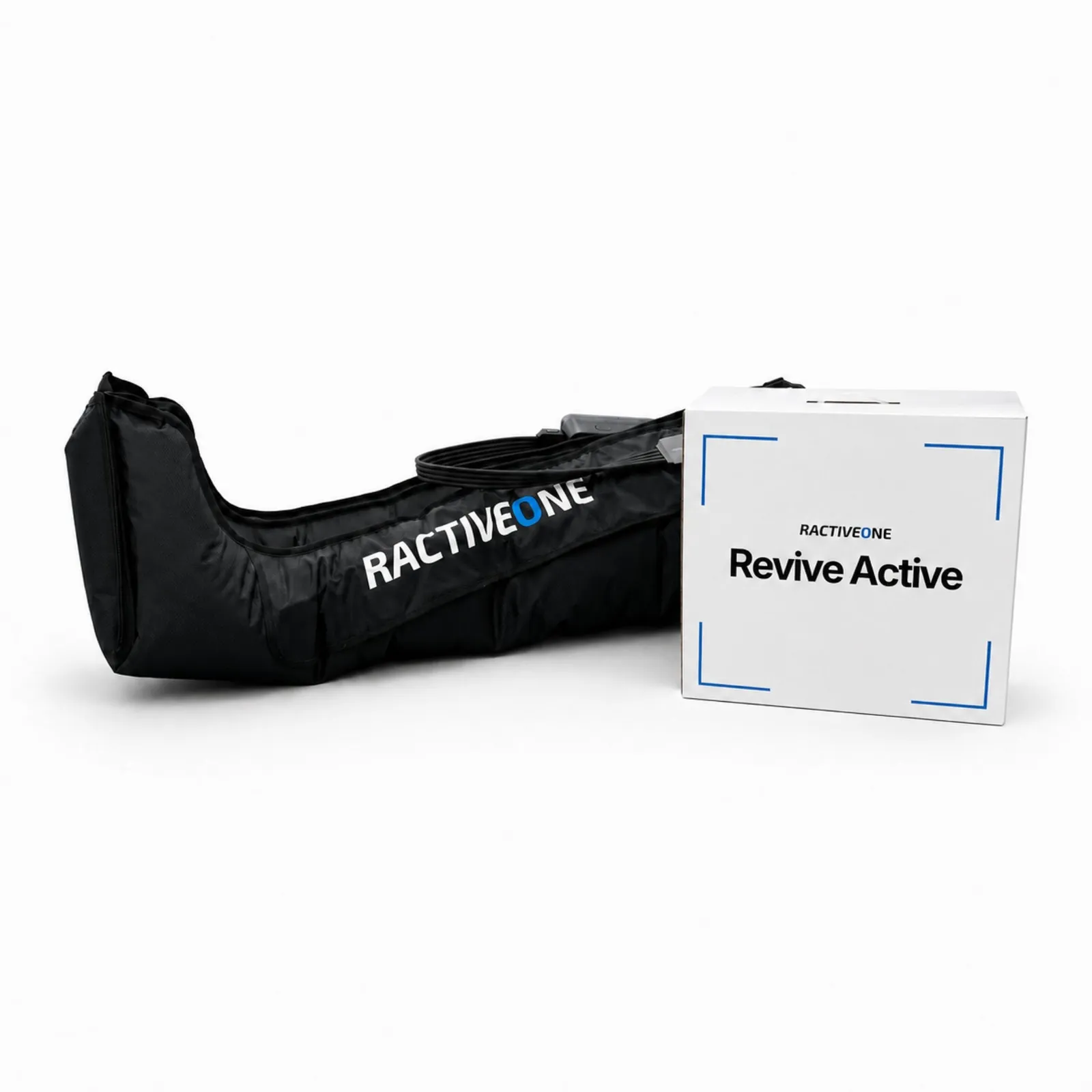
I put both models side by side using the product page data, show what research says about chambers, pressure and session length, and tell you where I draw the line as a coach.
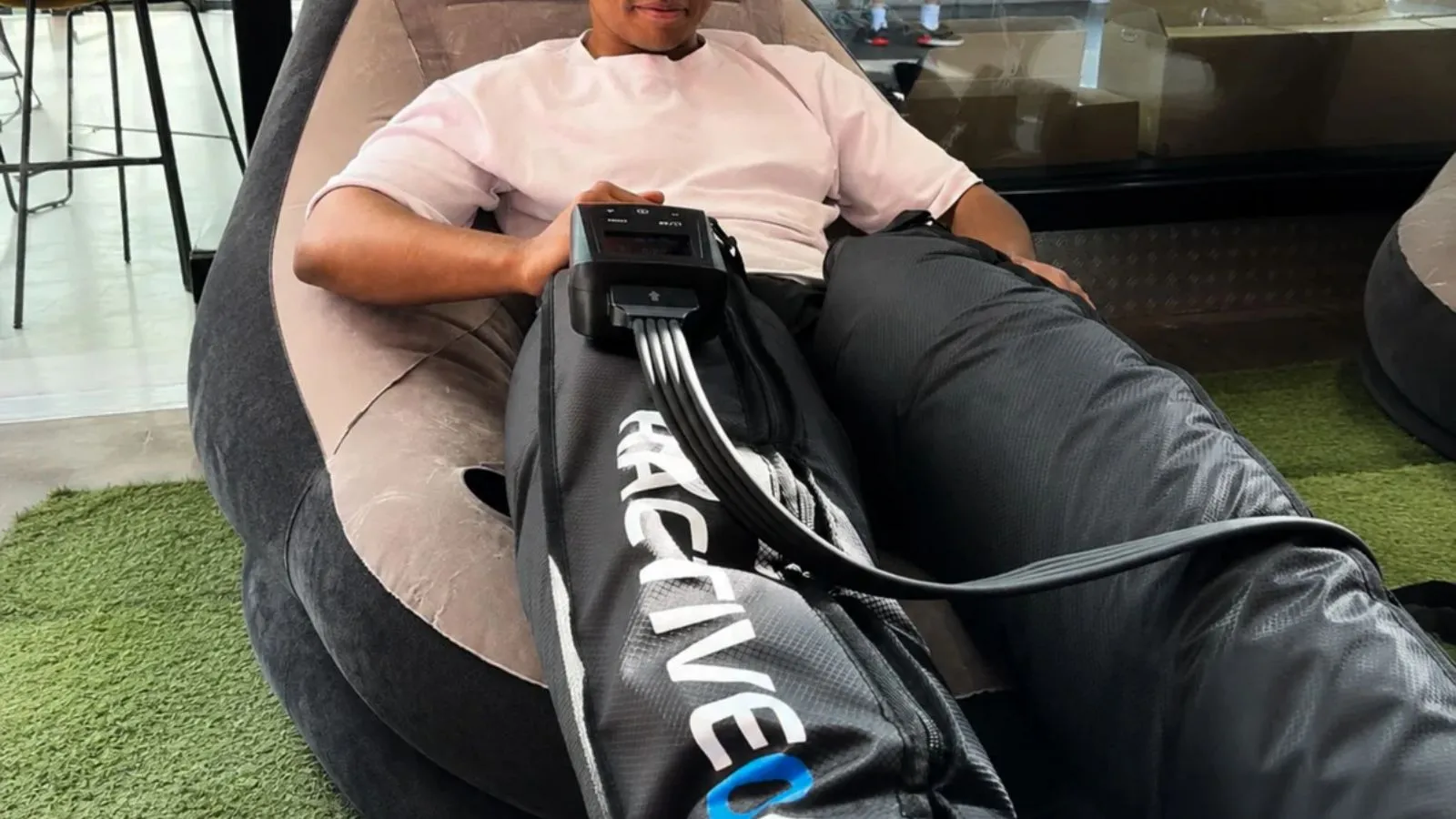
Both models work the same way: air chambers fill one after another from the foot towards the thigh, then release. If you want to know what that pressure wave does in your legs, start with our guide on how compression boots work. This article answers the question I get asked most by the athletes I coach: is the Revive Active enough, or is the Pro worth it?
Ractiveone sells both models. All specifications come from the product pages as of 15 October 2026. Where the Pro page gives no figure of its own, the table says so.
Revive Active vs Pro at a glance
| Feature | Revive Active | Revive Active Pro |
|---|---|---|
| Air chambers per leg | 4 | 8, can be switched off individually |
| Pressure | 30–240 mmHg in 7 levels | up to 260 mmHg |
| Programmes | 5 modes | 6 programmes |
| Session length | 15, 30 or 45 minutes | anything from 10 to 90 minutes |
| Power | battery, 3200 mAh, up to 180 minutes | battery, no separate runtime given |
| Sizes | S/M and L | S/M and L |
The differences sit in three places: chambers, control and adjustment range. The principle and the cable-free use stay the same.
What do 8 chambers do that 4 don't?
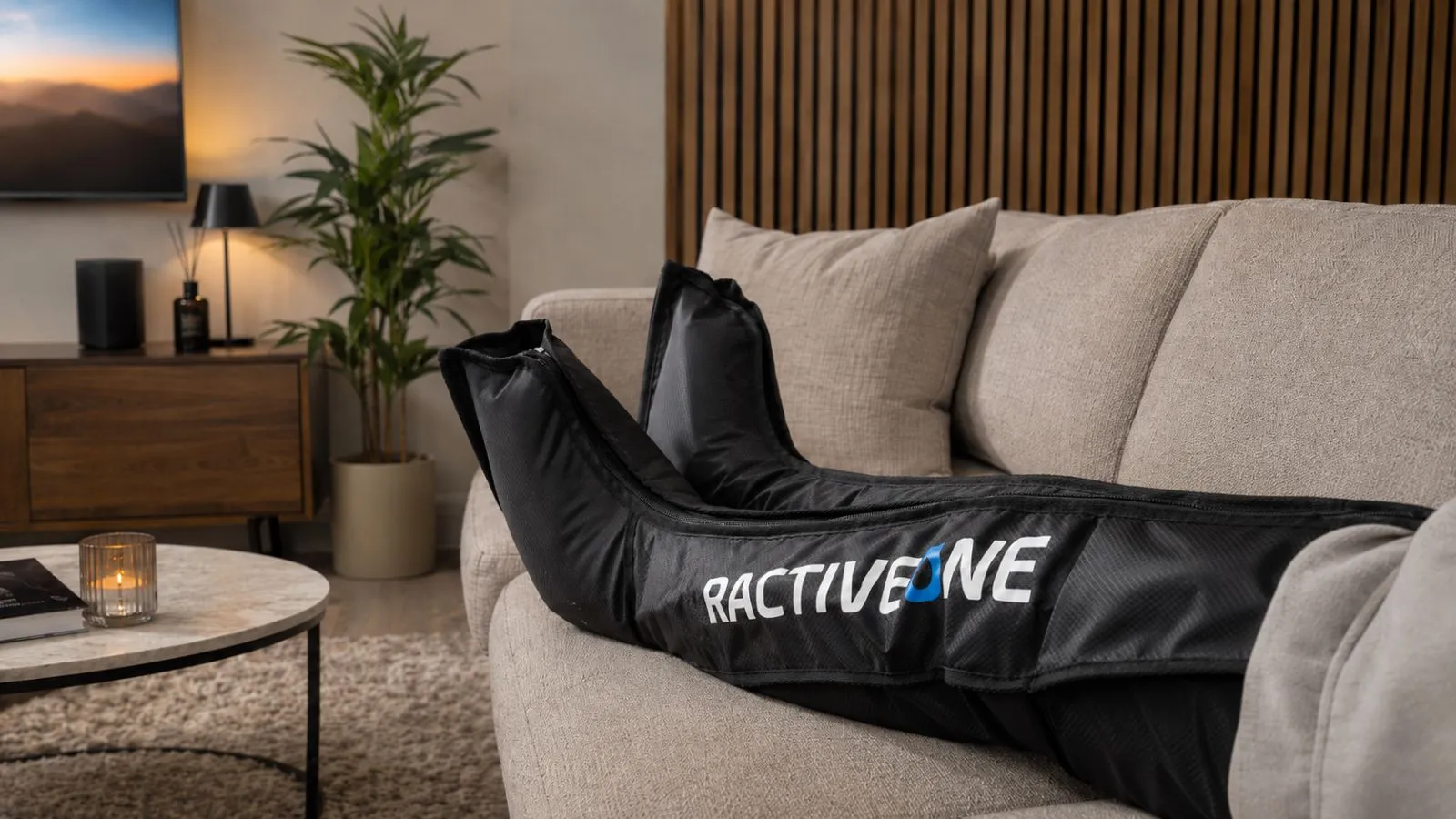
The Revive Active splits your leg into four sections from foot to thigh. The Pro splits the same length into eight. Each chamber is shorter, so the wave travels up the leg in smaller steps. It feels smoother, a bit like a hand working up your leg in short strokes rather than four long ones.
Whether that helps you recover faster is unknown. I'm not aware of any study comparing 4 and 8 chambers in athletes. One Japanese study used fluorescence imaging to watch lymph fluid move in the lower leg during compression. In the healthy volunteers, the different modes made no significant difference to flow speed. Only in patients with lymphoedema did sequential inflation at high pressure come out ahead (Kitayama et al. 2017). That was a clinical setting with a six-chamber device, so it does not transfer to sport.
To put it plainly: 8 chambers are about comfort and control, not a proven recovery advantage.
Do you need 260 rather than 240 mmHg?
Hardly ever. A meta-analysis of compression boots in sport found that most studies used around 80 mmHg, usually for 20 to 30 minutes (Maia et al. 2024). The Revive Active has seven levels (30, 50, 80, 120, 160, 200 and 240 mmHg), so 80 mmHg is a direct setting. According to its manual, the Pro works from 80 to 260 mmHg and starts at 80 mmHg by default.
In practice, few of the athletes I work with use the top levels regularly. After a heavy leg day your quads are tender and a middle setting feels better. If you like very firm pressure, the Pro gives you more room. The maximum is not something to chase. How to find your level is covered in our guide on how long and how often to use compression boots.
5 modes or 6 programmes, fixed or free timing?
The Revive Active has five modes:
- Sequential: the chambers fill one after another from the foot up and hold the pressure, the default after training.
- Wave: a gentle wave through the whole leg, good for rest days.
- Double Wave: two chambers work together as a double wave moving upward, designed by the manufacturer for warming up.
- Sequential + Double Wave: building compression first, then a double wave.
- All: all chambers fill at the same time.
The Pro has six programmes, labelled A to F in the manual. They have no names; the manual only shows the order in which the eight chambers fill.
Timing is a bigger difference than it sounds. The Revive Active runs for 15, 30 or 45 minutes; the Pro lets you set anything between 10 and 90. Longer isn't better, though. Distance runners who spent an hour a day in the boots for five days after a hard run had no less soreness than runners without them (Draper et al. 2020). Where I see real value in the free timer is at the short end: 10 minutes between two sessions on a tournament day, or before warming up.
Switching chambers off: when it helps
For me, this is the strongest reason to choose the Pro. You can switch off individual chambers and leave parts of the leg out of the session. Situations from training:
- After a session full of jumps or calf raises, you want to work mainly on calves and feet, not your thighs.
- The pressure feels uncomfortable in one spot, say around the knee, while the rest is fine.
- You use the boots daily and want to focus on different zones depending on the day.
On the Revive Active the wave always runs through all four chambers, which is exactly right for a standard session after training or a match.
"During contest prep, what matters to me is that I use the boots every evening, not how many chambers they have. The Pro gives me more dials to turn. But sleep, food and programming decide whether a recovery week goes well or badly."
Fabian, bodybuilder and coachWhat both models have in common
- Intermittent pneumatic compression from foot to thigh
- Battery power, so no socket needed during a session
- Sizes S/M and L: go by your inside leg length, S/M fits up to 84 cm, L from 85 cm. As a rough guide, S/M suits a height of about 165 to 180 cm and L from 180 cm.
- The same safety advice and contraindications
What to look for in any pair of boots, from fit and pressure range to controls and battery, is in our 7 criteria to check before buying. How both models compare with Normatec, JetBoots and others is in the compression boots comparison based on manufacturer data.
Which model suits you?
Choose the Revive Active if …
- you use the boots two to five times a week after training or in the evening,
- fixed sessions of 15, 30 or 45 minutes work for you,
- you want a simple device that needs no learning curve.
That covers most people: runners, Sunday league and club footballers, rugby players, strength athletes with one or two leg days, and anyone on their feet all day at work. The manufacturer itself sees the Revive Active as the right fit for around 90 per cent of users.
Choose the Revive Active Pro if …
- you use the boots almost daily and want to vary programmes,
- you want to leave specific zones out,
- you need very short or flexible sessions, for example between two training blocks,
- you like working with very firm pressure.
High-volume athletes, Hyrox and triathlon competitors or bodybuilders in prep get the most out of the extra settings. You are not buying a stronger recovery effect, you are buying more control. How the boots fit into a full training week is shown in the guides to Hyrox recovery between training blocks and the bodybuilding recovery protocol between splits. For clinics and gyms using boots with many clients, setup and hygiene are covered in compression boots for gyms and clinics.
Full specifications are on the product pages for the Revive Active with 4 chambers and the Revive Active Pro with 8 chambers.
When neither model is right
Applies to both models
Do not use them if you have or may have a blood clot (DVT), acute heart failure, a history of pulmonary embolism, peripheral arterial disease, uncontrolled high blood pressure, or open or inflamed skin on your legs. If you are pregnant, have a pacemaker, take blood thinners or have recently had surgery, speak to your GP first.
More chambers don't change any of that. A leg that keeps hurting or swelling needs to be looked at by a doctor before you use compression. The full list is in our guide on compression boots side effects and contraindications.
Conclusion
The Revive Active Pro stands apart through 8 chambers you can switch off individually, more programmes and free timing, not through a proven stronger effect. For most people who use their boots after training and on long days, the Revive Active is the right choice, while the Pro suits heavy users who want to control individual zones. No study compares 4 and 8 chambers directly, and if a contraindication applies to you, neither model is an option.
Frequently asked questions
What is the difference between Revive Active and Revive Active Pro?
Are 8 chambers better than 4 for recovery?
Do I need 260 mmHg?
Who is the Revive Active Pro for?
What size do I need for Revive Active or Pro?
Is the safety advice different for the Pro?
Sources
- Maia, F. et al. (2024). Effects of lower-limb intermittent pneumatic compression on sports recovery: A systematic review and meta-analysis. Biology of Sport, 41(4), 263–275. – Most common protocols 20–30 minutes at around 80 mmHg
- Kitayama, S. et al. (2017). Real-Time Direct Evidence of the Superficial Lymphatic Drainage Effect of Intermittent Pneumatic Compression Treatment for Lower Limb Lymphedema. Lymphatic Research and Biology, 15(1), 77–86. – No significant differences between modes in healthy volunteers
- Draper, S. N. et al. (2020). Effects of Intermittent Pneumatic Compression on Delayed Onset Muscle Soreness (DOMS) in Long Distance Runners. International Journal of Exercise Science, 13(2), 75–86.
- Ractiveone: Revive Active, product page with specifications (manufacturer data, accessed 15 Oct 2026)
- Ractiveone: Revive Active Pro, product page with comparison table (manufacturer data, accessed 15 Oct 2026)