How to Use Compression Boots: How Long, How Often, What Pressure
The best way to use compression boots is 20 to 30 minutes after training, two to five times a week, at a pressure that feels firm but never painful. That is the short answer. The real questions come once the boots are on your legs: is 45 minutes better than 20? Can I use them before a run or at half-time? Which of the seven levels is right?
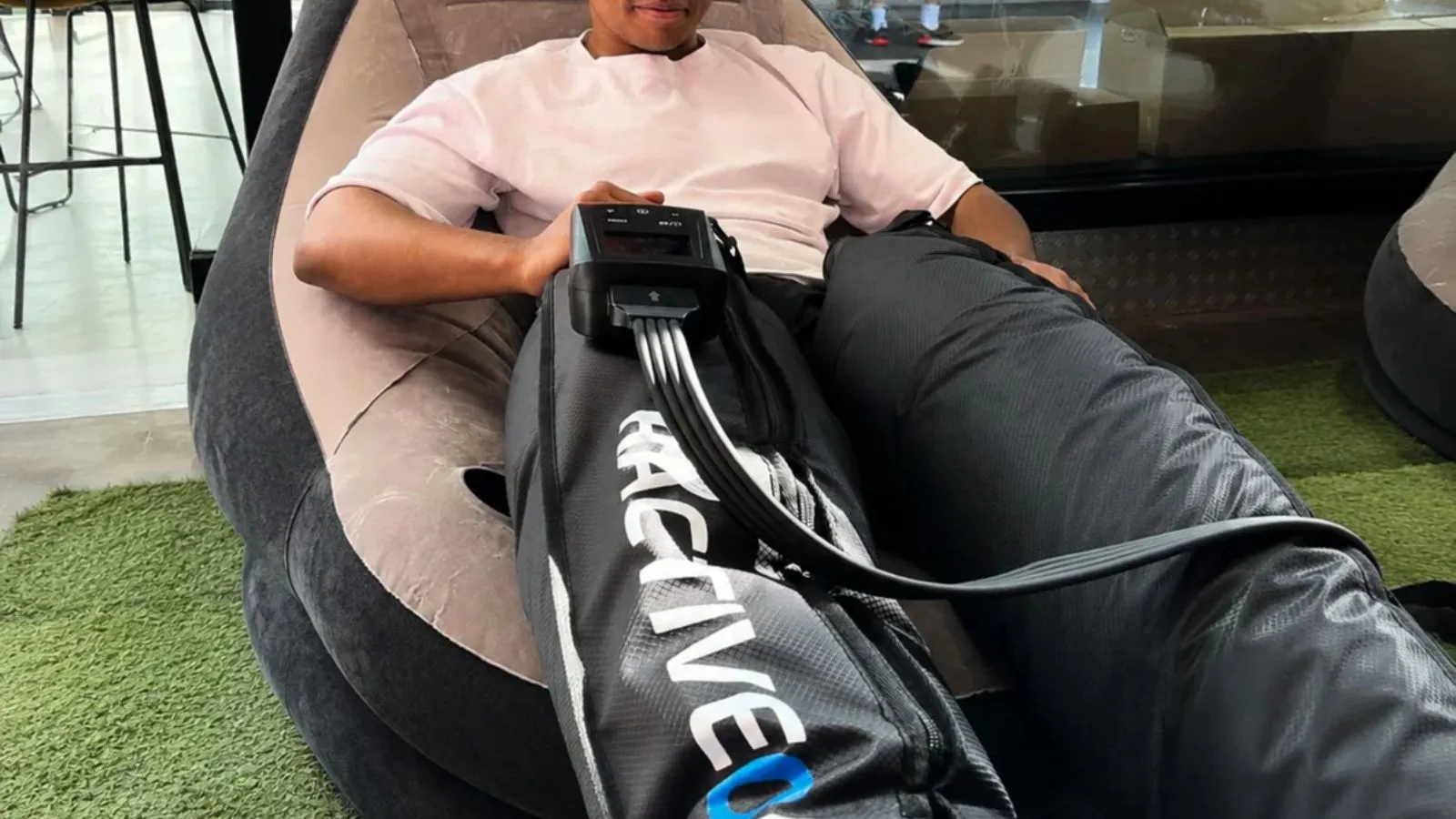
I answer each one with what studies have actually measured and what has worked for the athletes I coach.
This is the hands-on companion to our main guide on how compression boots work. If you have not read about air chambers and the pressure wave yet, spend five minutes there first. One step earlier still, our short explainer covers what compression boots are. This article answers one thing only: how to use the boots so that they actually do something for you.
The short answer in one table
| Question | Recommendation | Basis |
|---|---|---|
| How long? | 20–30 minutes | most common protocol in studies |
| How often? | 2–5 times a week | coaching practice, after hard sessions |
| What pressure? | start low, firm but comfortable | studies mostly around 80 mmHg |
| When? | after training or in the evening | where the effects were studied |
| Before exercise? | optional, short and gentle | one small study on flexibility |
How long should you use compression boots?
20 to 30 minutes per session. That is the range used in most studies, according to a meta-analysis of 17 trials (Maia et al. 2024). Shorter protocols can work too: in a 2025 study, 15 minutes straight after training and on each of the three following days was enough to reduce soreness at 48 and 72 hours (Gu et al. 2025).
More time, on the other hand, adds nothing you can measure. Distance runners who spent an hour in boots after a 20-mile run, and repeated it for five days, had no less pain and no lower inflammation markers than without boots (Draper et al. 2020). That is why the Revive Active has three timer settings:
- 15 minutes for busy days or a short session before training
- 30 minutes as the standard after hard sessions
- 45 minutes only on a low level, when you are using the time to unwind anyway
How often should you use recovery boots?
Two to five times a week. What counts is how often your legs are genuinely working hard. A fixed routine after your toughest sessions beats a random session whenever you happen to remember. After a race or a very hard block, you can borrow the protocol from the Gu study: one session straight afterwards and one on each of the next three days. What a recovery area right at a race looks like is shown in our report from the Altimate Run in Cologne.
Daily use is fine for healthy athletes as long as the pressure stays moderate. It does not replace a rest day.
| Profile | When | Per week |
|---|---|---|
| Runner, 3–5 runs | after the long run and after intervals | 2–3 × |
| Lifter with 2 leg days | evening after leg day and the day after | 2–4 × |
| Football, rugby, Hyrox | after the match or race and after the hardest training | 3–5 × |
| On your feet all day, frequent travel | evenings after long days | as needed |
What pressure should you use?
The lowest level at which you can clearly feel the wave. The studies in the meta-analysis most often used around 80 mmHg (Maia et al. 2024). The Revive Active has seven levels: 30, 50, 80, 120, 160, 200 and 240 mmHg. So start at 50 or 80 mmHg and only go higher if the pressure still feels too gentle after a few sessions.
How to tell whether the level is right:
- Right: a firm grip around the leg, the wave is clearly noticeable, and you can relax or read.
- Too high: tingling, numbness, throbbing, pain at the knee or ankle. Go down a level or stop.
- Too low: you barely feel the wave travel. Go up one level.
After very hard sessions, when your legs are tender, a lower level often feels better than on normal days. Pressure is not a target to beat.
"Consistency beats intensity. Someone who spends 20 minutes on a medium level after every hard session for three weeks feels fresher than someone who does 45 minutes on the top level once a month."
Daniel Volpe, coachCompression boots before or after a workout?
After. Almost every study looks at use after exercise, and that is where the benefit you notice lies: lighter legs and, in some cases, less soreness.
Before training
A short session of 10 to 15 minutes on a low level can feel good before training. A small study of nine people experienced in the splits found clearly better split flexibility after 15 minutes of compression at 70 mmHg than without (Sands et al. 2014). That is a short-term effect in very few people, and it does not replace an active warm-up with jogging, mobility drills and strides. The Double Wave mode is designed for a pre-session.
Between two efforts or at half-time
At tournaments, or with two races on the same day, it is tempting to spend the break in boots. Trained cyclists felt slightly better recovered after 30 minutes in boots between two races, but were no faster in the second one (Overmayer and Driller 2018). If it helps you relax, use it. Just do not expect a performance jump.
In the evening
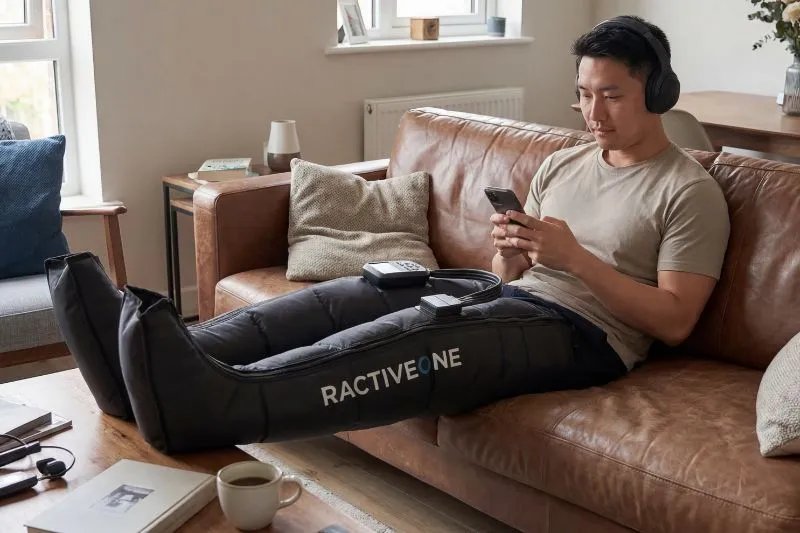
For many people the most practical option: 20 to 30 minutes on the sofa after dinner. Set the timer so you do not fall asleep in them. If your legs feel heavy mainly after a long working day, the after-work routine in heavy legs after the office fits better.
Which mode for what?
The Revive Active has five modes. This is how I use them:
- Sequential: the classic build-up from foot to thigh. The standard after training and the pattern most studies use.
- Wave: a gentle wave through the whole leg, good for rest days and evenings.
- Double Wave: two overlapping waves, intended by the manufacturer for warming up.
- Sequential + Double Wave: the most complete programme, for the days after a race or match.
- All: all zones at once. Intense, better for experienced users.
Step by step: how a session works
- Put on thin full-length leggings or tracksuit bottoms. A textile layer under the sleeve is also recommended in the German IPC guideline (Schwahn-Schreiber et al. 2025).
- Sit reclined or lie down with your legs straight and relaxed.
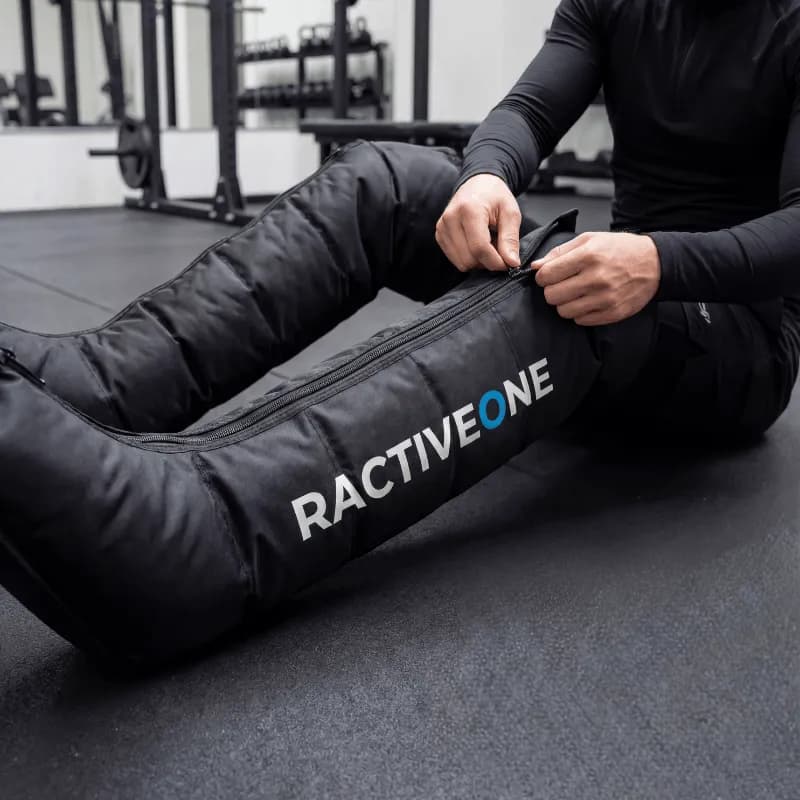
- Put the boots on, close the zips fully and connect the hoses.
- Choose mode and time, for example Sequential Squeezing and 30 minutes.
- Start on level 1 or 2 and wait for two or three cycles before changing anything.
- Stay put: read, listen to a podcast. Do not stand up in the boots.
- When it ends, sit for a moment, then stand up slowly. Wipe the inside with a damp cloth now and then. If several people share the boots, in a clinic or gym for example, stricter rules apply; they are set out in compression boots for clinics and gyms.
Five common mistakes
- Too much pressure at the start. It feels effective but is just uncomfortable.
- Boots instead of a cool-down. Easy movement after training still makes sense; the boots come afterwards.
- Using them irregularly. Once a month does very little. Plan fixed slots.
- Wrong size. The sleeve should match your leg length. Inside leg length is what counts: S/M up to 84 cm, L from 85 cm (as a rough guide, S/M for about 165–180 cm height, L from 180 cm).
- Ignoring pain. A device that feels nice is no substitute for seeing a doctor if one leg keeps hurting or swelling.
When should you not use recovery boots?
Contraindications
Do not use them with deep vein thrombosis or suspected DVT, extensive phlebitis, acute erysipelas or cellulitis, compartment syndrome, decompensated heart failure or severe uncontrolled high blood pressure (Schwahn-Schreiber et al. 2025). With open wounds, marked neuropathy, circulation problems, during pregnancy or after a fresh injury, check with your GP first. What sits behind each point is explained in our article on when not to use compression boots.
Heavy legs with no obvious cause, swelling on one side or pain in the calf should be checked by a doctor before you use compression. For more on this and on harmless causes, see our article on heavy legs and compression.
What you can realistically expect
Used well, compression boots make your legs feel lighter after hard sessions, and soreness may be a little milder. Which effects are well supported and which are not is laid out in the benefits of compression boots according to research. Whether buying a pair pays off for your training volume is worked out by Fabian in are recovery boots worth it for athletes. If you want to put the settings from this guide straight into practice, the Revive Active with 5 modes and 7 pressure levels has every programme and timer option described here.
Conclusion
The best routine is unspectacular: 20 to 30 minutes after training, two to five times a week, at a pressure that is firm but comfortable. It suits athletes whose legs work hard regularly and who plan the boots in as a habit. The effects are small and mostly felt rather than measured, and with a blood clot, an acute leg infection or heart problems, boots are not an option.
Frequently asked questions
How long should you use compression boots for?
How often should I use recovery boots?
What pressure should I use on compression boots?
Should I use compression boots before or after a workout?
Can I fall asleep in compression boots?
Should I wear anything under recovery boots?
Sources
- Maia, F. et al. (2024). Effects of lower-limb intermittent pneumatic compression on sports recovery: A systematic review and meta-analysis. Biology of Sport, 41(4), 263–275. – Most common protocols 20–30 minutes at around 80 mmHg
- Draper, S. N. et al. (2020). Effects of Intermittent Pneumatic Compression on Delayed Onset Muscle Soreness (DOMS) in Long Distance Runners. International Journal of Exercise Science, 13(2), 75–86.
- Gu, Z. et al. (2025). Effects of intermittent pneumatic compression on delayed onset muscle soreness and recovery of muscular fatigue. PM&R, 17(9), 1080–1090.
- Sands, W. A. et al. (2014). Peristaltic pulse dynamic compression of the lower extremity enhances flexibility. Journal of Strength and Conditioning Research, 28(4), 1058–1064.
- Overmayer, R. G. & Driller, M. W. (2018). Pneumatic Compression Fails to Improve Performance Recovery in Trained Cyclists. International Journal of Sports Physiology and Performance, 13(4), 490–495.
- Schwahn-Schreiber, C. et al. (2025). S1 guideline: Intermittent pneumatic compression (IPK, AIK). AWMF register no. 037/007 (in German).
- Ractiveone: Revive Active modes, pressure levels and timer (manufacturer data)