Football Recovery After a Match: 72 Hours, Busy Weeks, Grassroots
Football recovery after a match decides how fresh you are for the next game and how high your injury risk is. After 90 minutes of sprints, turns and tackles, research shows your speed can take up to 72 hours to come back. In a congested run of fixtures, you rarely get that long.
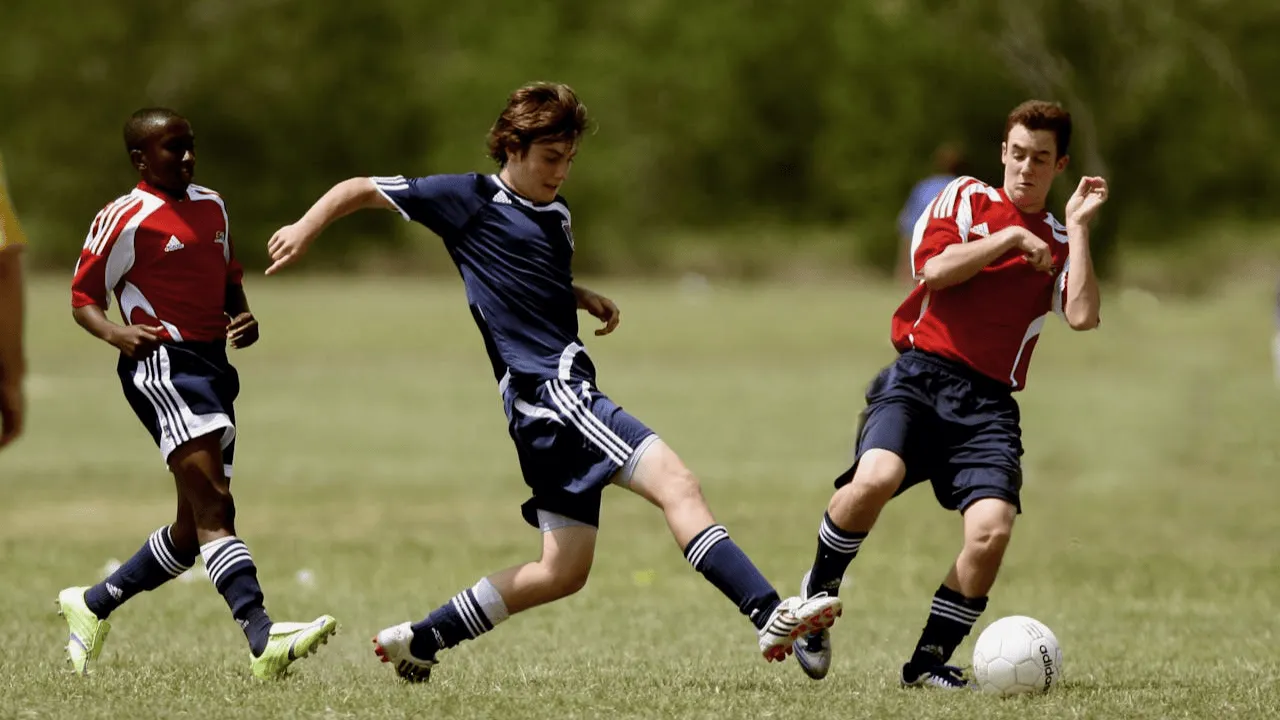
This article gives you a clear plan for the 72 hours after the final whistle, a strategy for two games a week and an honest look at what Sunday league players can borrow from the pros and what they cannot. You will also see where compression boots and a massage gun fit in.
Football is part endurance run, part sprint session. Ninety minutes pack in sprints, sudden stops, turns, jumps and challenges, and all that braking is what makes your legs heavy over the next few days. How compression boots work mechanically is explained in how compression boots support recovery. This article is about recovering after a match, through a run of fixtures and as a grassroots player with a day job.
What happens to your body after 90 minutes?
A review by Nédélec and colleagues (2012) names four main causes of post-match fatigue: fluid loss, empty glycogen stores, damage to muscle fibres and mental fatigue. A study that followed 24 players after a single match (Ispirlidis et al. 2008) mapped how long it lasts:
- Straight after the match: inflammatory markers and cortisol peak.
- After 24 hours: soreness is at its worst.
- After 48 hours: the muscle damage marker creatine kinase peaks.
- Up to 72 hours: sprint, jump and strength are still down.
In short, the day after a match is not a day for sprints or the gym. For most players, speed is back to normal after about three days.
The 72-hour plan after a match
The second part of the review (Nédélec et al. 2013) rates the usual methods. Fluids, food and sleep have the strongest support. It suggests, for example, a milk drink straight after the match and, within the first hour, a meal with fast carbohydrates and protein. Poor sleep after evening kick-offs is common and slows recovery down.
| When | What you do | Boots and massage gun |
|---|---|---|
| 0–60 minutes | drink, milk drink or snack, 5–10 minutes of easy jogging | not needed yet |
| Evening | meal with carbs and protein, screens off early, sleep | boots 20–30 min, level 1–2 |
| Day 1 | walk, easy cycle or swim, mobility | boots 20–30 min, massage gun 1–2 min per muscle |
| Day 2 | light session with the ball, no flat-out sprints | boots 20 min if legs feel heavy |
| Day 3 | normal training, speed work possible again | as needed |
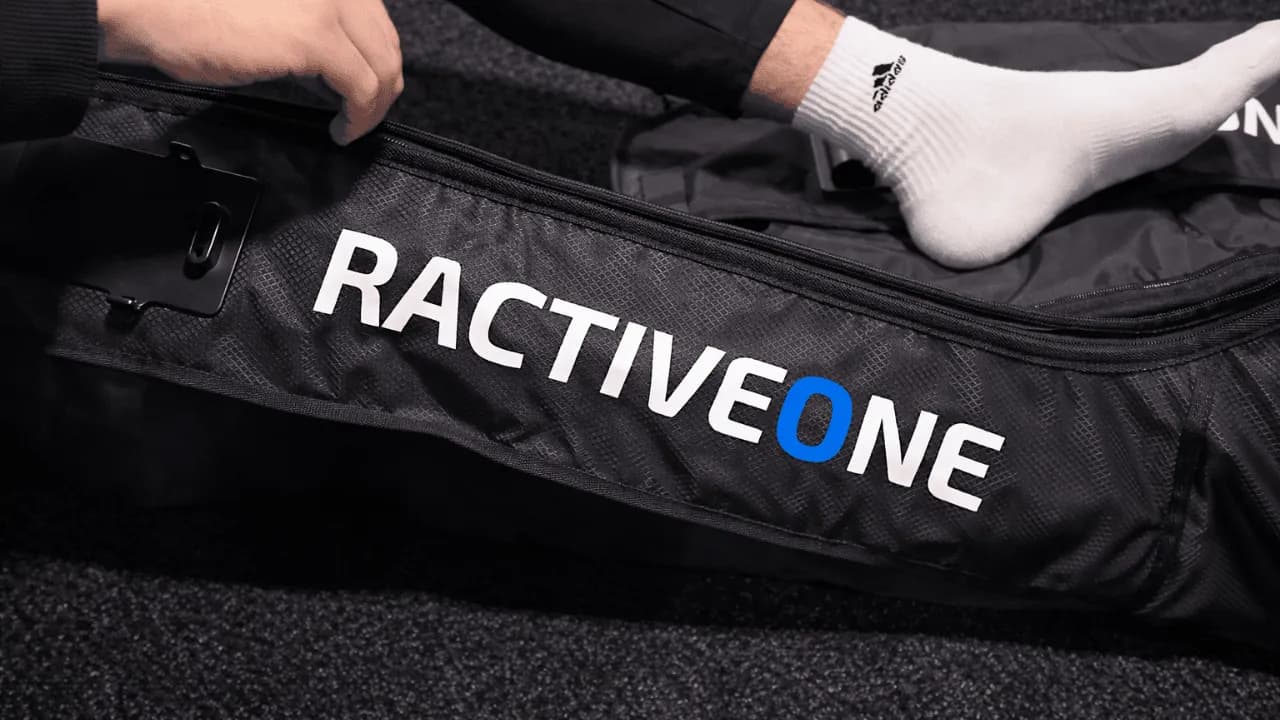
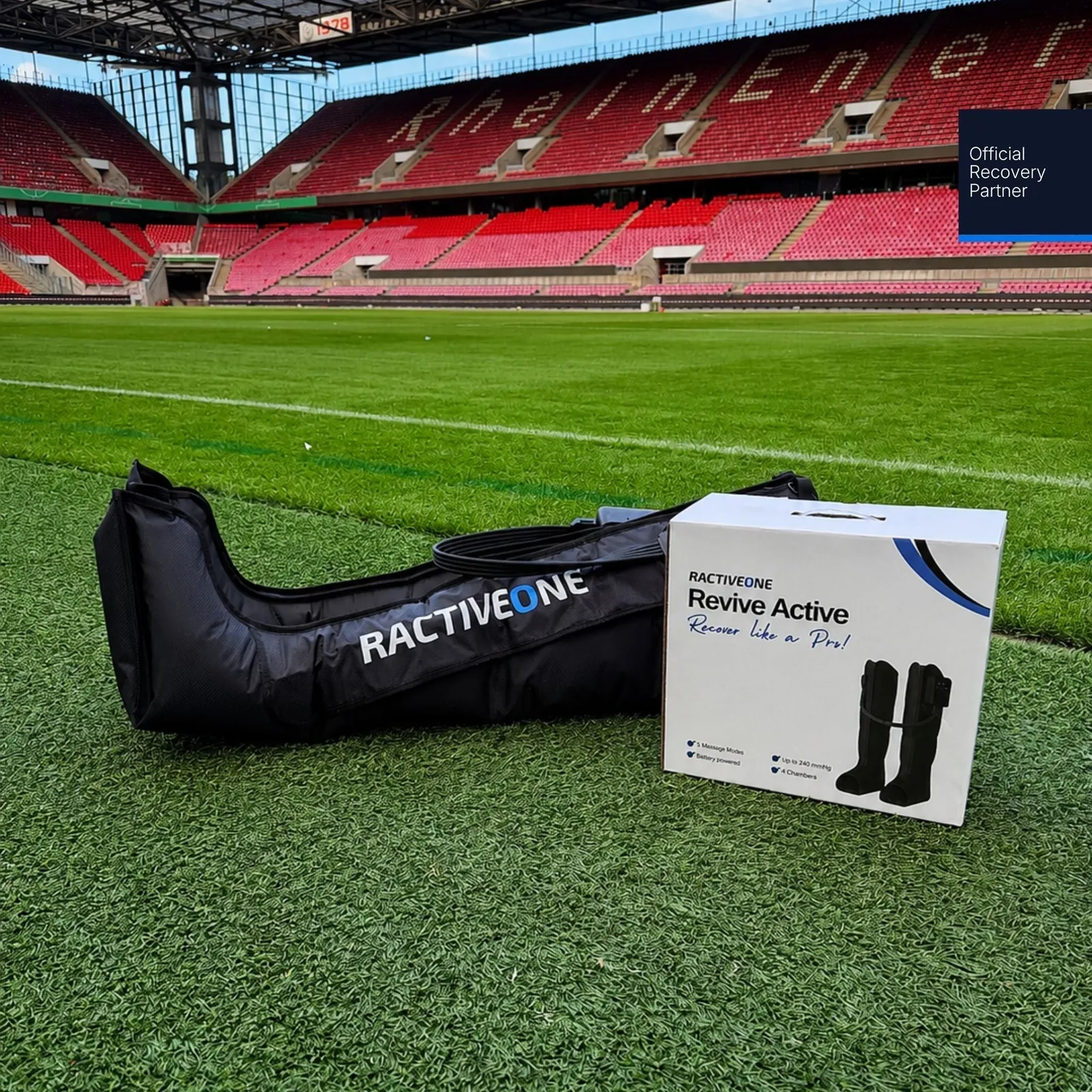
With boots, start low. The Revive Active compression boots have 7 pressure levels and 5 modes; the lower levels are plenty for the evening after a game. For general guidance on session length and frequency, see how long and how often to use compression boots.
How do you recover during fixture congestion?
In a Saturday–Tuesday–Saturday run, there are only 72 to 96 hours between games. Dupont and colleagues (2010) followed players from a Champions League squad for two seasons. Running output in matches stayed the same with two games a week, but the injury rate rose from 4.1 to 25.6 injuries per 1,000 hours. An analysis across eleven seasons (Bengtsson et al. 2013) found around 30 per cent more muscle injuries in league matches played after four days' rest or fewer compared with six days or more, mainly hamstrings and quads.
So the issue is less about performance in the next game and more about risk. That points to a clear plan for a midweek fixture:
- Sunday: recovery day with light movement and no load, boots in the evening.
- Monday: short session on shape and set pieces, no long runs.
- Tuesday: match, then back to the 72-hour plan.
- Wednesday to Friday: build back up, sharpen on Friday, early night.
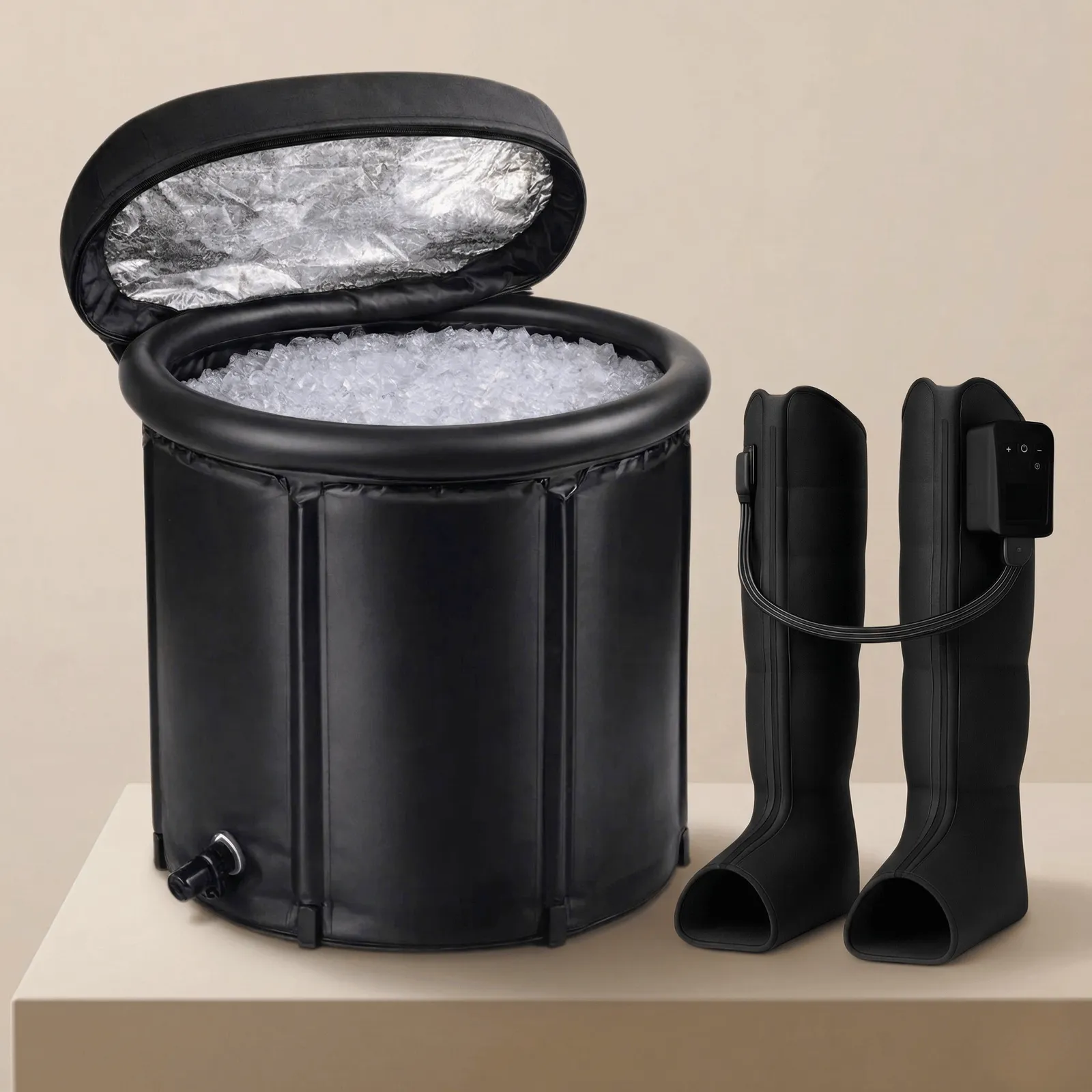
In busy periods, cold can help you get back to speed sooner, which the Nédélec review supports. In pre-season, when building strength is the goal, use it more sparingly. What an ice bath and boots each offer is compared in compression boots or an ice bath.
Sunday league vs pro: what can you borrow?
Professionals have staff, catered meals and time. Grassroots players kick off on Sunday morning, go to work on Monday and train two evenings a week. The principles are still the same.
| Area | Professional | Grassroots |
|---|---|---|
| Matches per week | often two | usually one |
| Food after the match | organised by the club | plan it yourself: snack in the kit bag, meal ready at home |
| Sleep | travel and evening kick-offs get in the way | post-match pints and early starts get in the way |
| Recovery tools | cold tubs, boots, massage from the physio | your own boots or massage gun at home |
| Biggest lever | squad rotation and load management | sleep, food and an easy day after the match |
Your advantage as a grassroots player is the time until the next game. Keep Monday easy, do not use Tuesday training for all-out sprints and make sure you eat something decent after the match at all. An expert consensus on athletes' sleep (Walsh et al. 2021) names less than 7 hours a night as a risk factor, and that applies on a Sunday league pitch too. If you also ride a bike or play padel during the week, that counts towards your load as well. How to recover there is covered in leg recovery for cyclists and padel recovery for forearm and shoulder.
Compression boots and a massage gun: what is realistic?
To be straight with you: football studies have not yet shown that compression garments, massage or boots bring performance back faster (Nédélec et al. 2013). A large meta-analysis across sports (Dupuy et al. 2018) did find less soreness and lower perceived fatigue with massage and compression garments. That is exactly why many players use the devices: so their legs feel lighter that evening and the next day.
- Compression boots: both legs at once, on the evening after the match and on day 1. Lie down with your legs slightly raised for 20–30 minutes.
- Massage gun: for calves, adductors and thighs, 1–2 minutes per muscle on a low speed. Never on bone, joints or fresh dead legs. The Revive Pulse Pro massage gun comes with 5 attachments. Practical tips for tight calves are in tight calves for runners and footballers. Whether a more precise tool suits single tight spots in the calf or adductors is covered in trigger point massager vs massage gun.
How the devices fit into a full plan with sleep, food and active recovery is covered in our complete muscle recovery guide.
Common post-match mistakes
- Eating nothing until the next morning. Your stores refill more slowly.
- Sprints or the gym the day after. Your body is still in the middle of repairs.
- Putting pressure on a dead leg. Fresh bruises and strains do not belong under the gun or in the boots.
- Too much pressure in the boots. Legs are sensitive after a match, so stay low.
- Ignoring pain. A sharp pain in the back of the thigh needs checking by a doctor or physio.
Who is this for, and who should be careful?
A good fit if you
- play for a club and train two to four times a week
- want to stay fresher through a run of fixtures
- regularly have heavy legs and tight calves after games
- play grassroots football and have little time in the evening
Not suitable, or only after medical advice, if you
- have had a DVT or one is suspected
- have heart failure or circulation problems
- have open wounds, fresh bruises or muscle injuries on your legs
- are pregnant
Which other conditions rule out compression is listed in contraindications for compression boots. If symptoms do not ease within a few days, always get them checked by your GP.
Conclusion
After a football match your body needs up to 72 hours, so fluids, food in the first hour, sleep and an easy day afterwards come first, with compression boots and a massage gun on top. Players in a busy fixture run and grassroots players short on time benefit most from a set evening routine. Studies show less soreness with boots and massage but no faster return of performance, and the higher injury risk in congested periods is mainly reduced by smart load management.
Frequently asked questions
How long does it take to recover after a football match?
What should I do straight after a football match?
Are compression boots good for footballers?
How do footballers recover between games two or three days apart?
Should I have an ice bath after a football match?
How should Sunday league players recover?
Sources
- Nédélec, M. et al. (2012). Recovery in soccer: part I – post-match fatigue and time course of recovery. Sports Medicine, 42(12), 997–1015.
- Nédélec, M. et al. (2013). Recovery in soccer: part II – recovery strategies. Sports Medicine, 43(1), 9–22.
- Ispirlidis, I. et al. (2008). Time-course of changes in inflammatory and performance responses following a soccer game. Clinical Journal of Sport Medicine, 18(5), 423–431.
- Dupont, G. et al. (2010). Effect of 2 soccer matches in a week on physical performance and injury rate. American Journal of Sports Medicine, 38(9), 1752–1758.
- Bengtsson, H., Ekstrand, J., Hägglund, M. (2013). Muscle injury rates in professional football increase with fixture congestion: an 11-year follow-up of the UEFA Champions League injury study. British Journal of Sports Medicine, 47(12), 743–747.
- Dupuy, O. et al. (2018). An Evidence-Based Approach for Choosing Post-exercise Recovery Techniques to Reduce Markers of Muscle Damage, Soreness, Fatigue, and Inflammation: A Systematic Review With Meta-Analysis. Frontiers in Physiology, 9, 403.
- Walsh, N. P. et al. (2021). Sleep and the athlete: narrative review and 2021 expert consensus recommendations. British Journal of Sports Medicine.