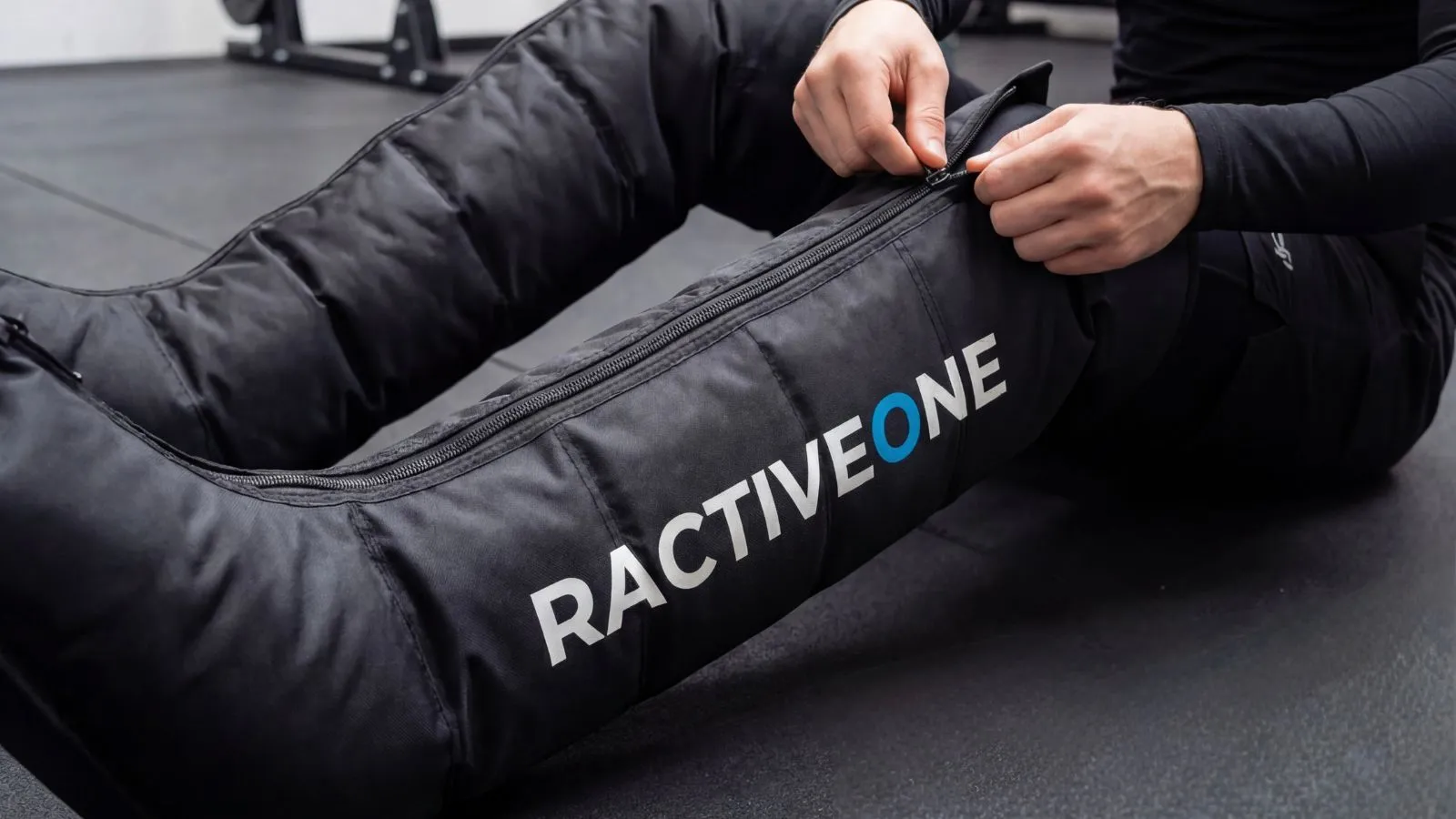
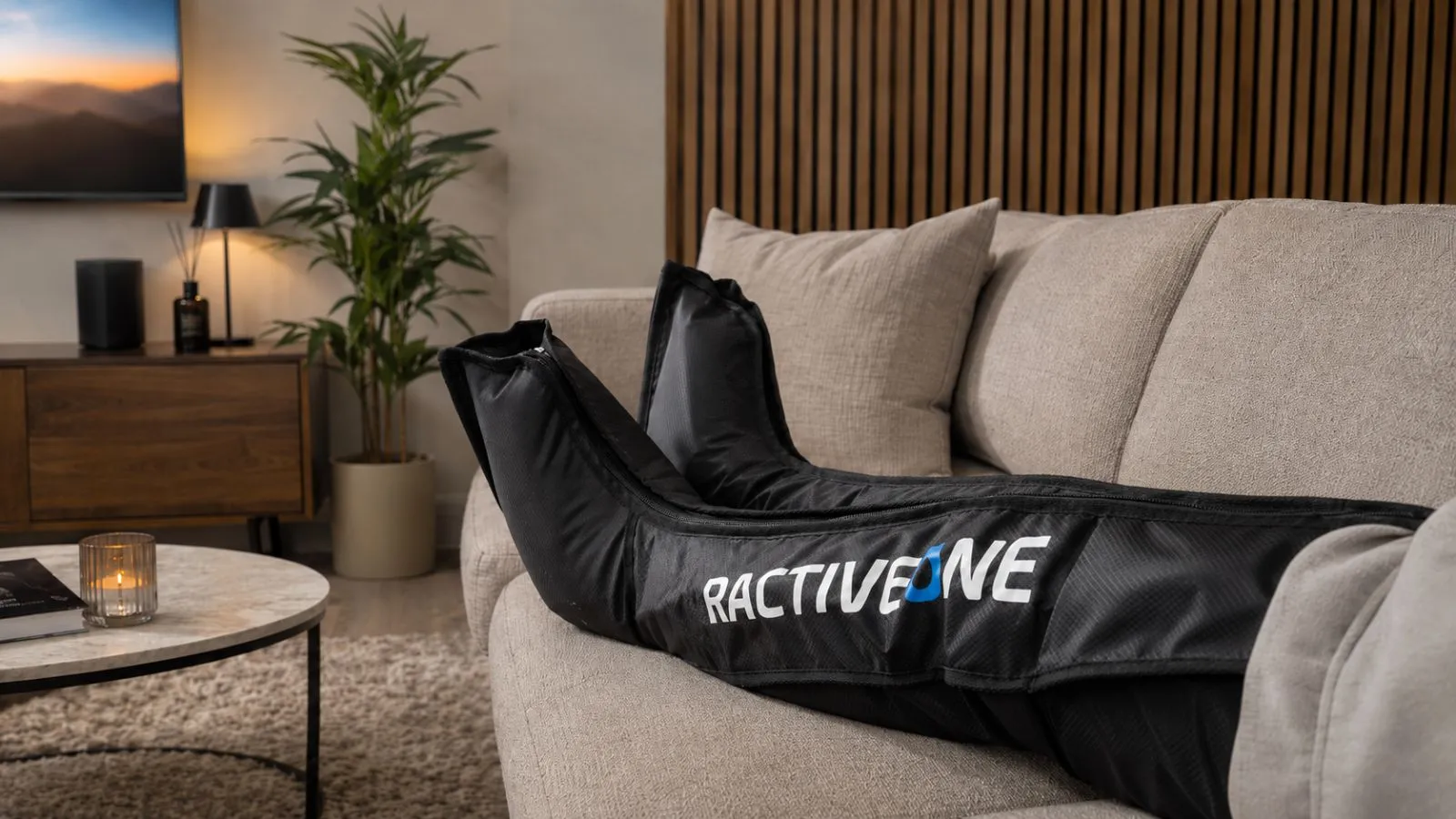
Leg Massager vs Compression Boots: Which Device Does What?
Leg massager vs compression boots: at first glance they look like the same thing. Cuffs with air chambers wrap your legs and squeeze them in waves. Yet they are different devices for different people. Some are medical devices used under clinical supervision for lymphoedema or vein disease. Others are massagers for your feet and calves after a long day, or sports kit for recovery after training.

In this guide I explain how the four main device types work, which pressures are typical, what studies and clinical guidelines say and which device suits which purpose.
Search for "leg compression machine" or "leg massager" and you find very different products: medical pumps used in lymphoedema clinics, compression massagers for home use, air massagers with heat and compression boots for athletes. They all share one basic principle. How that principle works in your legs is explained in our core guide on how compression boots work. This article answers a different question: which device is made for what.
Ractiveone sells Revive Active compression boots. They are made for sport and wellbeing and are not a medical device. Details on other devices come from their instructions for use and websites and are linked below.
Which devices hide behind the search terms?
Experts call the shared principle intermittent pneumatic compression, or IPC. Intermittent means the pressure comes and goes. Pneumatic means it is created by air. A pump inflates air chambers inside a cuff, holds the pressure briefly and then lets the air out. With several chambers, the wave usually travels from the foot upwards.
Four device types sit behind the usual searches:
- Medical compression pumps: treatment devices for lymphoedema, vein disease and blood clot prevention, used under clinical supervision.
- Home compression massagers: leg or trouser-style cuffs for use at home. Some are sold as medical devices, others as massagers.
- Air leg massagers with heat: massagers for feet and calves, often with a heat function. Fit King is one brand people often search for.
- Compression boots for sport: boots for recovery after training, such as Revive Active.
Quick explainer: mmHg
Pressure in the chambers is given in mmHg, millimetres of mercury. It is the same unit as your blood pressure. Important: the pressure in the chamber is higher than the pressure that actually reaches the tissue. Measurements described in the German IPC guideline show this (Schwahn-Schreiber et al. 2025).
How does a medical compression pump work?
Medical pumps are the original form of IPC. One example is the lympha-mat 300 from BÖSL Medizintechnik. Its instructions describe it as an active medical device. The cuffs have 12 or 24 overlapping air chambers that fill one after another, starting at the foot. Pressure can be set between 20 and 100 mmHg. The listed uses include lymphoedema, lipoedema, venous oedema, venous leg ulcers and blood clot prevention, always with the treatment settings a doctor specifies.
The German clinical guideline on IPC describes the rules in detail. The control units are class IIa medical devices. They carry the CE mark together with a four-digit number of the certification body that checks them. Before long-term home use, a trial under medical supervision should show that the treatment works. At home, the patient then gets clear instructions: how long, how often, at what pressure and when the next check-up is (Schwahn-Schreiber et al. 2025). Pressures differ a lot depending on the condition:
- Chronic venous insufficiency (weak leg veins) without an ulcer: 30 to 40 mmHg, 15 seconds inflation, 10 seconds deflation.
- Venous leg ulcer that is not healing: 40 to 50 mmHg, at least 1 hour a day on at least 3 days a week.
- Leg lymphoedema: multi-chamber devices up to 120 mmHg depending on the tissue, with long inflation and deflation times of about 50 seconds each.
More on where the method comes from and what it does in the body is in our guide to intermittent pneumatic compression.
What about home compression massagers?
Between the clinic and the gym there is a large group of compression massagers for home use. They look like medical pumps: a control unit with hoses and leg or trouser cuffs with several chambers. Some are sold as certified medical devices for patients under medical supervision. Others are sold purely for massage and relaxation.
The difference is in the paperwork, not in the look. Check the instructions and the label. The German guideline gives a useful clue: medical IPC control units carry a four-digit certification body number next to the CE mark (Schwahn-Schreiber et al. 2025). If the number is missing, the device has not been checked as that kind of medical device. If you want a home device because of a health condition, ask your doctor first whether it suits your case and which settings make sense.

What can an air leg massager with heat do?
Most products sold as "leg massager" use air cushions to massage the feet and calves. Some reach above the knee or up the thigh. Many add heat, some a kneading or vibration function. Brands like Fit King come up often in searches. Because models vary so much, we describe the device group here rather than a single brand.
Two practical differences to compression boots: many leg massagers only cover the foot and calf, not the whole leg. And not every maker gives a pressure in mmHg, which makes it hard to compare how firmly a device squeezes. A "best leg massager" badge only helps if you know who tested what, and how.
What are compression boots and what can they do?
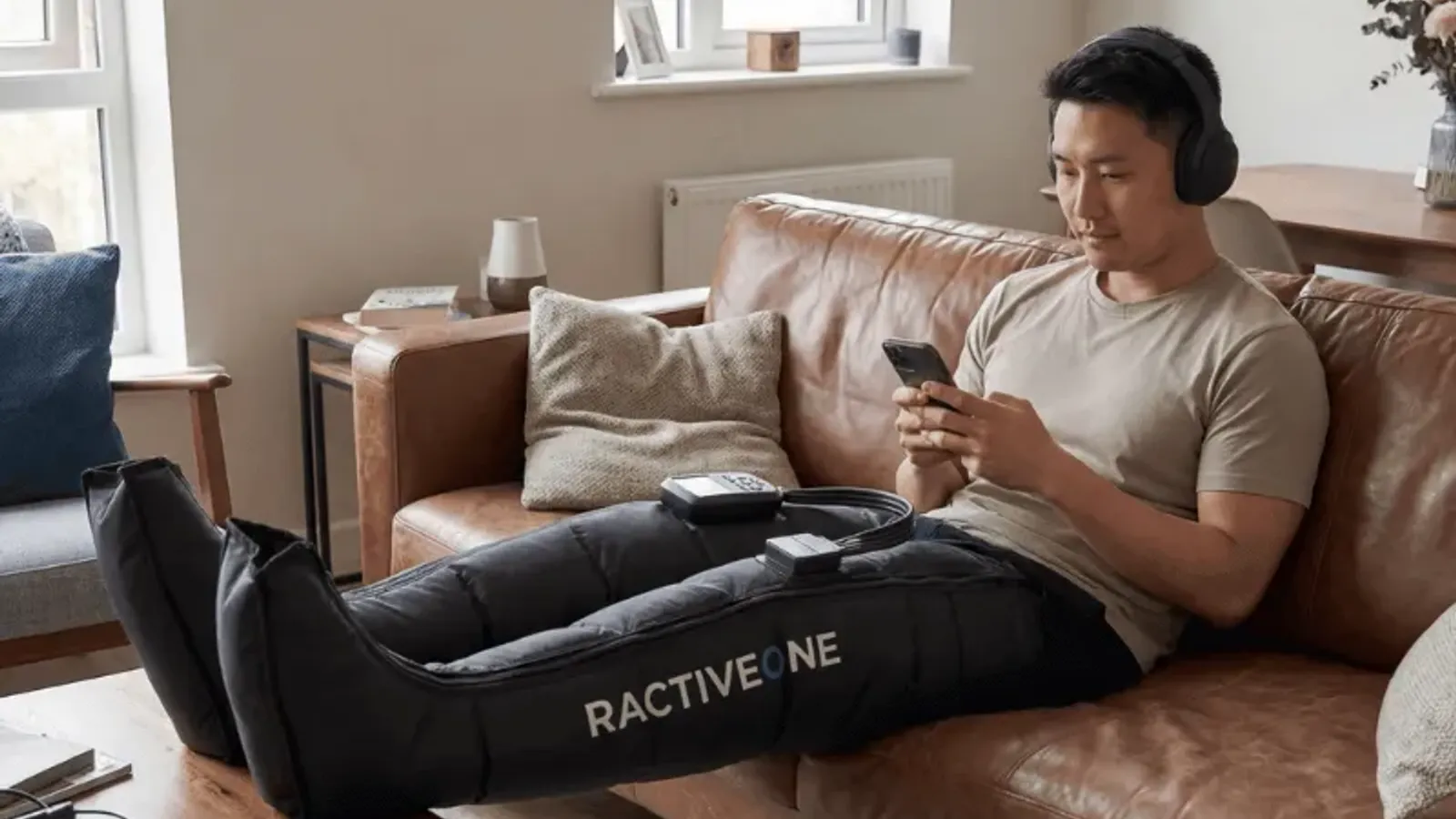
Compression boots for sport wrap the whole leg from foot to thigh. They are made for athletes who want to support recovery after long runs, rides or leg days, and for people who want lighter legs after a long day on their feet.
According to our product data, the Revive Active compression boots have 4 air chambers per leg, 7 pressure levels from 30 to 240 mmHg, 5 modes and programmes of 15, 30 or 45 minutes. The battery controller runs for up to 180 minutes, and there is no app. Revive Active Pro has 8 chambers that can be switched off individually and goes up to 260 mmHg. Revive Active carries the CE mark under the EU directives on electromagnetic compatibility and hazardous substances (RoHS). It is not a medical device.
What do such boots achieve? A meta-analysis, which pools the results of many studies, looked at 17 studies with 319 participants. It found a trivial to small benefit for muscle function and a trivial to moderate effect on pain and soreness. Most studies used 20 to 30 minutes at about 80 mmHg (Maia et al. 2024). Useful, but no miracle.
The four device types compared
The table sums up the differences. Pressure values come from the German IPC guideline, the instructions mentioned above and our own product data.
| Device type | Purpose | Pressure and function | Prescribed? | Suits |
|---|---|---|---|---|
| Medical compression pump | Treatment of lymphoedema, vein disease, clot prevention | Multi-chamber cuffs, pressure set by a clinician, about 30–40 mmHg for venous insufficiency up to 120 mmHg for lymphoedema | Used under medical supervision; reimbursement depends on the health system | Patients with a diagnosis and clinical follow-up |
| Home compression massager | Compression massage at home, some models sold as medical devices | Leg or trouser cuffs with several chambers, pressure range depends on the model | Usually bought privately | Home users; with a condition only after medical advice |
| Air leg massager with heat | Massage and relaxation | Air cushions mostly on foot and calf, often heat, pressure not always given in mmHg | No | Healthy people with tired feet and calves |
| Compression boots (e.g. Revive Active) | Recovery after sport, lighter-feeling legs | Whole leg, pressure wave from the foot upwards, Revive Active 30–240 mmHg | No | Healthy athletes and people with tired legs |
How the well-known compression boots compare with each other is shown in our compression boots comparison based on manufacturer data.
What does research say for each use?
Lymphoedema
Lymphoedema is swelling caused by lymph fluid that does not drain properly. A 2026 systematic review looked at 7 controlled trials on leg lymphoedema. In all of them, leg volume was smaller at the end of IPC treatment than at the start. The authors rate the certainty as moderate, partly because IPC was combined with other treatments in some trials (O'Donnell et al. 2026). An earlier review found the best results with 30 to 60 mmHg and 45 to 60 minutes per session, with overall weak study quality (Phillips and Gordon 2019).
The NHS lists compression garments, skin care, movement and exercise, and specialised massage among the ways to control lymphoedema. The German guideline sees IPC as a possible add-on to this decongestive treatment, also at home, but with medical check-ups (Schwahn-Schreiber et al. 2025).
Venous leg ulcers
A Cochrane review, a particularly thorough type of study summary, looked at 9 trials with 489 people with venous leg ulcers. In one trial with 80 people, 62 percent of ulcers healed with IPC compared with 28 percent with dressings alone. Whether IPC adds anything on top of compression bandages was mixed. The authors see limited evidence for an extra benefit (Nelson et al. 2014).
Lipoedema
Lipoedema is a fat distribution disorder, usually on the legs and hips, that often hurts. The German lipoedema guideline says compression therapy should be used to reduce pain, long term mainly with medical compression stockings. IPC should be used for pain and accompanying swelling, also at home. But the guideline stresses that the data are very limited and that IPC does not replace lymphatic drainage or compression garments (German Society of Phlebology and Lymphology 2024).
Sport
For recovery after sport, most of the data come from compression boots. The effects are small and mainly concern perceived muscle soreness (Maia et al. 2024). The study protocols are covered in detail in the IPC guide linked above.
Compression boots for lymphoedema or lipoedema?
Many people with swollen legs look for a solution at home, with searches like "compression boots for lymphatic drainage". The answer is clear: with lymphoedema and lipoedema, pneumatic compression belongs in medical hands. That means a checked medical device, the right pressure and regular reviews.
Our Revive Active boots are not made for that. They are for sport and wellbeing, not for treating lymphoedema, lipoedema or vein disease. If you have one of these conditions, talk to your GP or lymphoedema service first. How compression boots differ from lymphatic drainage therapy is explained in our article on lymphatic drainage boots at home.
One key reason for medical supervision: if lymph cannot drain further up, fluid can shift into the groin or genital area. The guideline says treatment should then stop and the cause be investigated (Schwahn-Schreiber et al. 2025). The NHS advises seeing a GP if you notice typical signs such as swelling in your arms or legs.
When compression devices are off limits
The guideline lists these absolute contraindications, meaning reasons not to use IPC at all:
- decompensated heart failure
- a blood clot, suspected clot or extensive vein inflammation
- acute cellulitis or erysipelas
- compartment syndrome
- severe, uncontrolled high blood pressure
This applies to all four device types. The full list, including relative contraindications and warning signs, is in our article on who should not use compression boots.
What should you check before buying?
Start with the key question: do you want to treat a condition or recover? For a condition, the first step is your doctor. For relaxation and sport, this list helps:
- Purpose: massage, sports recovery or treatment? The manual tells you.
- Pressure in mmHg: is it stated, and does it start low enough?
- Coverage: just foot and calf, or the whole leg up to the thigh?
- Chambers: several chambers allow a wave from the foot upwards.
- Size: do cuff length and thigh circumference match your leg?
- Contraindications: does the manual list them clearly?
- Handling: battery or cable, buttons or app?
Size is often underestimated. If the top chamber sits too low or too high, the wave presses in the wrong place. For Revive Active you go by your inside leg length: S/M fits up to 84 cm, L from 85 cm. S/M fits a thigh circumference of up to about 75 cm, L up to about 83 cm. A size extender, sold separately, adds up to about 10 cm of circumference.
"The devices look the same, but the question behind them is different. If your legs feel heavy after a long run, you don't need a prescription. If one leg stays swollen and won't go down, you need a diagnosis first and maybe a device later."
Daniel Volpe, coachWho are compression boots for, and who not?
Suitable for
- healthy runners, cyclists and team sport players after hard sessions
- strength athletes after leg day
- healthy people with tired legs after lots of standing, sitting or travel
Not suitable, or only after medical advice
- as a replacement for treatment of lymphoedema, lipoedema or vein disease
- with a blood clot or suspected clot, heart failure or severe high blood pressure
- with cellulitis, open wounds or reduced feeling in the legs
- with new, one-sided or unexplained swelling
If your legs mainly feel heavy in the evening, our article on heavy legs and compression covers causes and simple steps.
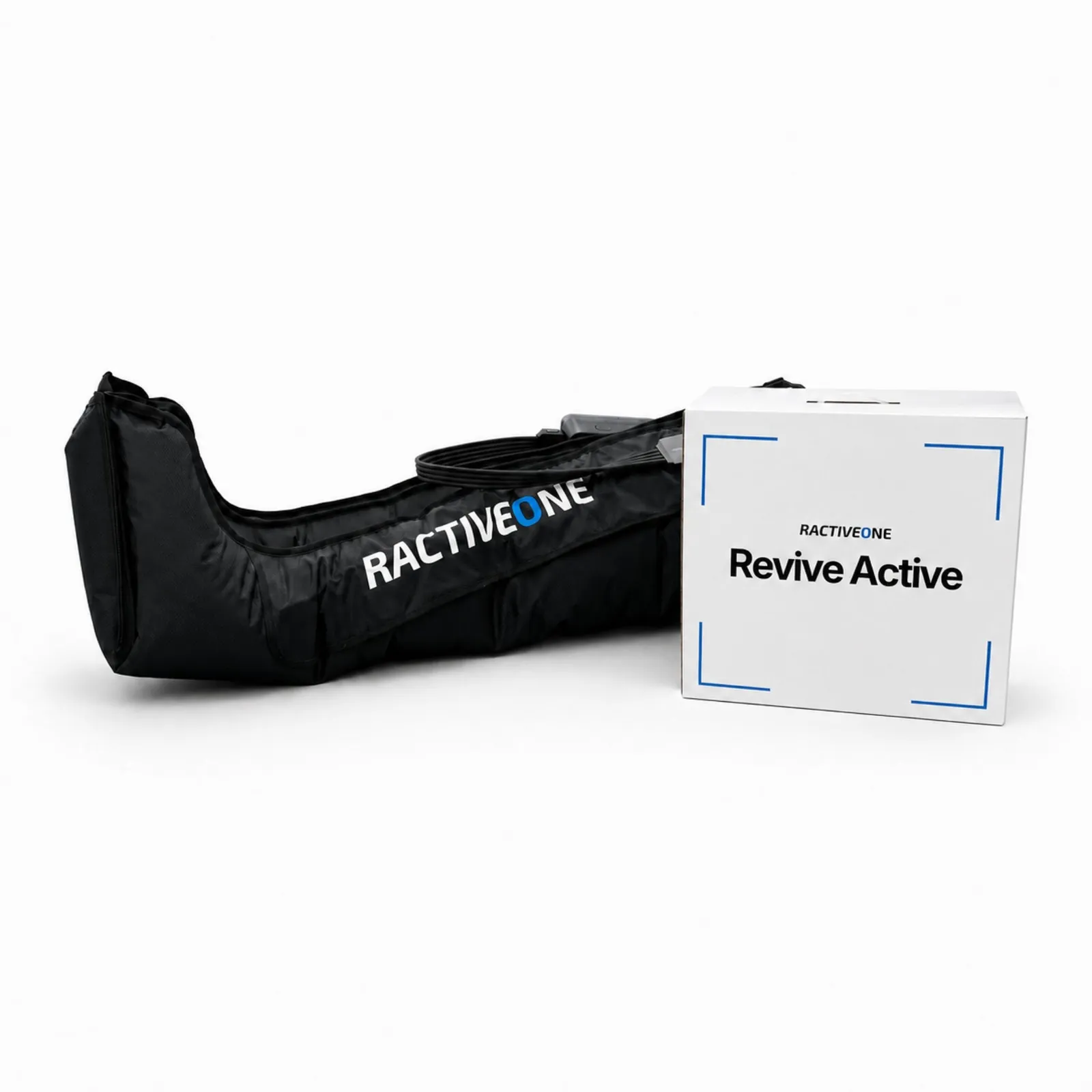
Revive Active compression boots
4 chambers from foot to thigh, 7 pressure levels from 30 to 240 mmHg, 5 modes and a cordless battery controller.
Conclusion
Leg massagers, home compression massagers, medical pumps and compression boots all use air pressure, but they do different jobs: medical pumps treat lymphoedema and vein disease under supervision, massagers relax feet and calves, and compression boots support recovery after sport. For healthy athletes and people with tired legs, compression boots are a good choice. With lymphoedema, lipoedema, vein disease or unexplained swelling, your doctor decides on device and pressure, not an online shop.
Frequently asked questions
What is the difference between a leg massager and compression boots?
Are compression boots a medical device?
Do compression boots help with lymphoedema?
Can I use compression boots for lipoedema?
What pressure in mmHg is normal for leg compression devices?
Which leg massager is the best?
Sources
- Schwahn-Schreiber, C. et al. (2025). S1-Leitlinie Intermittierende pneumatische Kompression (IPK, AIK). AWMF register no. 037/007, German Society of Phlebology and Lymphology. – device class IIa, pressure values, recommendations 9, 11 and 12, contraindications
- German Society of Phlebology and Lymphology (2024). S2k guideline Lipoedema, version 5.0, 22 January 2024. AWMF register no. 037-012.
- O'Donnell, T. F. Jr. et al. (2026). A systematic review of contemporary randomized controlled trials for treatment of lower extremity lymphedema by intermittent pneumatic compression devices. Journal of Vascular Surgery: Venous and Lymphatic Disorders, 14(4), 102500.
- Phillips, J. J. & Gordon, S. J. (2019). Intermittent Pneumatic Compression Dosage for Adults and Children with Lymphedema: A Systematic Review. Lymphatic Research and Biology, 17(1), 2–18.
- Nelson, E. A., Hillman, A. & Thomas, K. (2014). Intermittent pneumatic compression for treating venous leg ulcers. Cochrane Database of Systematic Reviews, CD001899.
- Maia, F. et al. (2024). Effects of lower-limb intermittent pneumatic compression on sports recovery: A systematic review and meta-analysis. Biology of Sport, 41(4), 263–275.
- BÖSL Medizintechnik: lympha-mat 300, instructions for use (26 May 2025, accessed 13 Nov 2026) – intended purpose, indications, contraindications, 20–100 mmHg, 12/24 chambers
- NHS: Lymphoedema (accessed 13 Nov 2026)
- Venen Engel: FAQ, example of a home compression massager sold as a medically certified product (accessed 13 Nov 2026)
- Ractiveone: Revive Active, product page and specifications (Ractiveone's own data, as of 13 Nov 2026)