Winter training: how to warm up, dress, breathe and recover in the cold
Winter training works well once you change three things: how long you warm up, how you dress and how you get warm again afterwards. Cold muscles are measurably weaker, cold and dry air irritates the airways, and you feel less thirsty in the cold. At the same time, the American College of Sports Medicine (ACSM) is clear that exercise is safe in most cold-weather conditions.

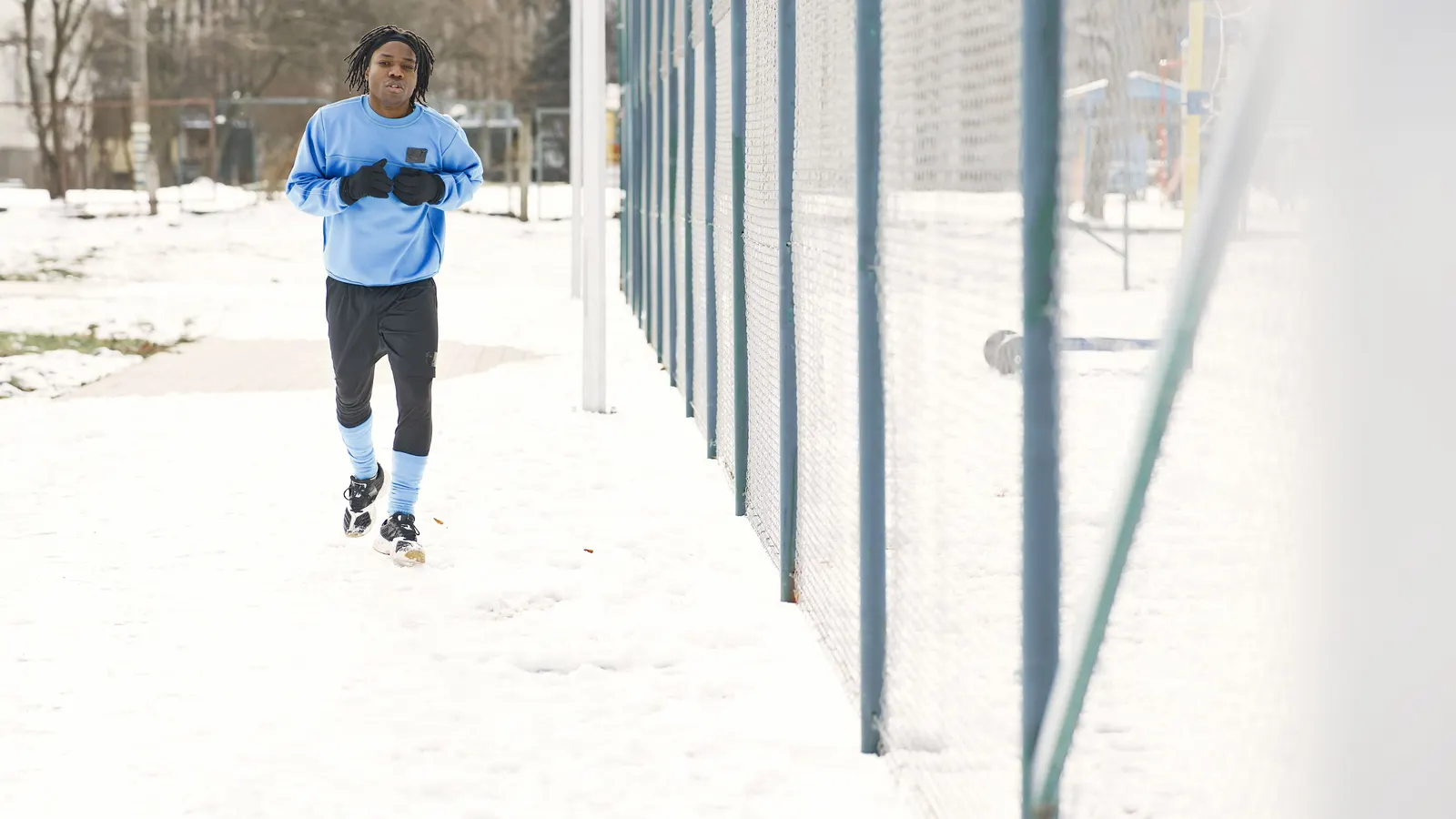
This guide explains what the cold does inside your body and gives you a table to match your warm-up, layers and pace to the weather. You also get a simple routine for recovering after a cold run, ride, match or gym session.
The basics of recovering from exercise are in our complete guide to muscle recovery after a workout. This article focuses on the cold months: dark, frosty morning runs, rides into a headwind, Sunday league on a frozen pitch and strength sessions in a sports hall that only warms up as you leave.
What does cold do to your muscles?
Muscles work like an engine: they run better when warm. A review on temperature and the nervous system found that performance in short efforts rises by 2 to 5% for every 1 °C increase in muscle temperature (Racinais and Oksa 2010). Short efforts means things like a sprint, a jump or a heavy set in the gym.
It works the other way round too. According to the latest consensus statement from the American College of Sports Medicine (ACSM), the main US sports medicine body, maximal oxygen uptake, exercise time and sprint power drop by 4 to 6% for every degree the muscle cools. In one study it cites, a muscle 8 °C colder produced 31% less power (Castellani et al. 2021). That is why the first mile on a frosty morning feels like wading through treacle.
Why does this happen? Warmth makes muscles and tendons less stiff, nerve signals travel faster and energy supply inside the muscle gets going more easily. A classic review on warming up describes these mechanisms (Bishop 2003). In the cold you lose that advantage until you earn it back by moving.
Interestingly, cold air on its own does not automatically ruin endurance. The ACSM reports that cyclists in shorts and T-shirts lasted longest at 11 °C and less long at 4 °C. Runners in cross-country ski suits performed best between minus 4 and plus 1 °C and worse at minus 14 °C (Castellani et al. 2021). Your clothing decides how cold your body really is.
How should you warm up in winter?
Warming up pays off. A meta-analysis, which pools the results of many studies, looked at 32 high-quality studies and found better performance after a warm-up in 79% of the measures tested. There was little evidence that warming up does any harm (Fradkin et al. 2010). In winter you have one more reason: you start with colder muscles, so they need longer to reach working temperature.
None of the studies gives a fixed number of minutes for the cold. A practical rule: you are warm when you sweat lightly and your movements feel smooth. In winter that takes noticeably longer than in summer. Build it like this:
- Start indoors: mobility for hips, ankles, shoulders and back, plus a few squats and lunges. That way you do not lose heat standing around outside.
- Start easy outside: keep the first minutes deliberately slow, or spin in an easy gear. Heart rate and breathing should climb gradually.
- Drills and strides: only once you are warm. Intervals, sprints and heavy sets come right at the end of the warm-up.
- Do not cool down again: long gaps between warm-up and effort cost the heat you built. In team sports, keep a jacket on by the touchline.
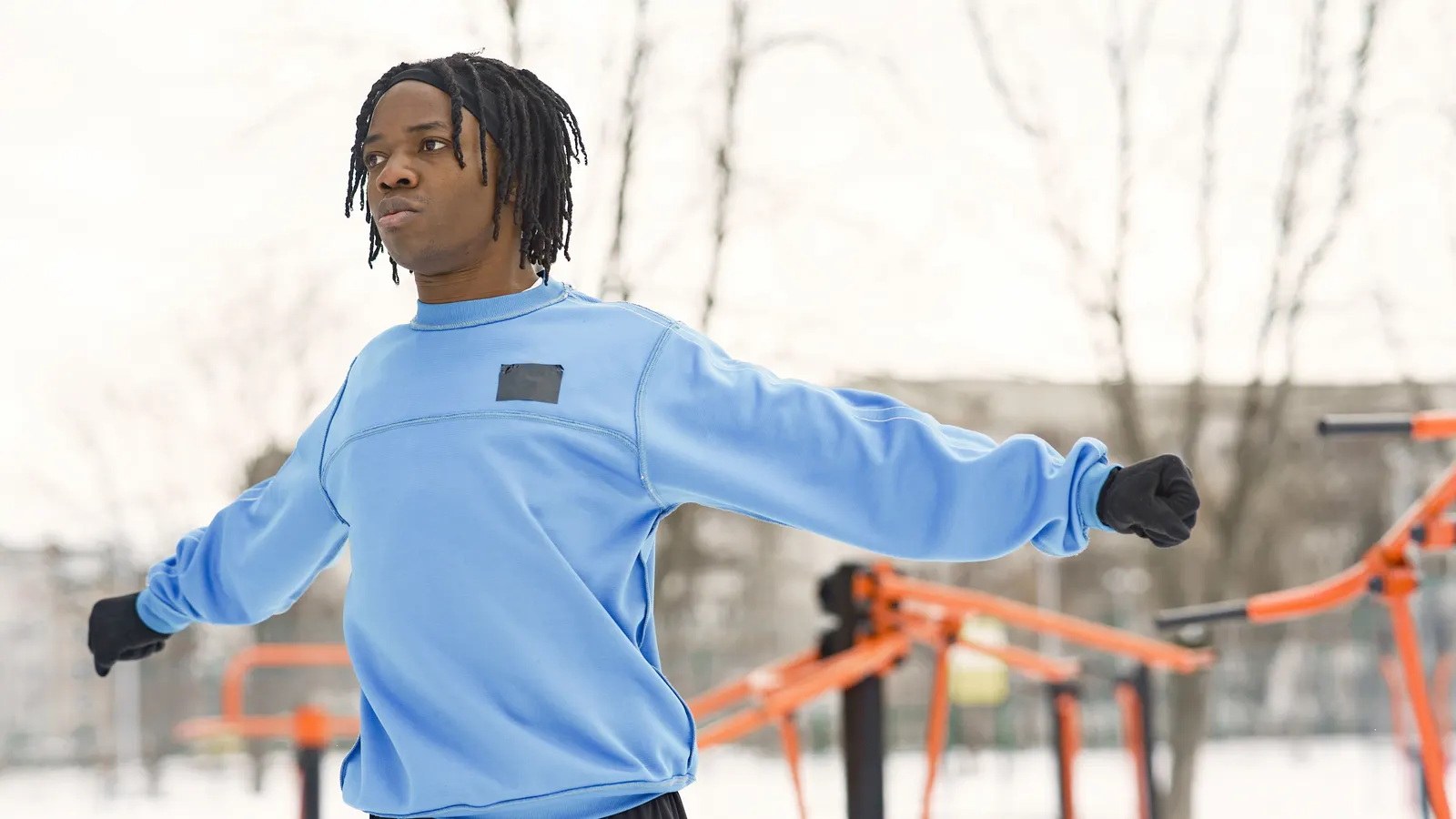
External heat as an extra: muscles can also be warmed passively, without exercise, for example with a warm shower or a heat pad. Bishop (2003) describes how this raises temperature without using up energy, but considers it impractical for most athletes. Local heat therefore does not replace an active warm-up. It can, however, prepare a stiff spot, such as your lower back after a long day at a desk.
The Thermo Flex hands-free heat and cold device works well for this. According to the product specifications it heats in three settings of 38, 40 and 42 °C and switches off after 15 minutes. You strap it to your back, shoulder, knee or calf and do your mobility work while it runs. Start on the lowest setting. Do not use it directly on the spine, the head or irritated or injured skin. If you feel heat or cold less well, for example with diabetic nerve damage, check with your doctor first. Transparency note: Ractiveone sells the Thermo Flex and the Revive Active compression boots.
How should you dress for cold-weather training?
The ACSM recommends three layers (Castellani et al. 2021):
- Base layer: sits on the skin, does not soak up moisture and moves sweat outwards. Technical fabric or merino, not cotton.
- Mid layer: holds in the heat, for example fleece or a thicker long-sleeve top.
- Outer shell: lets moisture out and keeps wind and rain off.
One detail surprises many people: according to the ACSM, the outer layer should usually not be worn while exercising, unless it is raining or very windy. It is for the breaks. The most common mistake is setting off dressed for standing still. After a few minutes you overheat, sweat into your kit and then freeze in wet clothes at the next stop. So start out feeling slightly chilly at the front door.
The ACSM also says clothing should be chosen individually. In a group, not everyone needs the same: if you sweat a lot, wear less. Cover your hands, ears and face. The NHS lists fingers, toes, nose and ears as the parts most often affected by frostbite.
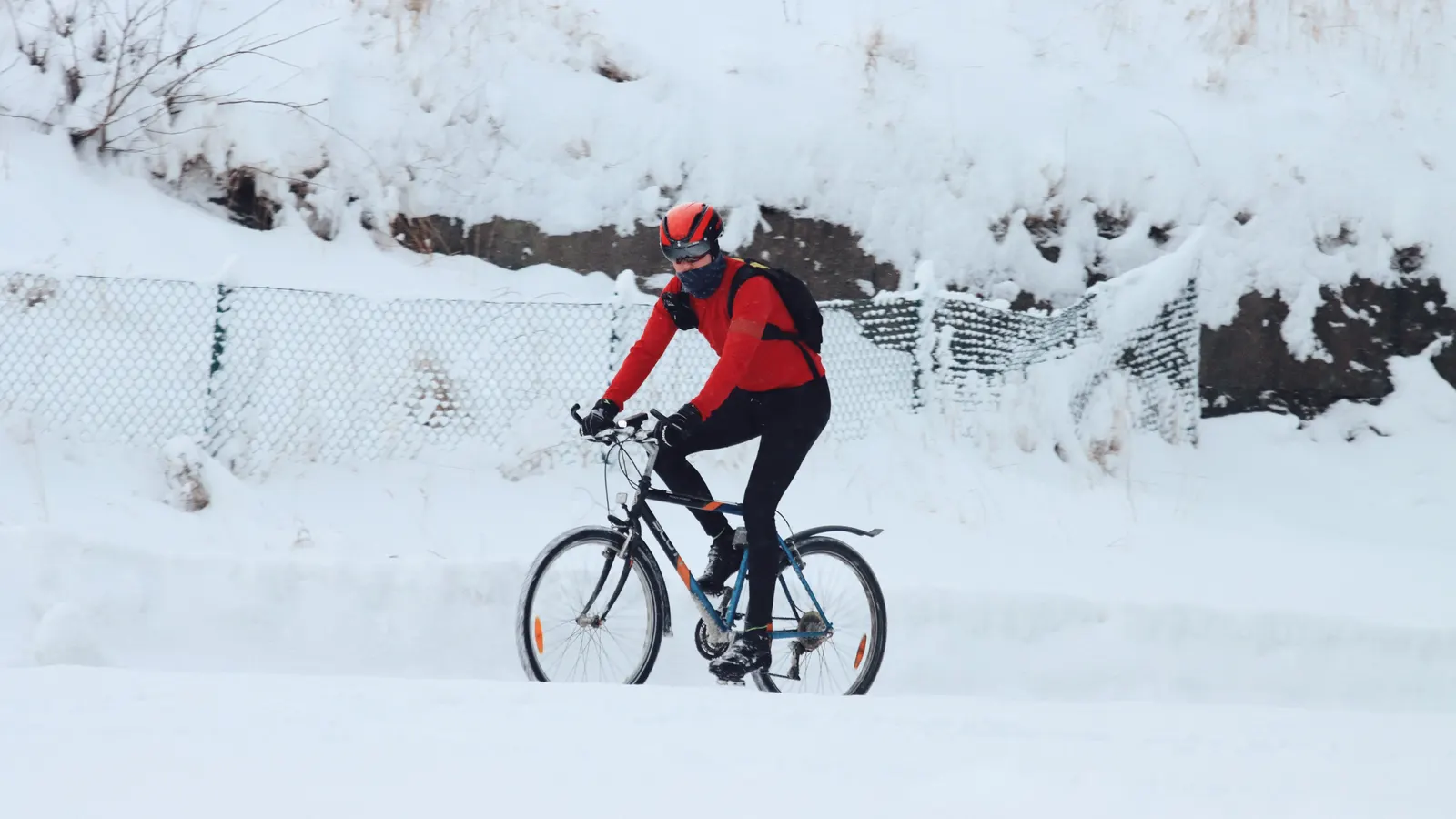
A note for cyclists: on the bike you create your own wind. Going downhill you barely sweat but lose heat fast. A windproof jacket matters even more than for running, as do thick gloves and overshoes.
Which changes suit which weather?
The table sums up what to change depending on the conditions. The numbers come from the ACSM recommendations. Everything else is practical experience, not a fixed rule. Listen to your body.
| Conditions | Warm-up | Clothing | Intensity |
|---|---|---|---|
| Cool and dry, above 0 °C | a bit longer than in summer, strides only at the end | 2 layers, thin gloves, headband | normal |
| Frost, little wind | start indoors, long easy jog or spin outside | 3 layers, hat, gloves, snood for neck and face | pick up the pace late, consider hard intervals indoors |
| Wind | warm up somewhere sheltered | windproof shell, cover your face | head out into the wind, come home with it behind you |
| Wet: rain, sleet | finish just before you start, do not stand around in the wet | waterproof shell, spare dry clothes ready | plan a shorter loop; cold and wet raises the risk of cold injury |
| Ice | indoors | shoes with grip | switch to the treadmill, turbo trainer or sports hall |
| Wind chill below −27 °C | indoors | no exposed skin | move indoors or cut it very short: frostbite possible in 30 minutes or less |
| Cold sports hall or gym | longer than usual, keep your top on until you start to sweat | layers you take off one by one | heavy sets only after several warm-up sets |
Wind chill is the "feels like" temperature once wind is added. It describes how fast exposed skin loses heat. According to the ACSM, the risk of frostbite on bare skin is under 5% as long as it is warmer than minus 15 °C. Below a wind chill of minus 27 °C, frostbite can develop in 30 minutes or less (Castellani et al. 2021). Most weather apps show this as the "feels like" figure. Wet skin cools faster, the ACSM adds.
Warning signs of frostbite
Numb skin that feels cold and firm, looks pale, white or blotchy, on fingers, toes, nose or ears. Get somewhere warm straight away. The NHS advises getting medical help if you think you or someone else has frostbite, and calling 999 or going to A&E if skin is hard and frozen or blisters appear.
How should you breathe in cold air?
When you breathe fast, your nose and lungs have seconds to warm and moisten the air. In cold, dry air the airways lose a lot of water and heat in the process. In sensitive people this can release inflammatory substances and narrow the airways. Specialists call this exercise-induced bronchoconstriction: the airways tighten because of exercise. Among elite cross-country skiers and biathletes, exercise-induced asthma is particularly common (Carlsen 2012).
That does not mean you should stop running in winter. It means you can protect your airways. A review lists two simple strategies alongside medication for diagnosed asthma: warm up beforehand and reduce water and heat loss from breathing with a face mask or by nose breathing (Anderson and Kippelen 2012). In practice:
- breathe through your nose at easy pace, it warms and moistens the air
- pull a snood up over your mouth and nose in frost
- do hard intervals indoors on very cold days, because you breathe fast and deep
- warm up thoroughly before you go fast
- if you have a prescribed inhaler, use it exactly as your doctor or asthma nurse told you
When to see your GP: if you wheeze after exercise, cough a lot or feel tight across the chest. A lung function test before and after exercise can show whether you have exercise-induced asthma. According to the ACSM, people with asthma or heart disease can exercise in the cold but should be monitored closely (Castellani et al. 2006).
The air at home counts too. Central heating makes indoor air dry in winter, and you breathe it for hours on end while you sleep. What a humidifier can and cannot do there is covered in humidifiers for athletes in winter.
Why do you need to drink on purpose in winter?
Thirst kicks in later in the cold. In one study, eight men in T-shirts and shorts walked briskly for 60 minutes, once at 4 °C and once at 27 °C. In the cold they felt up to 40% less thirsty, whether they were well hydrated beforehand or not (Kenefick et al. 2004). The researchers think blood vessels in the skin narrow and push blood towards the core, so the body "thinks" it has enough fluid.
You still lose water, though: through sweat under warm clothing and through your breath. The ACSM recommends checking fluid balance by weighing yourself before and after training and by the colour of your urine (Castellani et al. 2021). Pale is fine, dark means drink more. On long sessions a warm drink in an insulated bottle helps.
What about daylight and vitamin D?
In winter many people only train in the dark. That has two consequences. First, you see less and are seen less: a head torch and reflective kit are essential. Second, your skin gets hardly any sun. The NHS says that between October and early March we do not make enough vitamin D from sunlight in the UK. It advises everyone to consider a daily supplement containing 10 micrograms of vitamin D during autumn and winter.
If you are unsure what is right for you, ask your pharmacist or GP. If your day allows it, move one session a week to your lunch break. You train in daylight and it is usually a little warmer.
“There are two mistakes I see again and again in winter. Either people stand at the door wrapped up like they are going to the Arctic and are drenched after a short while. Or they go cold straight into their heavy sets. Both cost performance. Mobilise calmly indoors, start easy outside and only push the pace once your body is genuinely warm.”
Fabian, professional bodybuilder and coachHow do you recover after a session in the cold?
The first minutes after training are the most critical in winter. You stop moving, produce less heat and your kit is damp. The ACSM stresses staying dry and carrying dry clothes to change into (Castellani et al. 2021). Your order of play after training:
- Keep the cool-down short and get indoors rather than stretching outside.
- Change out of wet kit straight away, even in the clubhouse or the car. Have a dry hat and jacket ready.
- Take a warm shower. It warms you up and loosens your muscles. The exception: if patches of skin are numb and white, keep hot water off them and get them checked.
- Eat and drink: refill carbohydrate and fluids. The ACSM specifically mentions adequate carbohydrate stores for performance in the cold.
- Gentle movement or mobility somewhere warm if you feel stiff.
Heat or cold after winter training?
After a session in the cold, heat is usually the better fit. A review describes how heat increases blood flow and makes connective tissue more elastic. In controlled trials it eased muscle soreness more than cold did, although the evidence for both is limited overall (Malanga et al. 2015). Cold still makes sense when something is acutely irritated, hot or swollen, for example after a knock in a football match. Our decision guide heat or ice for sore and tight muscles shows when to use which.
Compression after long runs and rides
After a long run in the snow or a cold ride, your legs often feel doubly heavy. A meta-analysis of 17 studies with 319 participants found that compression boots, sleeves that inflate and deflate in waves, gave small benefits for muscle function and above all less perceived soreness. Sessions of 20 to 30 minutes at about 80 mmHg were typical (Maia et al. 2024).
The Revive Active compression boots for your legs have seven pressure levels from 30 to 240 mmHg and time options of 15, 30 and 45 minutes. Use them in the evening once you are warm and dry again, and start on a low level. How runners use them after a marathon, long run or intervals is explained in compression boots for runners. They are not for you if you have thrombosis, heart failure, heart rhythm problems or circulation disorders. The full list is in who should not use compression boots.
Sleep: the underrated half
Long winter nights are an opportunity. Regular bedtimes, a fairly cool bedroom and air that is not too dry help you wake up properly recovered. Why sleep matters so much for muscles and performance is explained in sleep and muscle recovery. Heading to the mountains this winter? There is a day-by-day plan in recovery on a ski trip.
Who are these tips for, and who should check first?
Good fit: anyone who runs, cycles or plays team sport outdoors in winter, and anyone who trains in cold sports halls or garage gyms. The basics apply to beginners and experienced athletes alike.
Check with your GP first: if you have asthma or get breathless with exercise, heart or circulation problems, Raynaud's (fingers turn white in attacks in the cold), diabetes with numbness in your hands or feet, or have had frostbite before. For these groups the message is not "no exercise" but "exercise with a plan". Chest pain, severe breathlessness or dizziness during training are always a reason to stop at once and get help.
Conclusion
Training in winter is safe and worthwhile for most people, as long as you warm up for longer and step by step, dress in layers, protect your airways and drink on purpose. That goes for runners, cyclists, team-sport players and anyone training in a cold hall. After the session, changing quickly, warming up, eating and sleeping matter more than any gadget. With breathing problems, numb patches of skin or existing health conditions, no tip replaces a proper check with your doctor.
Frequently asked questions
How cold is too cold to train outside?
How long should I warm up in cold weather?
Is running in the cold bad for your lungs?
What should I wear for running in winter?
Hot or cold shower after training in the cold?
Do you need to drink less in winter?
Does heat help before training in winter?
Sources
- Racinais, S. & Oksa, J. (2010). Temperature and neuromuscular function. Scandinavian Journal of Medicine & Science in Sports, 20(Suppl 3), 1–18.
- Bishop, D. (2003). Warm up I: potential mechanisms and the effects of passive warm up on exercise performance. Sports Medicine, 33(6), 439–454.
- Fradkin, A. J., Zazryn, T. R. & Smoliga, J. M. (2010). Effects of warming-up on physical performance: a systematic review with meta-analysis. Journal of Strength and Conditioning Research, 24(1), 140–148.
- Castellani, J. W. et al. (2006). American College of Sports Medicine position stand: prevention of cold injuries during exercise. Medicine & Science in Sports & Exercise, 38(11), 2012–2029.
- Castellani, J. W. et al. (2021). ACSM Expert Consensus Statement: Injury Prevention and Exercise Performance during Cold-Weather Exercise. Current Sports Medicine Reports, 20(11), 594–607.
- Carlsen, K. H. (2012). Sports in extreme conditions: the impact of exercise in cold temperatures on asthma and bronchial hyper-responsiveness in athletes. British Journal of Sports Medicine, 46(11), 796–799.
- Anderson, S. D. & Kippelen, P. (2012). Assessment and prevention of exercise-induced bronchoconstriction. British Journal of Sports Medicine, 46(6), 391–396.
- Kenefick, R. W. et al. (2004). Thirst sensations and AVP responses at rest and during exercise-cold exposure. Medicine & Science in Sports & Exercise, 36(9), 1528–1534.
- Malanga, G. A. et al. (2015). Mechanisms and efficacy of heat and cold therapies for musculoskeletal injury. Postgraduate Medicine, 127(1), 57–65.
- Maia, F. et al. (2024). Effects of lower-limb intermittent pneumatic compression on sports recovery: A systematic review and meta-analysis. Biology of Sport, 41(4), 263–275.
- NHS: Frostbite (checked 13 November 2026).
- NHS: Vitamin D (checked 13 November 2026).