Humidifier for athletes: airways, sleep and winter training
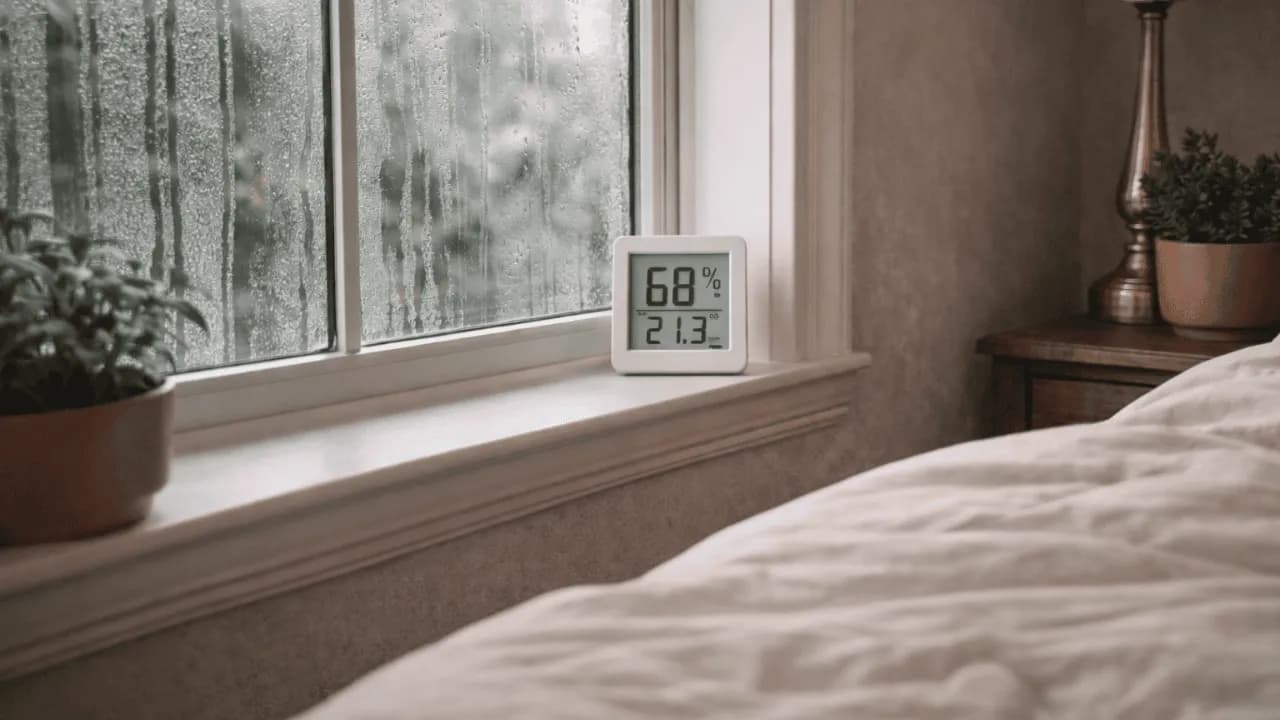
A humidifier for athletes sounds like a nice-to-have. In winter it does have a clear role: you spend eight hours breathing quietly in your bedroom, and with the heating on, the air there can drop below 30% humidity. At that point eyes and skin start to feel dry, and plenty of people wake up with a scratchy throat. At the same time, its effect is often overstated.
No device in your bedroom changes the cold, dry air you breathe on a January run. This guide separates the two, sets out what the research says about airways and sleep, and gives you concrete settings for the heating season.
This article builds on our main guide how to use a humidifier: 9 mistakes to avoid, which covers the general rules on readings, hygiene and ventilation. Here the question is a narrower one that runners, footballers and gym regulars ask every autumn: does a humidifier do anything for training and recovery, or is it just about comfort?
Dry air hits athletes in two places
When athletes complain about dry air, they usually mean one of two very different situations. The difference matters, because a humidifier only helps with one of them.
| Situation | What happens | Does a humidifier help? |
|---|---|---|
| Training outdoors in winter | high breathing rate, cold dry air, the airways lose water | no |
| Training in a sports hall or gym | usually warm, often dry air, ventilation decides | hardly, you do not control the building |
| Bedroom in the heating season | 8 hours of quiet breathing in warm, often very dry air | yes, this is where it helps |
During training: your lungs do the humidifying
When you run, cycle or play a full match, you breathe many times more air than at rest. Your airways have to bring that air to body temperature and saturate it with moisture. With cold, dry air they lose a lot of water in the process. A review from 2008 (Anderson and Kippelen) describes exactly this water loss as the trigger for exercise-induced bronchoconstriction, and suggests that endurance athletes who breathe large volumes of cold air for years repeatedly irritate the lining of their airways. For winter athletes, a tight chest after training is not a fringe issue.
This is the honest part: a humidifier in your bedroom does nothing to the air you breathe during intervals on a frosty morning. If you regularly cough, wheeze or feel tight-chested after training, see your GP.
At home: heated air at night
The bedroom is a different story. Cold outdoor air holds little water. Once it is heated indoors, its relative humidity drops sharply. In a Japanese lab study (Sunwoo et al. 2006), eyes and skin became noticeably dry at 30% relative humidity, and at 10% the nasal lining dried out as well. The authors therefore recommend staying above 30%. A review (Wolkoff 2018) reaches a cautious conclusion: higher humidity may improve perceived air quality and eye symptoms, but animal studies did not show that dry air worsens airway irritation.
Why the bedroom matters for athletes
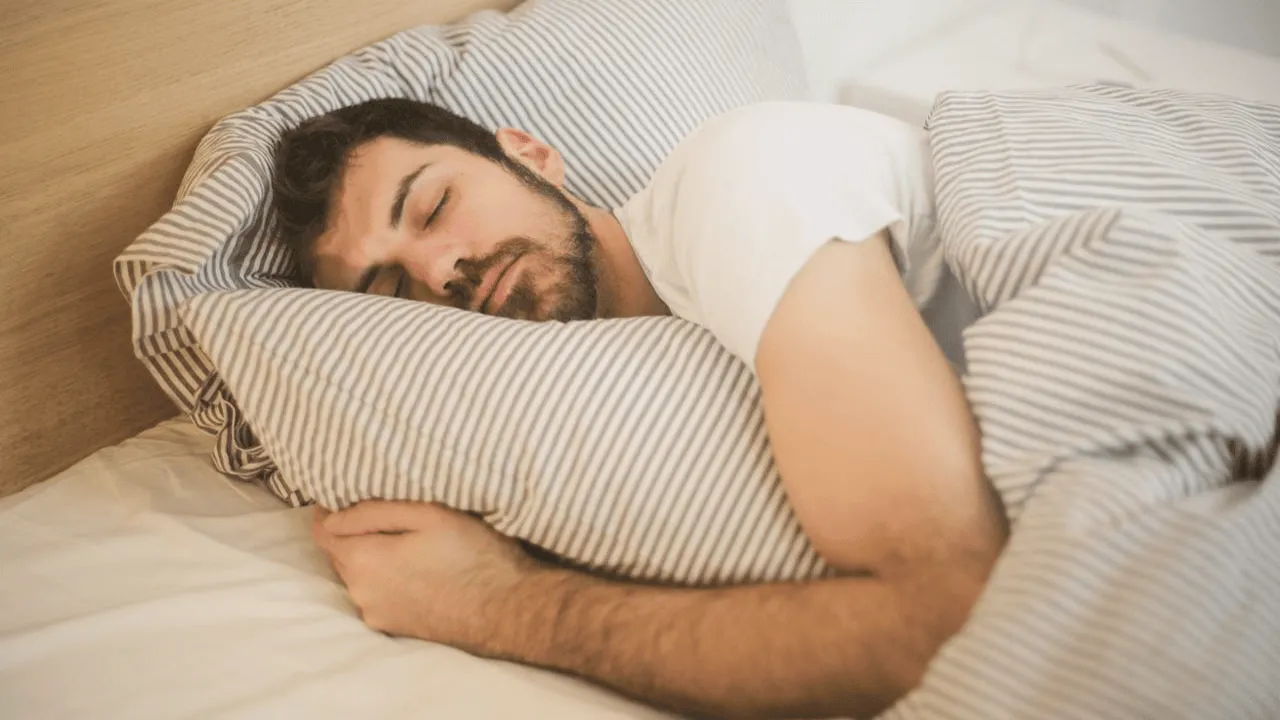
Sleep is the longest recovery window of your day. An expert consensus in the British Journal of Sports Medicine (Walsh et al. 2021) notes that elite athletes often sleep too little, frequently under 7 hours a night. In the general population, sleep that short is linked to a higher susceptibility to respiratory infections. Anything that disturbs your sleep affects your recovery too, and that includes a room where you wake up with a dry throat.
Humidity is one factor among several. Darkness and evening light matter at least as much, as our article on blue light, melatonin and sleep explains. How sleep, food and training load fit together across the week is covered in our guide to muscle recovery after a workout.
Does a humidifier protect against colds?
There is no solid answer to that, and a lot of what you read online goes too far. What we do have are lab experiments. In a test by the US occupational safety institute NIOSH (Noti et al. 2013), mannequins coughed flu viruses into a room and the air was sampled for an hour. At 23% humidity or below, 71 to 77% of the collected virus was still infectious. At 43% or above, it was only 15 to 22%. An older review (Arundel et al. 1986) found fewer respiratory infections at mid-range humidity than at very low or very high levels across several observational studies.
These are pointers, not a promise of protection. Winter infections depend mostly on contact with people who are ill, how well you sleep and how you manage your training load. A humidifier does not replace washing your hands or backing off after a hard block.
What humidity should athletes aim for?
The same as everyone else. There are no special values for athletes.
| Relative humidity | What it means |
|---|---|
| below 30% | too dry, eyes and skin noticeably dry out |
| 30–40% | dry, uncomfortable for many people |
| 40–50% | target range during the heating season |
| 50–60% | still acceptable, watch for condensation on cold outside walls |
| above 60% | too humid, higher risk of mould and dust mites |
The German Environment Agency gives 40 to 60% as a guide. According to Arundel et al., dust mites multiply least below 50%, and most moulds only grow above 60%. The full picture, including how to measure, is in our article on ideal bedroom humidity for sleep.
How to use a humidifier as an athlete
- Measure first. Put a hygrometer in your bedroom for a week, at table height and not right next to the device. If evening readings are below 40%, humidifying is worth it.
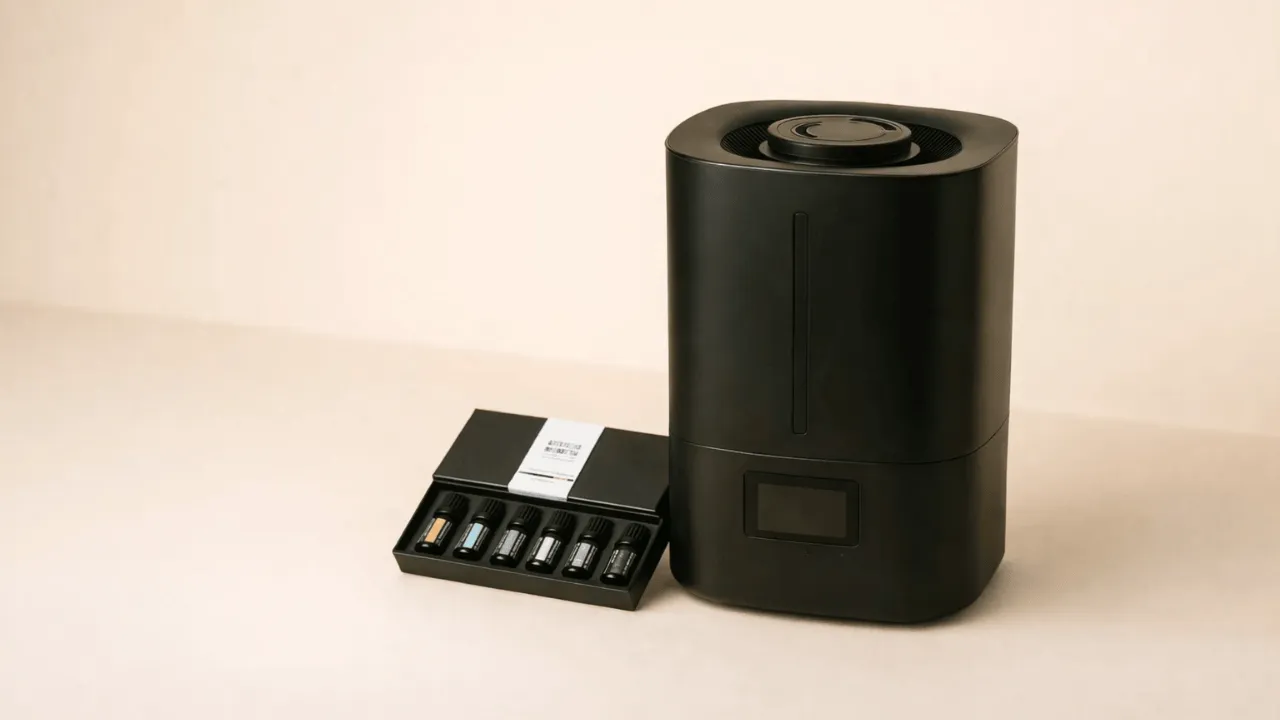
- Set a low target. The Aero Pure Deluxe with adjustable target humidity holds a value between 45 and 80% according to the manufacturer. For a bedroom in winter, choose the lowest setting, 45%.
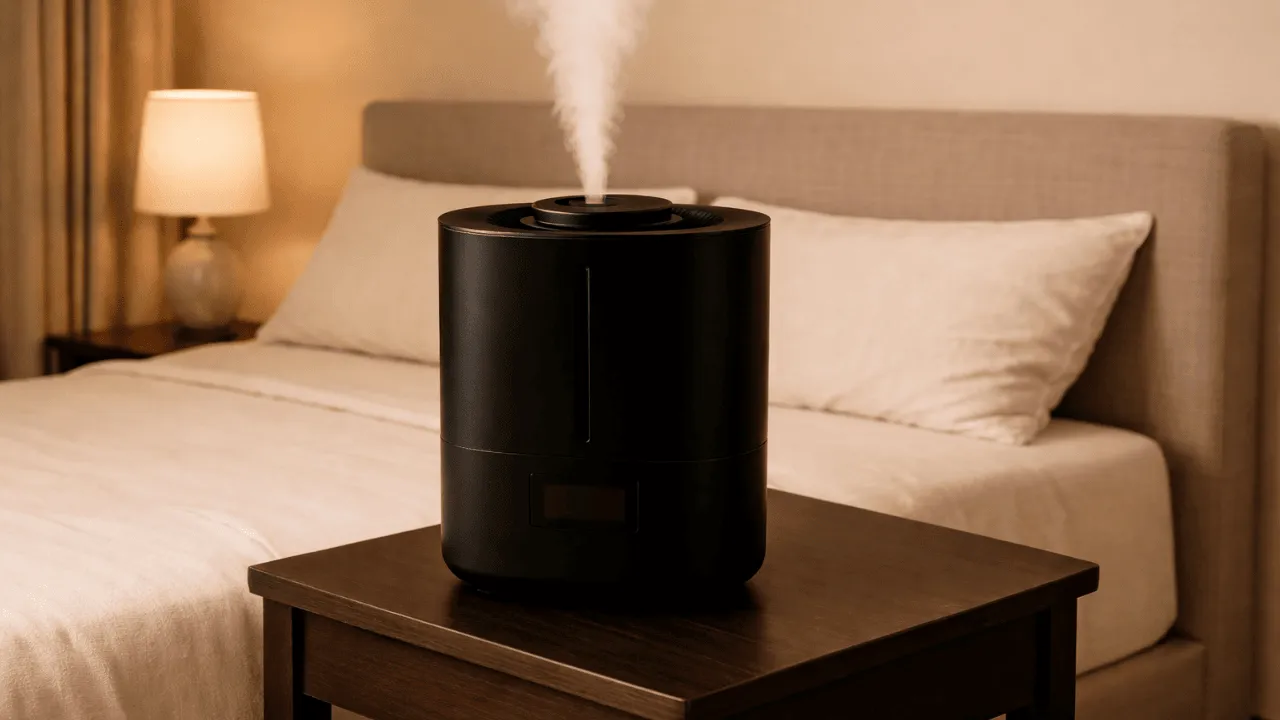
- Quiet setting at night. The manufacturer states it stays under 35 dB. The finest mist setting is usually enough for a bedroom.
- Keep your distance. Not aimed at the bed, not against a cold outside wall. About a metre away, raised on a chest of drawers.
- Fresh water every day. The EPA recommends emptying, wiping dry and refilling the tank daily, and cleaning portable units thoroughly about every third day. Low-mineral water prevents white dust.
- Air the room in the morning. Open the windows wide for five to ten minutes after you get up. Humidifying does not replace ventilation.
Essential oils after training?
With the Aero Pure Deluxe, essential oils can go straight into the tank according to the manufacturer. Plenty of people like eucalyptus or lavender in the evening. Whether it helps recovery has not been shown. It is about comfort. Use them sparingly and leave scents out if you have asthma or notice they irritate your airways. Which oils work and which to avoid is covered in our guide to essential oils in a humidifier.
"I would never suggest a humidifier to make someone faster. I suggest it to athletes who wake up every winter morning with a dry throat and stinging eyes and whose hygrometer reads below 35%. For them it is a simple fix in the bedroom, nothing more."
Daniel Volpe, coachAnd during winter training itself?
The air you train in has its own levers. A thorough warm-up prepares your airways for harder work. Breathing through your nose at easy pace helps, because the nose warms and moistens the air before it reaches your lungs. A snood or neck gaiter over your mouth and nose can warm the air a little in the cold. Hard intervals on very cold days are better moved indoors. If you still have breathing problems regularly, that is a job for a sports doctor, not for a device in your bedroom.
Who a humidifier suits and who it does not
A good fit if you
- often wake in winter with a dry throat, dry nose or stinging eyes
- regularly measure below 40% in your bedroom in the evening
- train a lot and take your sleep seriously as recovery time
- are happy to refill the device with fresh water every day
Not suitable or not enough if you
- have breathing problems during or after training. Get that checked by a doctor; a humidifier does not treat airway conditions.
- live somewhere with mould or windows that are constantly steamed up. The air is already too humid.
- do not want to clean the device regularly. Standing water in the tank is worse than dry air.
Conclusion
For athletes, a humidifier mainly delivers a more comfortable bedroom in winter when heated air drops below 40%, not a performance boost in training. Athletes who regularly wake with a dry throat or dry eyes and treat sleep as part of their recovery benefit most. It does nothing for the cold air you breathe outdoors, it has not been shown to prevent infections, and breathing problems need a medical check.
Frequently asked questions
Is a humidifier good for athletes?
What is the ideal bedroom humidity for athletes?
Does a humidifier help prevent colds in winter?
Why is my throat dry after training in winter?
Can I put essential oils in a humidifier?
How often should I clean my humidifier?
Sources
- Anderson, S. D. & Kippelen, P. (2008). Airway injury as a mechanism for exercise-induced bronchoconstriction in elite athletes. Journal of Allergy and Clinical Immunology, 122(2), 225–235.
- Sunwoo, Y. et al. (2006). Physiological and subjective responses to low relative humidity in young and elderly men. Journal of Physiological Anthropology, 25(3), 229–238.
- Wolkoff, P. (2018). Indoor air humidity, air quality, and health – An overview. International Journal of Hygiene and Environmental Health, 221(3), 376–390.
- Noti, J. D. et al. (2013). High humidity leads to loss of infectious influenza virus from simulated coughs. PLoS One, 8(2), e57485.
- Walsh, N. P. et al. (2021). Sleep and the athlete: narrative review and 2021 expert consensus recommendations. British Journal of Sports Medicine, 55(7), 356–368.
- Arundel, A. V. et al. (1986). Indirect health effects of relative humidity in indoor environments. Environmental Health Perspectives, 65, 351–361.
- U.S. Environmental Protection Agency: Use and Care of Home Humidifiers.
- Umweltbundesamt (German Environment Agency): Richtiges Heizen schützt das Klima und den Geldbeutel (updated 24 October 2023).
- Ractiveone: Aero Pure Deluxe, specifications (5 L, under 35 dB, target humidity 45–80%), as of 15 October 2026.