How to Use Essential Oils in a Humidifier: Drops, Timing, Safety
Using essential oils in a humidifier is simple, but most people put in far too much. The short version: check that your humidifier allows oil, start with 2 to 4 drops, run the scent for 30 to 60 minutes and then carry on with plain water. Leave the oil out in rooms with babies, cats, birds or anyone with asthma.
This guide gives you exact amounts, a step-by-step routine, the limits set by health authorities and vets, and an honest look at what research says about scent and indoor air.
This article is part of our main guide, humidifier tips for beginners and 9 mistakes, which covers target humidity, water and cleaning. Here we stick to one question: how do you add scent to a room without it becoming overpowering, gumming up the device or bothering someone else in the house?
In this article you will learn:
- whether your humidifier can take oil at all
- how many drops suit which room
- how long a scent session should last
- which oils to avoid around children, asthma and pets
- how to get the tank clean afterwards
01. Can you put essential oil in a humidifier?
Only if the manufacturer says so. Essential oils are concentrated, fat-soluble mixtures. In many humidifiers they attack plastic parts, clog wicks and filters, or coat the ultrasonic plate. That is why plenty of manuals ban oil from the water tank and provide a separate aroma tray or scent pad instead.
The Aero Pure Deluxe with its aroma function is designed to take essential oils directly in the water tank. With any other model, check the manual first, and if it says nothing, ask the manufacturer. Evaporative units with a wick and steam vaporisers with a heating element are usually not meant for oil at all.
Why ultrasonic humidifiers spread scent so well
An ultrasonic humidifier shatters water into tiny droplets, together with whatever is dissolved or floating in it. The US Environmental Protection Agency describes this for the minerals in tap water, and the same principle applies to oil. That is why a few drops are enough, and why too much oil ends up on furniture and windowsills.
02. How many drops of essential oil in a humidifier?
Fewer than you think. I start clients on 2 to 4 drops and only go up if the scent really does not reach the room after a quarter of an hour. More oil does not make the room smell nicer, just heavier, and more of it stays behind in the tank.
| Room | Starting amount | Practical upper limit |
|---|---|---|
| Bedroom, 10–15 m² | 2 drops | 4 drops |
| Home office, 15–20 m² | 3 drops | 5 drops |
| Living room, 20–30 m² | 4 drops | 6 drops |
One trick matters with big tanks: dose per session, not per tank. A 5-litre tank like the one in the Aero Pure Deluxe lasts up to 30 hours. Put your drops into a full tank and the scent runs all day whether you want it or not. For an evening session, fill about one litre instead.
Also bear in mind that after 15 to 20 minutes you will barely smell the scent yourself, because your nose adapts. Topping up at that point is how people overdo it. Ask someone who has just walked in.
03. How to put essential oil in a humidifier, step by step
- Switch the humidifier off and unplug it.
- Fill with fresh water, around one litre for an evening session.
- Add 2 to 4 drops straight into the water, or into the aroma tray if your model has one.
- Close the lid and start on the lowest mist setting.
- After 30 to 60 minutes, switch off or change to plain water.
- Open the window wide for a few minutes, then empty the tank and wipe it out.
04. How long should you run the scent?
In set windows, not around the clock. France's health and safety agency Anses advises airing rooms well when essential oils are diffused in an enclosed space. The ASPCA considers a short session in an area pets cannot reach unlikely to cause problems. Both point to the same habit: scent briefly, then ventilate.
- Evening: 30 to 60 minutes in the bedroom before bed, then air the room and run the humidifier overnight on plain water.
- Working from home: one session in the morning is plenty. Constant scent tends to distract rather than help.
- Guests: start 20 minutes before they arrive and switch off once they are in.
Where to put the humidifier at night and which setting works there is covered in humidifier in the bedroom: placement and night use.
05. Which oils work, and which to avoid?
For adults, mild and familiar scents are the best start: lavender in the evening, orange or lemon during the day. What matters more than the latest blend is that everyone in the room actually likes it. Keep to these rules:
- Pure essential oils only. No perfumes, room sprays or fragrance oils with solvents.
- No fatty carrier oils such as almond or jojoba oil. They do not evaporate and leave a film.
- Blends only with listed ingredients. "Natural" does not mean free of irritants, as the next section shows.
- Camphor, menthol, peppermint and eucalyptus only in rooms without young children.
06. What does research say about scent and indoor air?
Essential oils are mixtures of volatile organic compounds. A 2018 analysis of 24 commercial oils (Nematollahi et al.) found at least one compound classed as potentially hazardous in every single oil, and oils labelled "natural" were no different from the rest. That does not make a few drops dangerous. It does mean scent always adds something to your indoor air, and the dose matters.
On the other side are studies on scent and sleep. A 2014 systematic review (Lillehei and Halcon) looked at 15 studies. Most reported a positive effect on how people rated their sleep, and lavender was the oil studied most often. The authors also stress that the studies were small and methodologically weak. So I treat scent as part of a pleasant wind-down routine, not as a fix for poor sleep. How scent, light and warmth fit into the last hour before bed is set out in our evening recovery routine.
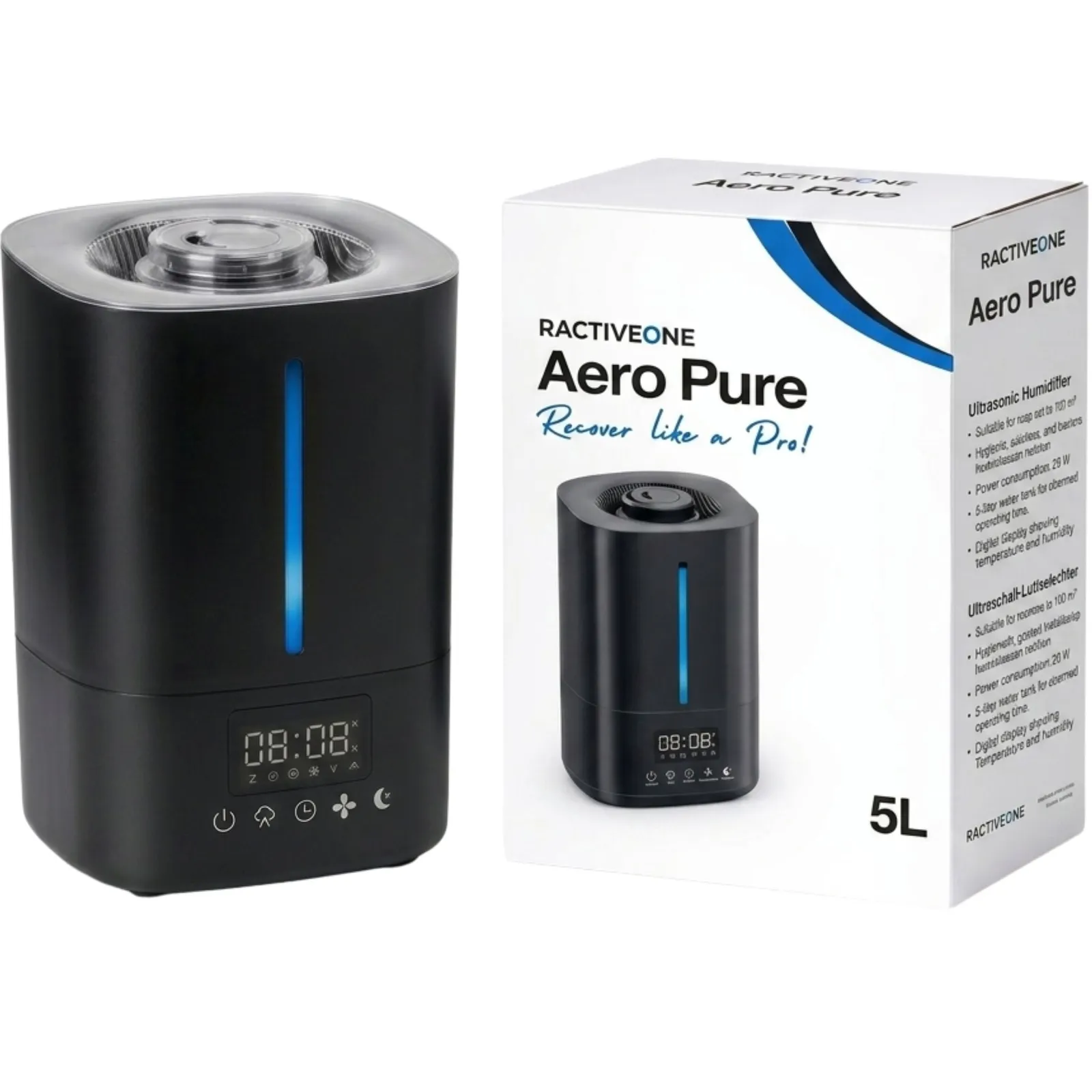
Aero Pure Deluxe humidifier
Essential oils go straight into the 5-litre tank. Three mist levels, adjustable target humidity and under 35 dB.
07. Babies, pregnancy, asthma and pets: when to leave the oil out
Use plain water here
Babies and toddlers: Germany's Federal Institute for Risk Assessment (BfR) points out that they react far more sensitively than adults. Camphor and menthol are unsuitable for them, and under the age of three particular caution applies to eucalyptus and peppermint oil as well. In a nursery, only water goes in the tank. Keep bottles out of children's reach and never next to medicines: Anses reports that in a third of accidents involving children, an essential oil was given by mistake instead of a medicine.
Pregnancy: Anses advises pregnant women against essential oils. Check with your GP or midwife first.
Asthma and sensitive airways: The American Academy of Allergy, Asthma & Immunology recommends caution with diffusers, because the compounds they release have been linked to more asthma symptoms. The BfR also advises sparing use for anyone prone to allergies or asthma.
Cats, dogs and birds: Vets at Texas A&M University warn that cats can inhale diffused oil and swallow it while grooming their fur. The ASPCA advises against diffusers in homes with birds and for pets with breathing problems. For everyone else: short sessions, in a room the animal does not use.
If scenting brings on coughing, headaches, stinging eyes or breathlessness, switch off and open the window. If symptoms persist, see a doctor. The same goes for pets that drool, vomit or breathe heavily: get them into fresh air and call the vet.
08. Cleaning the tank after using oil
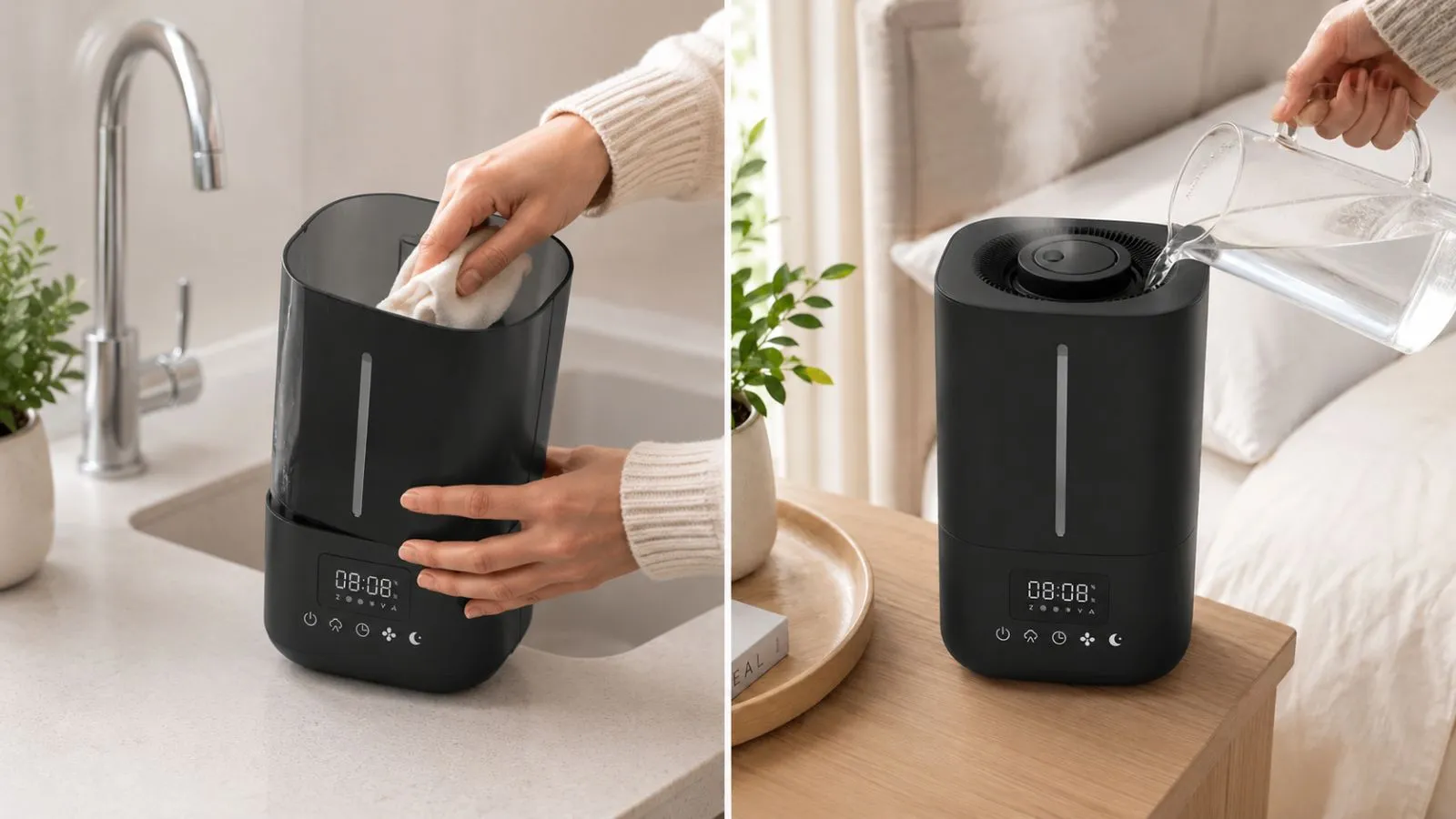
Oil floats on the water and coats the tank walls and the plate. The film smells stale, traps dirt and slowly reduces mist output. The EPA already recommends emptying, drying and refilling portable humidifiers daily and cleaning them every third day. The full cleaning and descaling plan is in how to clean and descale a humidifier. After a scent session, add one more step:
- Pour away what is left, rather than topping it up.
- Wipe the tank with warm water and a drop of washing-up liquid, then rinse thoroughly.
- Clean the plate area as the manual describes, without scratching.
- Let everything dry before refilling.
Because the Aero Pure Deluxe fills from the top, a cloth reaches every corner. Which design features make cleaning easier in general is part of our humidifier buying guide with 7 criteria.
09. Who is a scented humidifier for, and who not?
A good fit if you
- want a subtle scent as part of your evening routine
- would rather not use candles or anything with a flame
- own a humidifier that explicitly allows oil
- are happy to wipe the tank after each session
Better without oil if
- a baby or toddler sleeps in the room
- someone has asthma or a fragrance allergy
- you are pregnant and have not checked with your midwife
- you share your home with cats or birds
In winter, the humidity itself matters most. If you train indoors a lot, our piece on humidifiers for athletes in winter explains why plain water is the better choice there.
Conclusion
Essential oils in a humidifier work well when the device allows them, you start with 2 to 4 drops and keep the scent to 30 to 60 minutes. That suits adults who enjoy an evening ritual and will wipe the tank afterwards. With young children, asthma, pregnancy, cats or birds in the home, stick to plain water, and do not expect scent to solve sleep or breathing problems.
Frequently asked questions
How many drops of essential oil should I put in a humidifier?
Can you put essential oils in any humidifier?
Is it OK to sleep with essential oils in a humidifier?
Are essential oils in a humidifier safe for babies?
Are essential oils in a humidifier bad for cats and dogs?
Which essential oils are best in a humidifier?
Do I need to clean my humidifier after using essential oils?
Sources
- German Federal Institute for Risk Assessment (BfR): Ätherische Öle – duftende Wirkungen mit Einschränkungen. FAQ, 2 September 2026. – Camphor and menthol unsuitable for infants and toddlers; particular caution with eucalyptus and peppermint under three
- Balekian, D. & Long, A.: Essential oil diffusers and asthma. American Academy of Allergy, Asthma & Immunology, Ask the Expert (reviewed 2026).
- Nematollahi, N., Kolev, S. D. & Steinemann, A. (2018). Volatile chemical emissions from essential oils. Air Quality, Atmosphere & Health, 11(8), 949–954.
- Lillehei, A. S. & Halcon, L. L. (2014). A systematic review of the effect of inhaled essential oils on sleep. Journal of Alternative and Complementary Medicine, 20(6), 441–451.
- ASPCA: Is the Latest Home Trend Harmful to Your Pets? What You Need to Know (17 January 2018).
- Texas A&M College of Veterinary Medicine: A Scent-sitive Subject – Essential Oil Diffusers and Your Cat (14 November 2019).
- Anses: Huiles essentielles – risques et précautions (17 December 2024).
- U.S. Environmental Protection Agency: Use and Care of Home Humidifiers.
- Ractiveone: Aero Pure Deluxe, specifications and aroma function (manufacturer data, 15 October 2026).