Humidifier vs air purifier: and ultrasonic or evaporative?
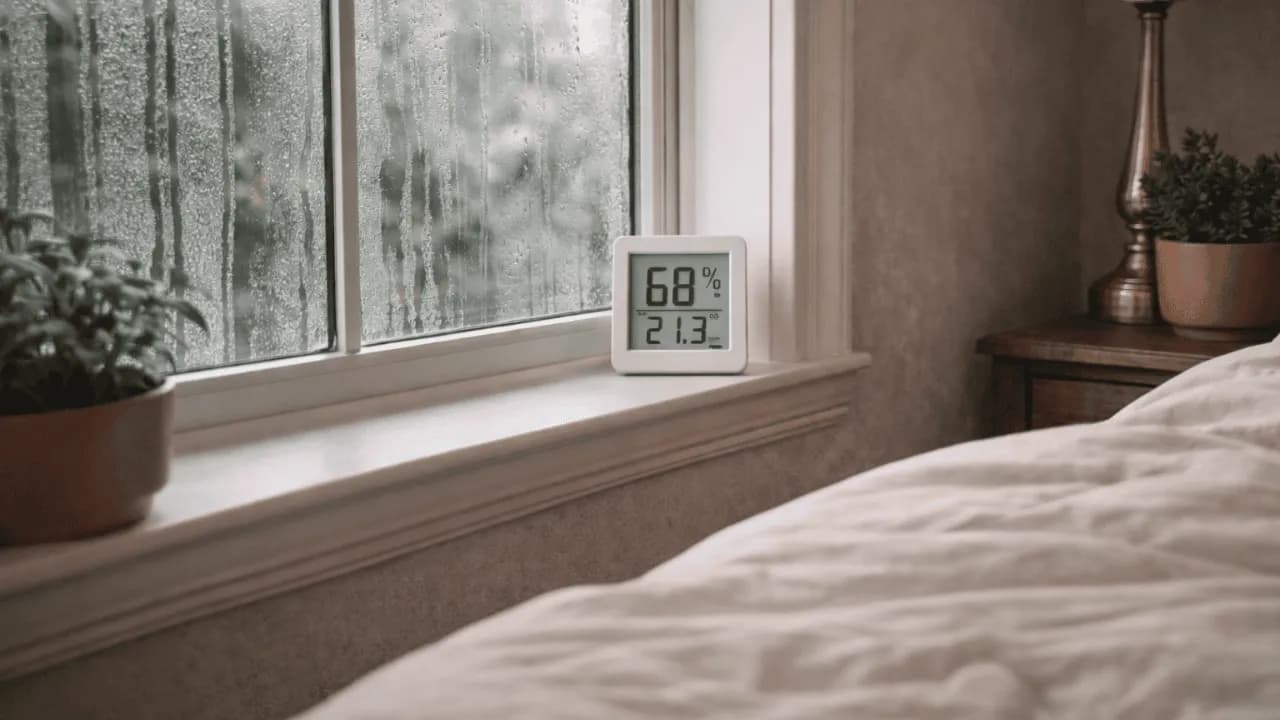
Humidifier vs air purifier sounds like a choice between two similar gadgets, but they solve completely different problems. A humidifier puts water back into the air when your hygrometer drops below 40% with the heating on. An air purifier filters out particles such as pollen and dust and leaves humidity exactly where it was. Once that's settled, there's a second decision: ultrasonic, evaporative or steam.
This comparison first matches your problem to the right device, then explains the three humidifier types with their honest trade-offs, and tells you when neither is the answer.
Before you pick a device, it's worth reading our main guide, how to use a humidifier without the usual mistakes. It covers target levels, placement and ventilation. This article answers the question that comes first: do you need a humidifier at all, or something else?
Which device fixes which problem?
It depends on what's bothering you. A cheap hygrometer will tell you within a few days whether your air is too dry, too damp or fine. After that the choice is usually obvious:
| Your problem | Reading or sign | Right solution |
|---|---|---|
| Dry eyes, scratchy throat, static shocks | below 40% relative humidity | humidifier |
| Hay fever, house dust, pet hair | humidity in the normal range | air purifier with HEPA filter |
| Traffic pollution, smoke from outside | humidity in the normal range | air purifier, windows shut when outdoor levels are high |
| Condensation on windows, musty smell, mould | consistently above 60% | ventilate more, possibly a dehumidifier, find the cause |
| Stuffy air, tiredness in the office | high CO2 | open the windows; no device replaces that |
Where your bedroom levels should sit and how to measure properly is covered in our guide to the ideal bedroom humidity for sleep.
What's the difference between a humidifier and an air purifier?
A humidifier adds water to the air. An air purifier pulls air through a filter and traps particles. That's where the similarities end.
The humidifier
It raises relative humidity when cold winter air dries out as it's heated. Most experts give 40 to 60% as a good range for living spaces, based on a widely cited review that found the unwanted effects of overly dry and overly damp air are smallest in that band (Arundel et al. 1986). The US Environmental Protection Agency (EPA) advises not to humidify above 50%. A humidifier does nothing against pollen or dust.
The air purifier
It filters particles, and good units with a HEPA filter catch very fine ones too. The EPA sees it as a supplement: air cleaners can reduce indoor pollution but can't remove every pollutant, and removing sources and ventilating are more effective. The German Environment Agency (UBA) agrees and points out that portable purifiers don't remove carbon dioxide or water vapour. So they don't touch humidity at all.
Watch out for ozone
The UBA considers devices that release ozone into a room unsuitable while people are present. Ozone irritates the airways and reacts with other substances. If you're looking at a purifier with ionisation or plasma technology, check what the manufacturer says about ozone output.
Ultrasonic, evaporative, steam: the three humidifier types
Once you know you need to humidify, the next question is how. There are three common designs, and each comes at a cost.
| Feature | Ultrasonic | Evaporative | Steam |
|---|---|---|---|
| How it works | a vibrating plate turns water into cool mist | a fan blows air through a wet wick | a heating element boils the water |
| Noise | very quiet | fan noise | soft bubbling |
| Running costs | low electricity, no filters | low electricity, replacement wicks | high electricity because water is heated |
| Minerals in the air | yes, as white dust with hard water | hardly any | hardly any |
| Microbes | misted into the room if poorly maintained | can grow in wick and tank | fewer, but still clean the tank |
| Special point | humidity rises quickly and can be set precisely | evaporation partly slows itself as humidity rises | hot steam, burn risk |
On microbes and minerals the EPA is clear: ultrasonic and impeller models release the most, evaporative and steam models less. For steam units it adds a warning about burns from steam and hot water in homes with children.
Ultrasonic or evaporative: which suits you?
Ultrasonic is the best choice if you want a quiet bedroom unit, precise control of humidity and you're prepared to keep the tank clean. Its weak point is the water. A University of Alberta study found that an ultrasonic humidifier running on tap water produced substantial fine particle levels in a test house, mostly from limescale. With distilled water the problem didn't occur (Lau et al. 2021). What good care looks like in practice is in our guide to cleaning and descaling a humidifier.
Evaporative units suit you if your water is very hard and you don't want to buy distilled water, or if a steady fan hum doesn't bother you. Budget for replacement wicks and change them as the manufacturer says, or the wick itself becomes the problem.
Steam units are the robust option for people who worry most about microbes in the mist and accept the higher electricity bill. In a child's room or right by the bed, the hot steam makes them the weaker choice.
“Most bad buys happen because someone buys a device for a problem they've never measured. A week with a hygrometer first, then shop. It saves money and disappointment.”
Daniel Volpe, coachWhat about 2-in-1 units?
Some devices humidify and purify, often sold as air washers or 2-in-1 units. They save space and a socket. The catch: both functions share one housing, one fan and one cleaning routine. Damp parts right next to a particle filter mean more maintenance, and when one function fails, the whole unit is often affected.
If you only have one of the two problems, buy the device that solves exactly that one. If you have both, say hay fever in spring and dry heating air in winter, two simple devices are often more practical than one complicated one.
Where the Aero Pure Deluxe fits
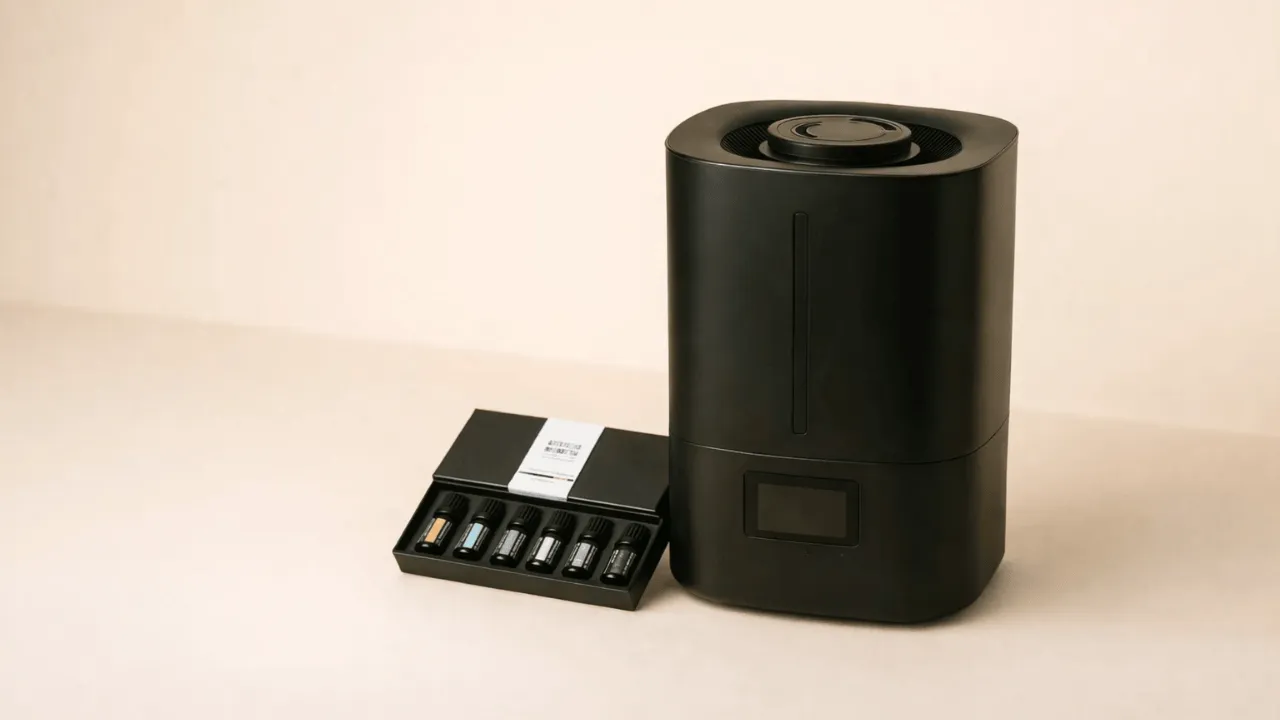
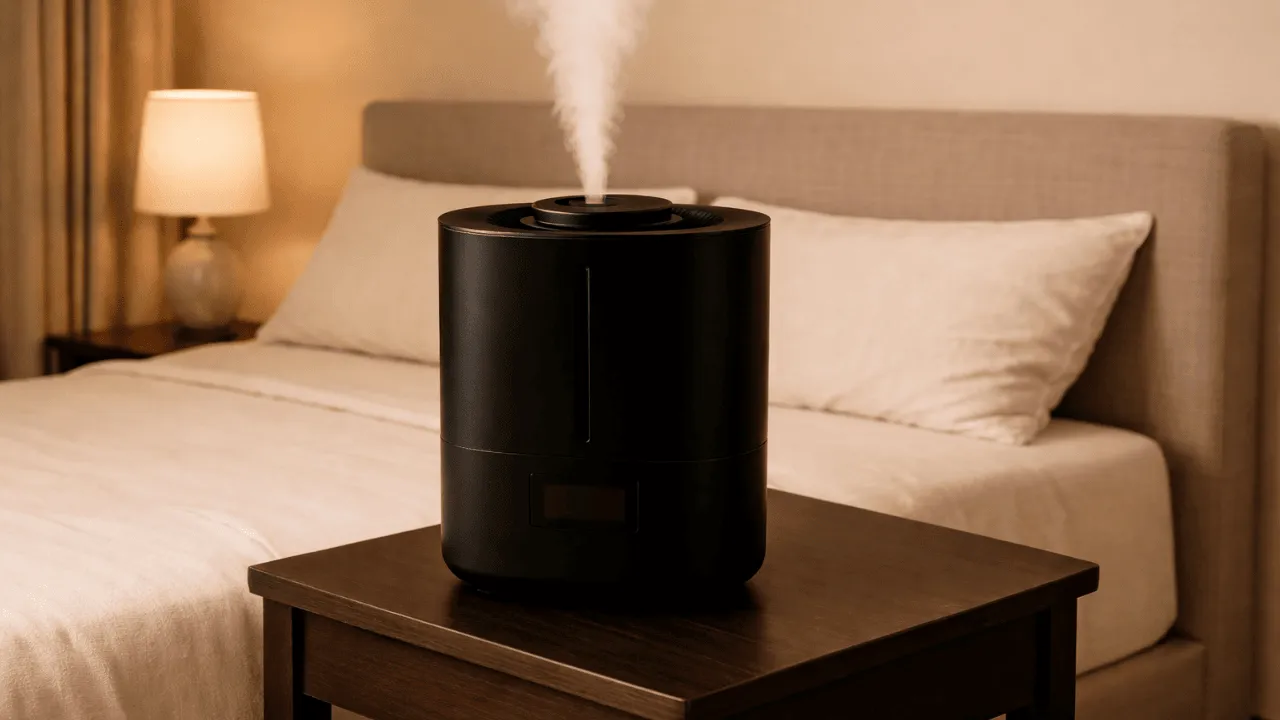
The Aero Pure Deluxe ultrasonic humidifier is a pure cool mist humidifier, not an air purifier. The key specifications according to the manufacturer:
- ultrasonic, under 35 dB, three mist levels
- 5-litre tank, top fill, up to 30 hours of running time
- adjustable target humidity from 45 to 80%, which the unit holds itself
- no replacement filters, automatic shut-off when the tank is empty
- for rooms up to about 30 m²
So it suits you if dry air is the problem and you want a quiet unit for the bedroom or office. Against pollen or dust it's the wrong tool. In winter, keep an eye on the upper limit and set 45 to 50%, not more. What else matters when buying, from tank size to noise, is in our 7 criteria for buying a humidifier.
Who each device suits, and who needs neither
Humidifier: rooms that regularly drop below 40% in the heating season, such as well-insulated flats with underfloor heating or offices. The signs of dry indoor air are listed in dry air at home and how a humidifier helps.
Air purifier: hay fever sufferers in pollen season, homes with pets, or flats on busy roads.
Neither: if your hygrometer already reads between 40 and 60% and nothing bothers you. And certainly not if your windows steam up or mould appears. Then you need more ventilation and to find the cause, not another gadget. If you have persistent problems with your airways or eyes, see your GP rather than relying on a device.
Conclusion
A humidifier deals with dry air, an air purifier with particles, and for damp or stuffy air the answer is ventilation. If you want quiet, precise humidifying and can keep up the cleaning, an ultrasonic unit serves you well, while evaporative models can be the easier choice with very hard water. No device replaces opening the windows, and without measuring first you may end up buying for the wrong problem.
Frequently asked questions
Is a humidifier or an air purifier better?
Does an air purifier add moisture to the air?
Ultrasonic or evaporative humidifier, which is better?
Can an air purifier replace ventilation?
Does a humidifier help with hay fever?
Are steam humidifiers more hygienic than ultrasonic ones?
Sources
- U.S. Environmental Protection Agency: Use and Care of Home Humidifiers (updated 29 April 2026). – Humidifier types, minerals and microbes, 50% upper limit
- U.S. Environmental Protection Agency: Air Cleaners and Air Filters in the Home (updated 3 August 2026).
- Umweltbundesamt (German Environment Agency): Mobile Luftreiniger nur als Ergänzung zum Lüften sinnvoll (2022). – No substitute for ventilation, no removal of CO2 or water vapour, ozone devices unsuitable
- Lau, C. J. et al. (2021). Particulate matter emitted from ultrasonic humidifiers: Chemical composition and implication to indoor air. Indoor Air, 31(3), 769–782.
- Arundel, A. V. et al. (1986). Indirect health effects of relative humidity in indoor environments. Environmental Health Perspectives, 65, 351–361.
- Ractiveone: Aero Pure Deluxe, specifications (manufacturer information), as of 15 October 2026.