Recovery Boots on Black Friday 2026: How to Spot a Real Deal
Recovery boots on Black Friday can be a good buy, but often they are not. Around Black Friday, Cyber Monday and Christmas, percentage signs are everywhere. Whether a deal is really cheap is not shown by the big "50% off" badge, but by the price it is compared with.


I will show you how to tell a was price from an RRP, how to check a discount in the shop, what a price history tells you, whether there is any real test winner, and which features are worth the money. You finish with a checklist.
Before you compare prices, it helps to know what you are buying. Recovery boots are sleeves with air chambers that fill and empty one after another. How that works in your legs is explained in our guide how compression boots work. This article is about the question everyone asks in November: is this deal actually good?
Disclosure
Ractiveone sells the Revive Active and the Revive Active Pro. The checks in this article apply to every model and every shop, including ours. Laws and studies are linked below, research date: 13 November 2026.
How do you know if a Black Friday discount is real?
A percentage on its own tells you nothing. "40% off" can be a lot or almost nothing. It depends on the price it is taken from. So the key question is not "how many percent?", but "what has this model really cost over the last weeks and months?"
Here is an example with made-up numbers. A shop sells boots for €399 for one week in October, then goes back to €499. On Black Friday it advertises "€449, was €499". That sounds like 10% off. But if you know the October price, you can see the "deal" costs more than three weeks earlier.
That is why a quick look back pays off. The next sections show the fastest way to do it: first the different prices you see in a shop, then the price history. In the end you always work out the same thing: how much money do you save compared with the price you would normally pay?
Shopping from the UK?
UK law bans false or misleading information that is relevant to a buying decision, and a misleading presentation even when each fact on its own is true (Digital Markets, Competition and Consumers Act 2024, section 226). A made-up "was" price can fall under this. In practice, your best protection is still the price history.
Codes and stepped discounts
Many shops use codes, tiered prices or discounts that grow in steps in November. That makes comparing hard. Put the item in your basket and look at the final price including delivery. Compare that number with the price history, not the percentage on the banner.
Was price, RRP or real previous price: what is the difference?
Product pages often show three different prices side by side. They sound alike but mean very different things.
| What the shop shows | What it means | What you check |
|---|---|---|
| Crossed-out "was €499" | an earlier price of this shop | When, and for how long, was this price really charged? Does the price history show it? |
| "Best price" or "lowest price ever" | an advertising claim by the shop | Does it only mean this shop? What do other shops charge? |
| RRP "recommended retail price" | a price the manufacturer suggests | Has any shop actually charged it recently? Often not. |
| Discount code or voucher | a personal reduction | Compare the final price including delivery with the price history |
The RRP is the most common trick. It is not a price the shop has charged, only a suggestion. Many shops sell well below it all year. A worked example with made-up numbers: a model has an RRP of €799. Most shops have sold it for about €449 for months. On Black Friday you see "€399, RRP €799, 50% off". Your real saving is €50, or about 11%.
What have consumer groups found about Black Friday prices?
Which? tracked 175 home, tech and health appliances at eight big UK retailers for a full year, from six months before to six months after Black Friday 2024. 83% of the products were the same price or cheaper at least once outside the four-week sales period. At the retailer with the worst result the figure was 94% (Which? 2025).
The EU picture is similar. In November and December 2025, authorities from 23 EU countries plus Iceland and Norway checked 314 online shops together. 18% used pressure tactics such as countdown timers or "only 2 left". More than half of those cases were misleading, for example because the low stock was fake (European Commission 2026).
How do you read a price history?
Price comparison sites show a chart for many products: what the model cost over the last weeks and months, and at which shop. Which? recommends checking it before the sales. It answers three questions in a few minutes.
- How low has the price been before? If the model was cheaper in summer, the Black Friday price is not a low.
- Did the price rise just before the sale? A jump two or three weeks earlier is a warning sign.
- What do other shops charge? A discount at one shop means little if another one is cheaper all year.
Every chart has a limit: it only shows shops that the site tracks. Many recovery boots are sold only in the brand's own shop. Then you have to plan ahead: take a screenshot of the price a few weeks before Black Friday. Old newsletters or ads from the shop also show what the boots used to cost. That way you can compare later.

Is there a Which? best buy or test winner for recovery boots?
Not that we could find. As of 13 November 2026 we found no test of recovery boots by Which? in the UK. We also searched the website of the German testing organisation Stiftung Warentest for "compression boots" and "recovery boots" and found no test. If a shop advertises a "test winner", look closely.
A badge is only as good as the test behind it. Many "best" lists come from magazines, blogs or comparison sites that earn commission on sales. That is allowed, but it is not the same as an independent lab test. Check every badge for these points:
- Who tested? A known consumer organisation, a magazine, or a site with no company details?
- When? A test from five years ago says little about today's model.
- What was tested? Are the criteria published, for example pressure measurement, durability, ease of use, safety?
- Which model? Is it exactly the version you are buying?
- How many models? Winning against three devices is not the same as winning against twenty.
The same goes for reviews. Ten mixed reviews with details on size, noise and battery are worth more than three enthusiastic lines with no content.
Which features are worth paying for?
First, the key research. A meta-analysis pooled 17 studies with 319 participants. Recovery boots showed a trivial to small benefit for muscle function and a trivial to moderate effect on pain and soreness. The most common protocol was about 80 mmHg for 20 to 30 minutes (Maia et al. 2024). mmHg means "millimetres of mercury", the same unit used for blood pressure.
A study at the 161 km Western States ultramarathon shows the limits. 72 runners got 20 minutes of massage, compression or rest after the race. Right after the session, the compression group felt less overall muscle fatigue. From the next days on there was no difference, including in 400 m run times (Hoffman et al. 2016). More features do not change these results. They do make boots more comfortable and flexible.
| Feature | What it does | What to look for |
|---|---|---|
| Chambers per leg | more chambers split the pressure wave more finely | at least 4; more chambers mainly help if you want to switch zones off |
| Pressure range in mmHg | decides how gentle or firm it feels | low starting value, small steps, real mmHg figures instead of "level 1–7" |
| Modes and timer | different pressure patterns, automatic stop | a sequential mode from foot upwards, timer around 20–30 minutes |
| Battery or mains | battery: free to use on the sofa or when travelling; mains: no charging breaks | runtime in minutes, charging time, spare parts |
| Sizes and zip | the sleeve must match your leg length | size by inside leg, thigh circumference, full-length zip |
| Service and spare parts | matters if a hose or controller fails | check the manufacturer's information: contact, spare parts, the shop's terms |
A high maximum pressure is a reserve, not a mark of quality. All seven criteria in detail are in buying recovery boots: 7 criteria to check. How well-known brands such as Normatec, JetBoots or Blackroll are specified by their makers is shown in our compression boots comparison with manufacturer data.
When are recovery boots worth it, and when not?
Recovery boots are worth it if you use them often. Typical users are runners, cyclists, triathletes, team and strength athletes with several hard leg sessions a week. People who stand or sit a lot at work also like them in the evening. If you only put them on once a month, you are paying a lot for a pleasant feeling.
There are cheaper options. A meta-analysis of 23 studies found small benefits of compression garments, such as socks or tights, for the recovery of strength and endurance (Brown et al. 2017). Another meta-analysis of 99 studies showed that active recovery, massage and compression garments also reduce muscle soreness, with massage working best (Dupuy et al. 2018). The difference between boots and sleeves is explained in compression boots vs. sleeves.
Suitable for
- athletes with several hard leg sessions a week
- people looking for a fixed evening routine to relax
- anyone with the space and budget for a device they will use regularly
Not suitable, or only after medical advice
- with thrombosis or suspected thrombosis
- with heart failure or arterial circulation problems
- with open wounds, skin infections or fresh injuries on the legs
- during pregnancy
The full list is in our article on who should not use compression boots. Recovery boots do not replace medical treatment. If you have problems with your legs, please see a doctor.
"Before anyone buys, I ask: when exactly will you wear them? If you have no answer, put the money into sleep, good food or a few massages. If you plan three or four evenings a week, a good Black Friday price is a nice bonus, but it should not be the reason."
Fabian, bodybuilder and coachWhat if the boots do not fit? Your right to cancel
For online purchases you have a legal right to cancel in both the EU and the UK. In the UK, the cancellation period for goods ends 14 days after the day you receive them (Consumer Contracts Regulations 2013, regulation 30). EU law sets the same 14 days from delivery. You do not need to give a reason. This also applies to goods bought on sale.
You may try the boots as you would in a shop: put them on, check the size, run a short test session. If you handle them more than needed to check them and they lose value, the seller may deduct that loss (regulation 34). For sealed goods that are not suitable for return for health protection or hygiene reasons, the right to cancel can end once the seal is broken after delivery (regulation 28). Whether a shop relies on this is stated in its cancellation information. Read it before you buy.
For Christmas gifts, timing matters. If you buy on Black Friday and the boots arrive in early December, the legal period may end before Christmas Day. Some shops voluntarily offer longer return windows. That is the shop's own offer, not the law. Check the terms, and measure the inside leg of the person you are buying for if you can.
Where do Revive Active and Revive Active Pro fit in?
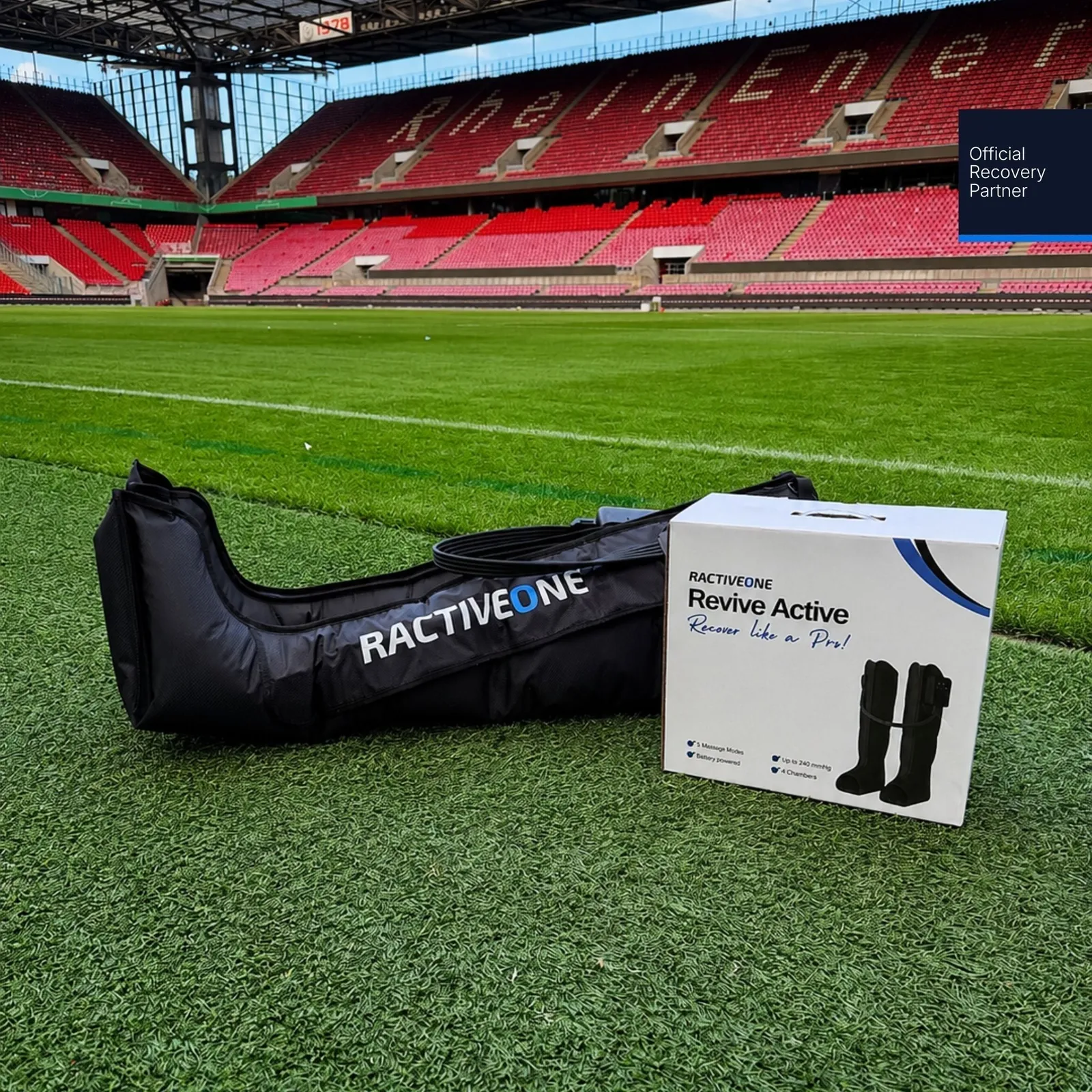
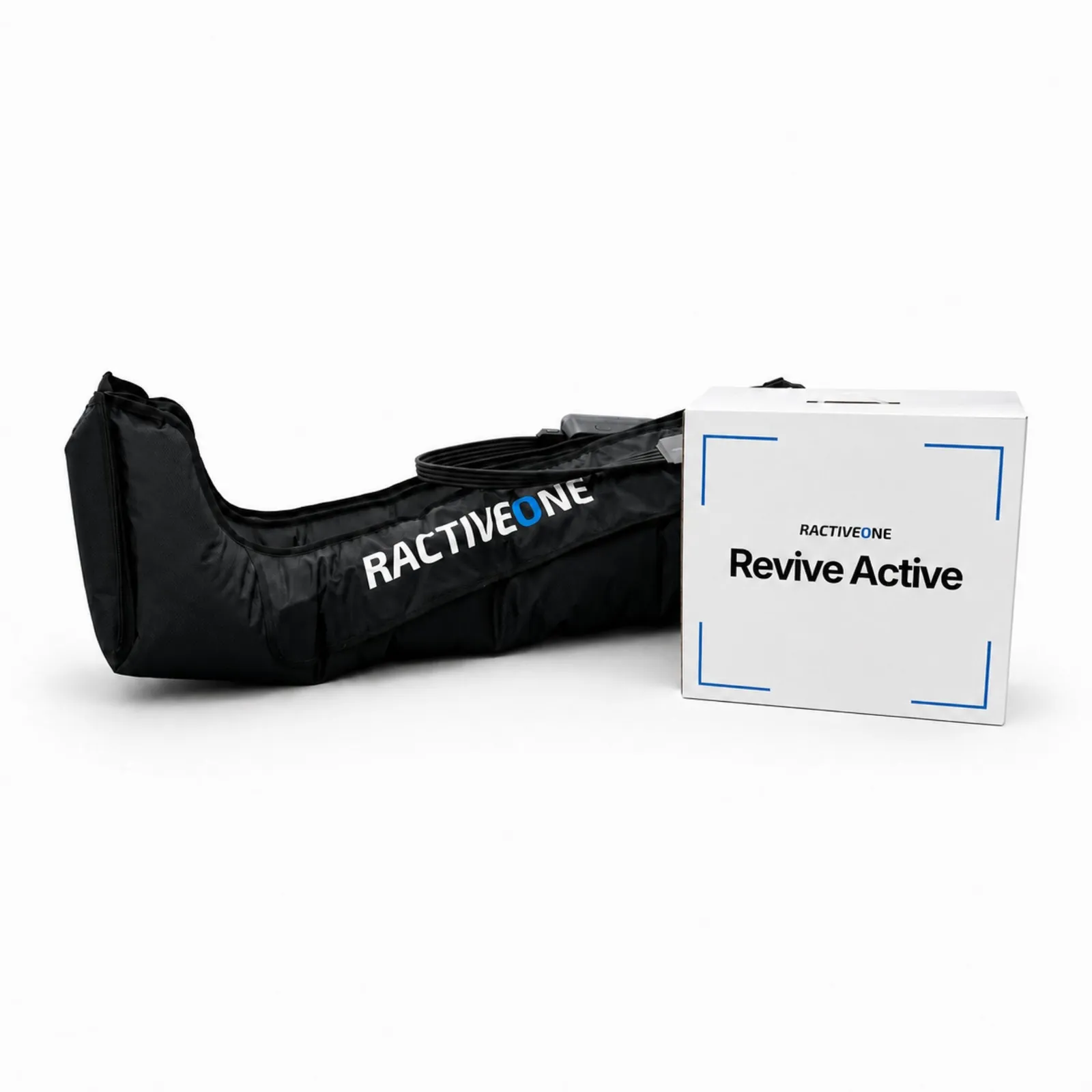
As one option among several: the Revive Active recovery boots have, according to the manufacturer, 4 chambers per leg, 7 pressure levels from 30 to 240 mmHg, 5 modes and programmes of 15, 30 or 45 minutes. The controller has a 3,200 mAh battery with up to 180 minutes of runtime. There is no app. Size goes by inside leg: S/M up to 84 cm, L from 85 cm.
The Revive Active Pro has 8 chambers that can be switched off individually, up to 260 mmHg, 6 programmes and freely set times from 10 to 90 minutes. You do not buy more recovery with it, you buy more control. Which one suits you is covered in Revive Active vs. Pro. The current price is shown in the product box.
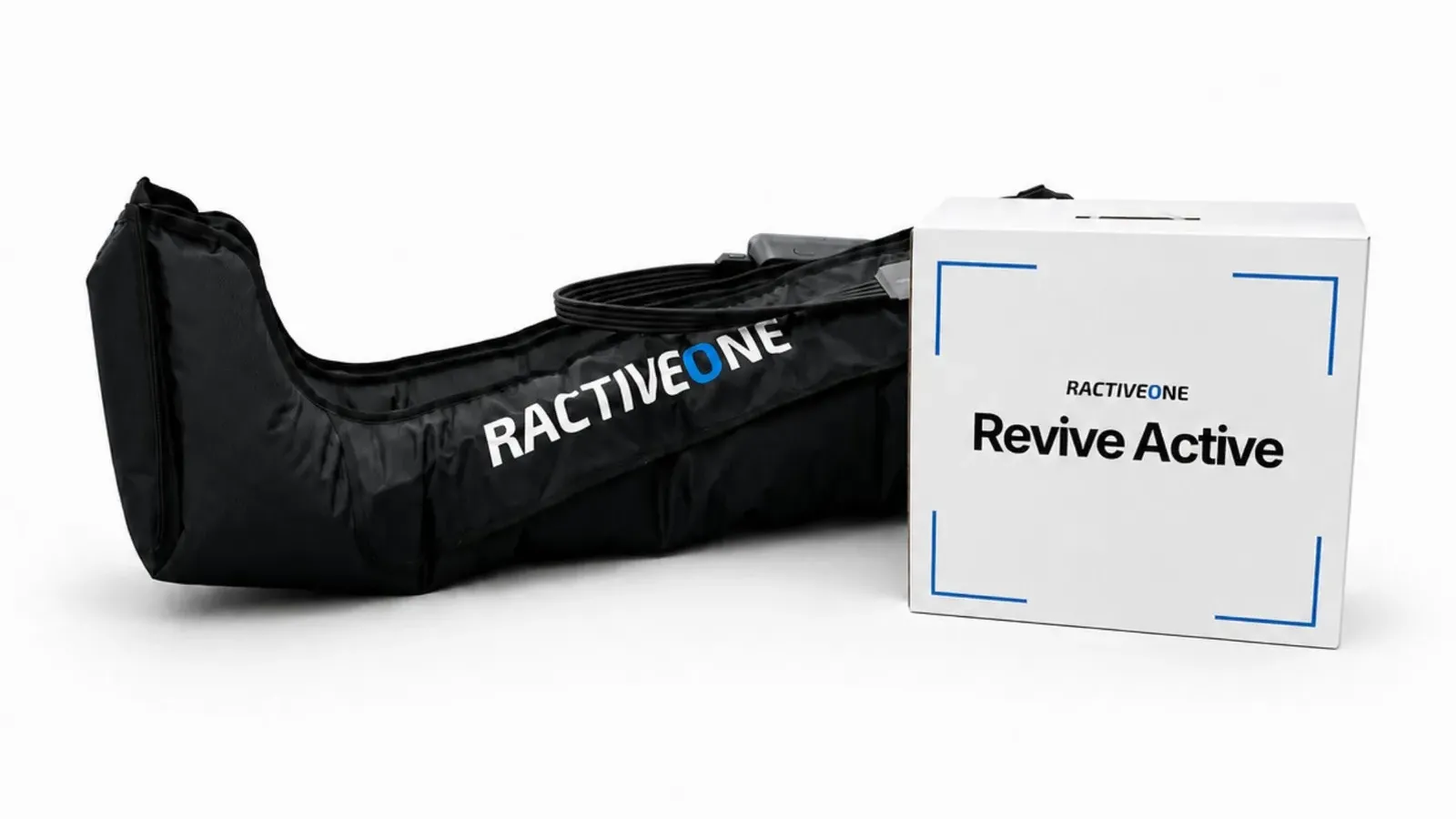
Revive Active recovery boots
4 chambers, 7 pressure levels from 30 to 240 mmHg, 5 modes and up to 180 minutes of battery life.
Checklist: test a recovery boots deal in 5 minutes
- Real saving worked out in money, against the price of recent months?
- Is the comparison an RRP? Then ignore the percentage and look at the price history.
- Price history of recent months checked, final price including delivery compared?
- Pressure in mmHg, number of chambers, timer and battery runtime clearly stated?
- Size chosen by your inside leg?
- Badge checked: who tested, when, how, and which model?
- Company details, contact and cancellation information of the shop read?
- Contraindications ruled out or checked with a doctor?
- Countdown or "only 2 left" ignored, and slept on it for a night?
Conclusion
A Black Friday deal on recovery boots is only good if the price is truly below recent prices and the boots fit your legs and your training. They make most sense for people who will use them several times a week; for everyone else, compression socks, active recovery or massage are cheaper routes. Studies show small benefits, mainly for perceived soreness, and we found no independent test winner so far. Do not let percentages or countdowns rush you, and if you have a medical condition, check with a doctor before you buy whether compression is right for you.
Frequently asked questions
Is Black Friday a good time to buy recovery boots?
How can I tell if a discount is real?
Are fake 'was' prices allowed in the UK?
Is a crossed-out RRP a real discount?
Which recovery boots won a Which? or Stiftung Warentest test?
Can I return recovery boots bought online?
Are there cheaper alternatives to recovery boots?
Sources
- European Commission: EU check reveals misleading sales practices online, 26 March 2026.
- Which?: Don't believe the hype: most Black Friday deals the same price or cheaper at other times of the year, 25 November 2025.
- Digital Markets, Competition and Consumers Act 2024, section 226 (misleading actions), legislation.gov.uk.
- The Consumer Contracts (Information, Cancellation and Additional Charges) Regulations 2013, regulations 28, 30 and 34, legislation.gov.uk.
- Your Europe (European Union): Returns, cancelling an online purchase (accessed 13 November 2026).
- Maia, F. et al. (2024). Effects of lower-limb intermittent pneumatic compression on sports recovery: A systematic review and meta-analysis. Biology of Sport, 41(4), 263–275.
- Hoffman, M. D. et al. (2016). A Randomized Controlled Trial of Massage and Pneumatic Compression for Ultramarathon Recovery. Journal of Orthopaedic & Sports Physical Therapy, 46(5), 320–326.
- Brown, F. et al. (2017). Compression Garments and Recovery from Exercise: A Meta-Analysis. Sports Medicine, 47(11), 2245–2267.
- Dupuy, O. et al. (2018). An Evidence-Based Approach for Choosing Post-exercise Recovery Techniques to Reduce Markers of Muscle Damage, Soreness, Fatigue, and Inflammation. Frontiers in Physiology, 9, 403.
- Ractiveone: Revive Active, product page with technical data (manufacturer information, accessed 13 November 2026).