


How to Use a Humidifier: 9 Common Mistakes and How to Avoid Them
A humidifier can make indoor air noticeably more comfortable – especially during the heating season, when the air dries out fast. But knowing how to use a humidifier properly is what makes the difference: keep it controlled, hygienic and matched to the room’s humidity. Almost every common problem – odour, condensation, overly damp air or even mould – comes down to a handful of avoidable mistakes.
In short
You use a humidifier correctly when you keep indoor humidity at roughly 40–60% with a hygrometer, place the unit freely in the room, and clean the tank and water regularly. This avoids the most common mistakes – over-humidifying, condensation and odour – and keeps your room climate comfortable and hygienic.
In this article you’ll learn:
- what humidity level makes sense – and how to measure it
- where to place your humidifier
- how to keep the tank and unit hygienic
- how to combine ventilation and essential oils correctly
01. Measuring and holding the right humidity
The most common mistake is starting without measuring and trusting your gut. Humidity that feels pleasant in one room may already be too high in another. If you want to use a humidifier the right way, measuring is the foundation.
The fix: Use a hygrometer and aim for around 40–60% relative humidity. This is a widely cited guideline that keeps the risk of mould low while still reducing overly dry air.

Don’t over-humidify – and take condensation seriously
A humidifier should support the room, not create a tropical climate. If water collects on windows or corners stay cool and damp, that’s a warning sign. Lower the mist setting, air the room briefly and keep an eye on your target range. Avoid readings that stay above 60% for long periods.
In smaller rooms the highest setting is rarely useful. Start low, work in steps and adjust to room size and season. If your device has a humidity control, use it consistently.
Good to know
The 40–60% range is a good compromise: low enough to help prevent mould, high enough to noticeably reduce dry air.
02. Where to place your humidifier
If the humidifier sits too close to a wall, moisture can build up locally. On wood or sensitive surfaces, the mist can also leave marks. Placement plays a big part in whether the device helps or causes problems.
The fix: Place the humidifier freely in the room, with some distance to the wall and not directly on wood or electronics – ideally so the mist can spread well.


“A good spot and a hygrometer solve most problems before they start.”
— A practical rule of thumb
03. Hygiene: water, cleaning and descaling
Water left standing for several days can turn unpleasant, and a biofilm can form more quickly – which affects odour and hygiene. If a humidifier smells musty, it’s often not the device but a lack of cleaning.
- Water: change it regularly, rinse the tank briefly, and don’t keep topping up without cleaning.
- Cleaning: a short routine is enough – clean the tank regularly and descale when needed.
- Residue: with ultrasonic units, hard tap water can leave “white dust” on furniture – use lower-mineral water or wipe surfaces down.
“Units with a wide tank opening are far more pleasant day to day, because you can actually reach every corner – which makes cleaning a routine rather than a chore.”
Marco Reinhardt, Ractiveone editorial
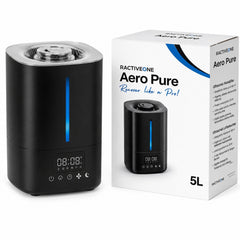
Aero Pure Humidifier
Wide opening for easy cleaning, adjustable mist levels and an aroma function. 30-day risk-free trial, free delivery.
04. Ventilating and using essential oils
A humidifier does not replace ventilation. Without regular air exchange, moisture stays in the room – especially in bedrooms and poorly ventilated corners. Short bursts of fresh air, above all in the morning and after steamy situations like showering or cooking, keep the room climate stable.
Aromatherapy is a plus for many people – but problems usually come from overdosing. Too much oil can make the scent “turn” and makes cleaning harder. Only use oils the way your device is designed for (aroma function), start with a few drops and keep up the cleaning.

30-second check
Hygrometer: am I in the 40–60% range? · Placement: free in the room, not against a wall or on wood? · Hygiene: fresh water, tank cleaned regularly? · Ventilation: airing out daily, especially in the morning?
05. Frequently asked questions
What humidity level is ideal indoors?
In most living spaces, a range of around 40–60% relative humidity is a good guideline. It keeps the risk of mould low while reducing overly dry air.
How often should I change the water and clean the tank?
Change the water regularly and don’t leave it standing for days. Rinse the tank briefly and clean it on a set routine, descaling when needed.
Why does white dust form on my furniture?
It’s usually minerals from hard tap water that ultrasonic units disperse as fine mist. Lower-mineral water or regularly wiping surfaces helps.
Can I add essential oils straight into the water?
Only if your device explicitly allows it. Otherwise use the aroma function, dose sparingly and keep up the cleaning so the scent doesn’t turn.
Does a humidifier replace ventilation?
No. A humidifier supports your room climate but does not replace ventilation or medical advice. With persistent respiratory symptoms or suspected mould, seek professional or medical guidance.
Sources
- German Federal Environment Agency (Umweltbundesamt) – guidance on indoor climate, humidity and proper ventilation.


